In the realm of electronics and music, fine-tuning is critical. Bourns potentiometers, like the delicate dials on vintage radios, allow for precise adjustment of electrical signals. Whether it's tweaking the tone on a guitar or controlling the speed of a motor, these versatile components play an essential role. This article serves as a guide, exploring the diverse types of Bourns potentiometers, their applications, and how they contribute to both the functionality of modern electronics and the nuances of artistic expression.
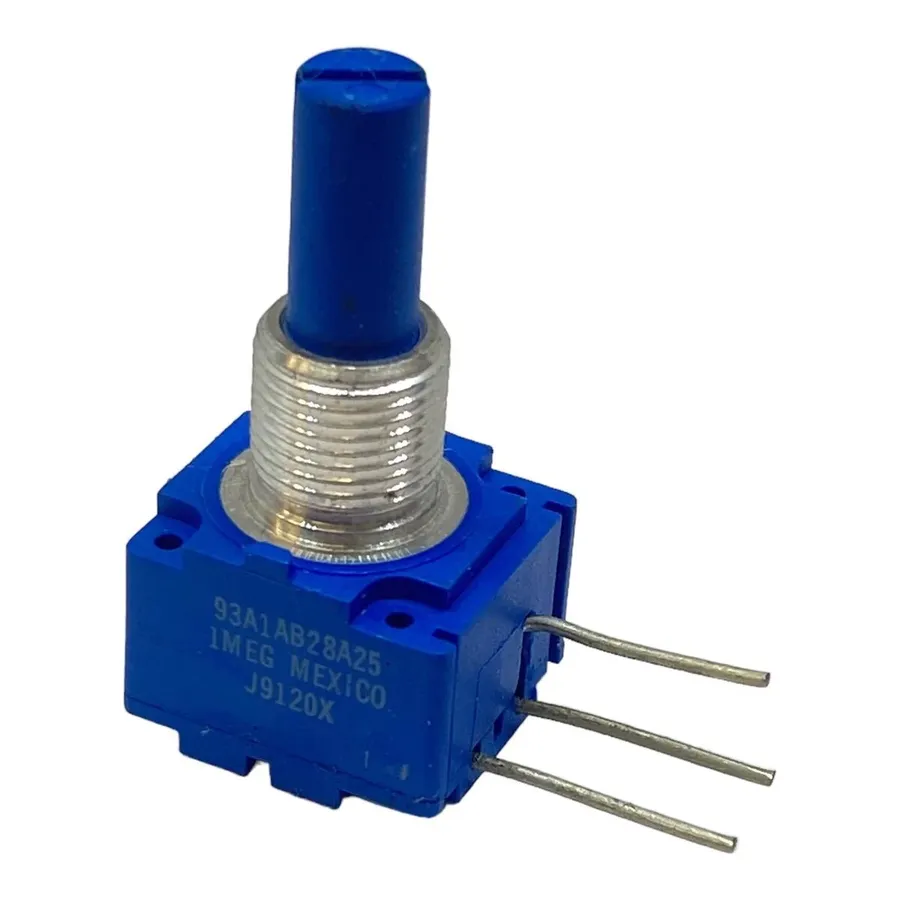
Bourns potentiometers are fundamental components in electronic circuits, serving as adjustable voltage dividers. Their core function lies in providing precise electrical control through a variable resistive element. This element, typically a track of conductive material, allows users to finely tune the resistance and, consequently, the output voltage. Bourns offers a diverse range of potentiometer types, each engineered to meet specific application needs. Understanding these types and their underlying principles is crucial for effective circuit design and implementation.
| Potentiometer Type | Description | Typical Applications |
|---|---|---|
| Single-Turn Potentiometers | The resistive element is covered in a single circular path. The adjustable slider arm rotates across the element allowing the user to adjust the resistance from end-to-end. | Basic volume controls, simple tuning circuits |
| Multi-Turn Potentiometers | Utilizes a spiral resistive track, the user rotates a slider that can move across many turns, allowing for more precise adjustments. | Precision adjustments, calibration, where finer tuning is required. |
| Linear Motion Potentiometers | Employs a linear track, the user slides a slider across the conductive element. | Mixers, audio faders, measuring equipment, linear position adjustments. |
The resistive element within a Bourns potentiometer is typically made of materials like carbon film, cermet, or conductive plastic. The choice of material impacts the potentiometer's precision, temperature stability, and lifespan. The wiper or slider, which moves along the resistive element, makes contact with the resistive material and determines the proportion of the total resistance that is available at the output terminal.
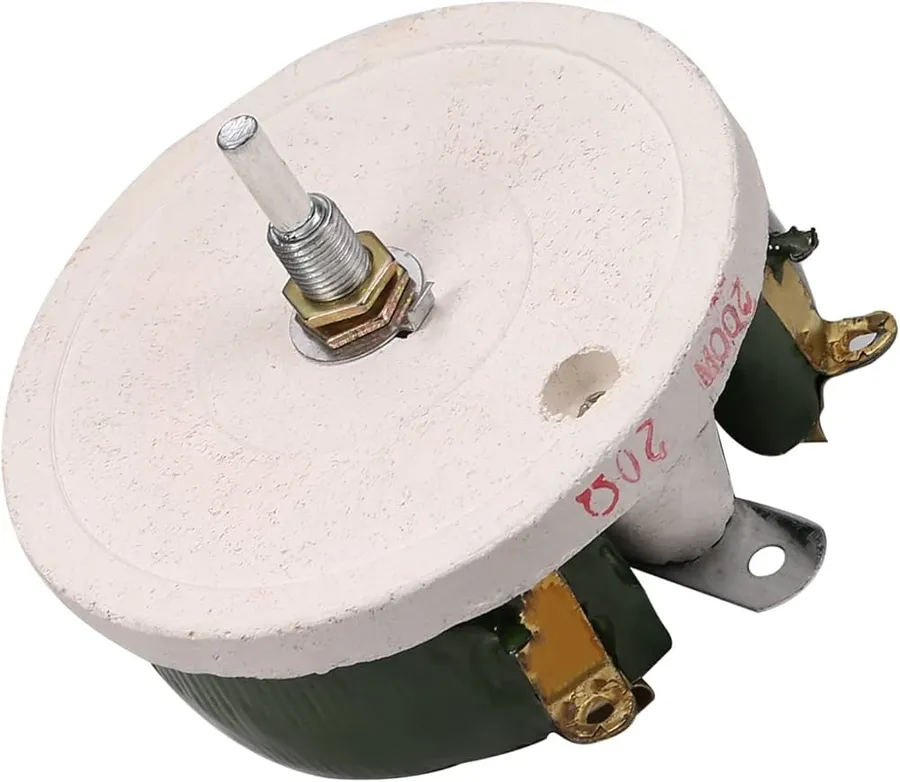
Bourns precision potentiometers are integral components in numerous industries, providing the accuracy and reliability demanded by modern control and measurement systems. Their robustness and precision make them ideal for applications ranging from automotive systems to advanced medical equipment.
| Industry | Application | Specific Use Case | Benefit |
|---|---|---|---|
| Automotive | Throttle Position Sensors, Steering Angle Sensors | Engine Management Systems, Electronic Stability Control | Precise and reliable control, enhanced safety |
| Industrial Automation | Robotic Arm Positioning, Process Control Systems | Automated Manufacturing Lines, Chemical Processing Plants | Accurate position feedback, consistent production quality |
| Medical Equipment | Diagnostic Imaging, Patient Monitoring Devices | X-ray Machines, Infusion Pumps | High-resolution adjustments, life-critical accuracy |
| Aerospace | Flight Control Systems, Navigation Equipment | Aircraft control surfaces, altitude measurement | High reliability in demanding conditions, precision adjustments |
| Test and Measurement | Signal Generators, Calibration Equipment | Laboratory Testing Equipment, Research Instruments | Precise signal adjustment, highly accurate calibration |
The selection of a Bourns potentiometer for a specific industrial application is contingent upon several factors, including the required resistance range, linearity, environmental conditions, and operational lifespan. For example, in automotive applications, potentiometers must withstand significant temperature fluctuations and vibrations, whereas in medical equipment, they require extremely high precision and long-term stability. In industrial automation the potentiometers are often used in feedback loops for precise positioning.
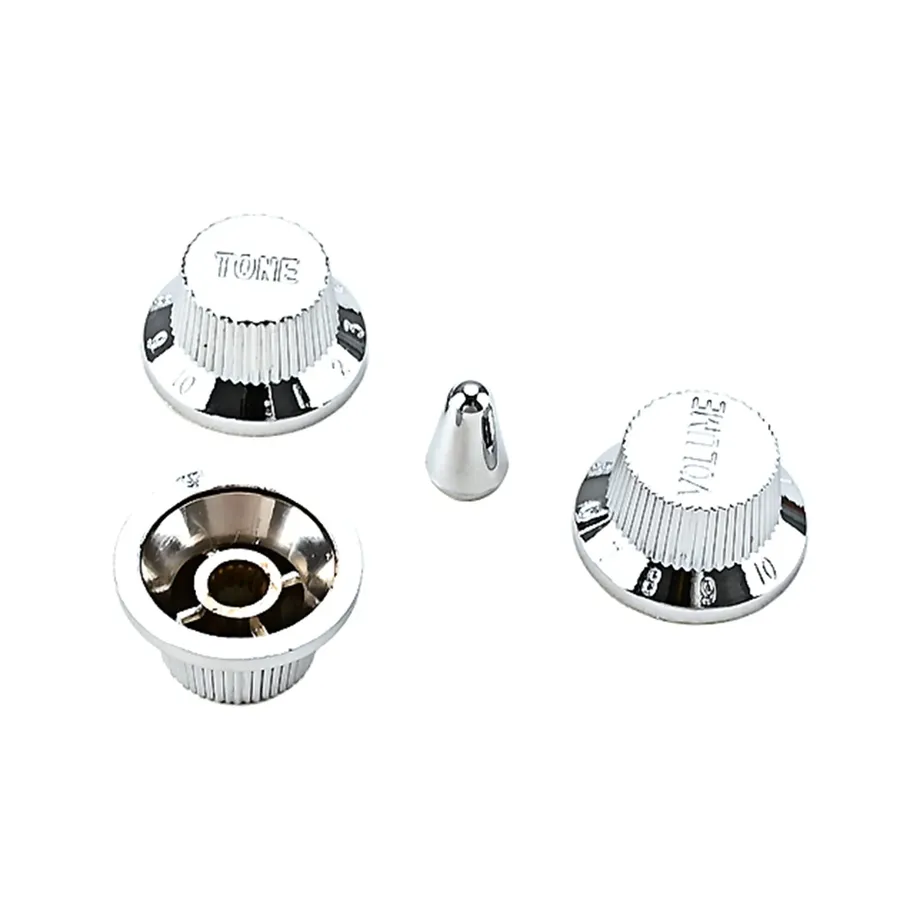
Bourns potentiometers play a pivotal role in shaping the sound of musical instruments and audio equipment. Their precision and reliability make them indispensable for controlling volume, tone, and balance, directly influencing the sonic characteristics and user experience.
In guitars, Bourns potentiometers are crucial components of the tone and volume circuits. They allow guitarists to manipulate the instrument's output, achieving a wide range of sounds from subtle nuances to dramatic shifts in tone and intensity. Similarly, in audio mixing consoles, they manage signal levels, equalization, and panning, enabling sound engineers to sculpt complex audio landscapes.
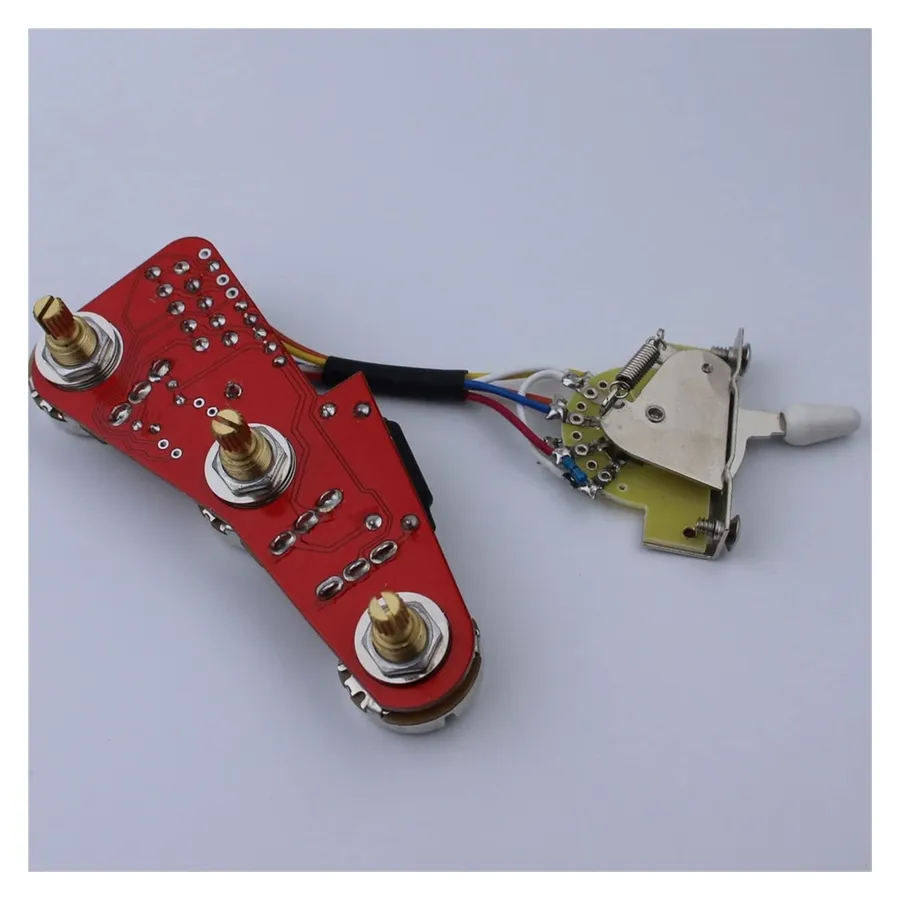
Bourns potentiometers used in guitars typically employ two distinct taper types: audio (also known as logarithmic) and linear. These tapers dictate how the potentiometer's resistance changes as the shaft is rotated, significantly affecting the perceived volume and tone control. Understanding the differences is crucial for guitarists to achieve the desired control response.
| Feature | Audio Taper | Linear Taper |
|---|---|---|
| Resistance Change | Non-linear; resistance changes rapidly at first, then more slowly. | Linear; resistance changes at a constant rate. |
| Perceived Volume Change | Corresponds more closely to how human hearing perceives volume; more gradual at lower volumes, a faster change at higher volumes. | Changes uniformly with rotation; can sound abrupt, particularly at low volumes where a slight turn can cause a significant change. |
| Typical Use | Volume controls, as well as tone control applications where more fine-tuned adjustment is desired. | Tone controls or applications requiring a uniform response or as a control to drive other circuits. |
| Response Curve | Logarithmic or exponential curve. | Straight line curve. |
The choice between audio and linear taper potentiometers largely depends on the intended application. For guitar volume controls, audio taper potentiometers are almost universally preferred due to their more natural response curve that aligns with the way humans perceive loudness. The human ear's sensitivity to sound is logarithmic, not linear, so an audio taper potentiometer helps provide a smoother and more natural adjustment to the sound volume. Linear potentiometers, however, are often used in tone circuits where their more uniform response is beneficial for shaping the overall tone of the guitar.
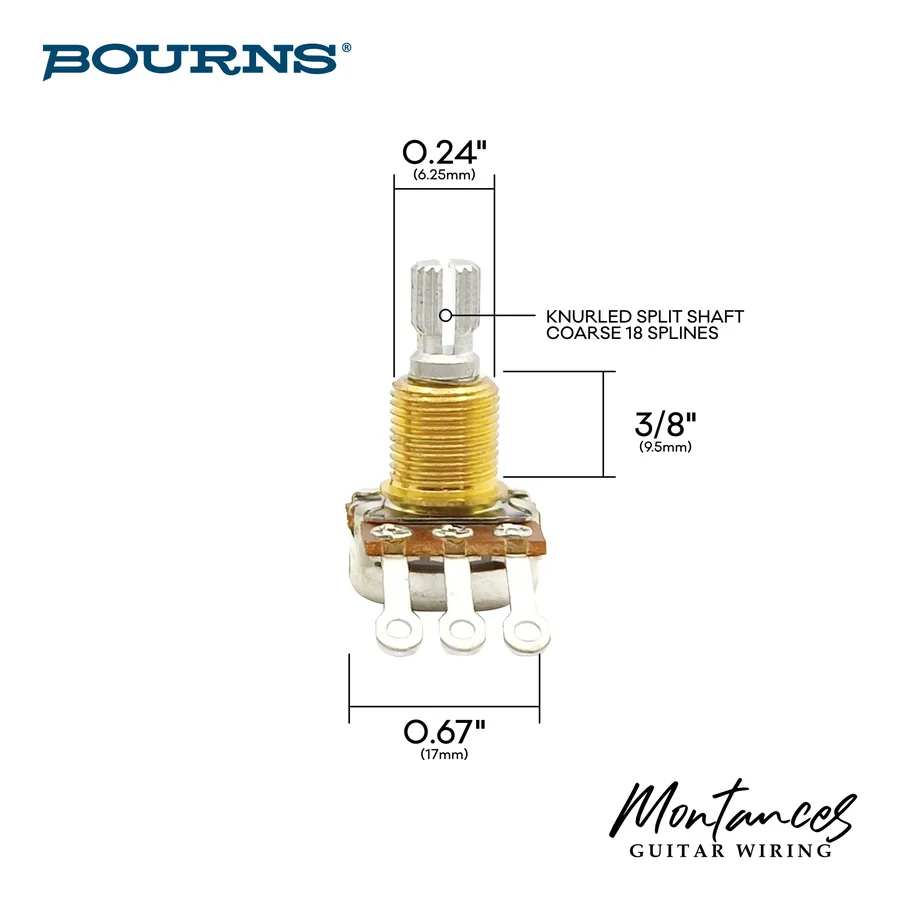
Selecting the correct Bourns potentiometer is crucial for achieving the desired functionality and performance in any application. This requires a thorough understanding of several key parameters, including resistance value, taper, shaft type, and tolerance. Each of these factors plays a significant role in the potentiometer’s behavior within a circuit.
| Parameter | Description | Impact on Performance |
|---|---|---|
| Resistance Value | The total resistance between the two fixed terminals, typically measured in ohms (Ω) or kilohms (kΩ). Common values include 10kΩ, 250kΩ, and 500kΩ. | Determines the maximum resistance the potentiometer can offer, affecting the overall range of control. |
| Taper | Describes how the resistance changes as the potentiometer's shaft is rotated. Common tapers are audio (logarithmic) and linear. | Affects how the user perceives adjustments. Audio tapers are suited for volume controls, while linear tapers provide a direct proportional change in resistance. |
| Shaft Type | Refers to the type of shaft used to adjust the potentiometer. Common types include solid and split shafts. | Primarily affects compatibility with knobs and other mechanical interfaces. |
| Tolerance | Indicates the allowable deviation from the specified resistance value, usually expressed as a percentage (e.g., ±10%). | Impacts the precision and accuracy of the potentiometer. Lower tolerance values indicate higher precision. |
Choosing the appropriate resistance value depends on the circuit’s requirements, affecting the maximum resistance the potentiometer can offer, and thus the control range. The taper determines how resistance changes with rotation, an important factor in applications like volume or tone controls. Shaft type ensures compatibility with knobs and other mechanical interfaces. Lastly, tolerance dictates the accuracy and precision of the device, where a lower tolerance value indicates a higher degree of precision. For example, a 10kΩ potentiometer with an audio taper is well-suited for volume controls, while a 500kΩ potentiometer with a linear taper might be used for adjusting brightness or speed.
Proper wiring of Bourns potentiometers is crucial for achieving reliable performance and accurate control in any application. This section provides essential wiring diagrams, installation guidelines, and best practices to ensure successful integration into your circuits.
Bourns potentiometers typically have three terminals: two outer terminals, each connected to one end of the resistive element, and a center terminal connected to the wiper. The wiper moves along the resistive element as the shaft is turned, changing the resistance between the center terminal and each outer terminal.
| Wiring Aspect | Description | Best Practices |
|---|---|---|
| Terminal Identification | Identify the terminals clearly, typically center terminal is distinct. Refer to the datasheet for specific configurations. | Use a multimeter to verify terminal connections before assembly. Check for continuity. |
| Solder Technique | Use a soldering iron with a fine tip to avoid damaging potentiometer components. Apply solder carefully to terminals. | Avoid excessive heat or solder, which can lead to damage. |
| Wire Gauge | Select the correct wire gauge to handle the expected current. Improper gauge wire can cause damage or overheating. | Ensure wires are not pinched or stretched to prevent short circuits. |
| Proper Mounting | Ensure the potentiometer is securely mounted on the chassis or control panel. Potentiometer should not be under stress or be susceptible to excessive vibration | Use proper tightening torque, if needed. If not done properly may lead to incorrect readings or mechanical damage to the potentiometer. |
When installing Bourns potentiometers, it is essential to avoid common mistakes such as applying excessive force to the shaft or terminals. Do not overtighten mounting hardware. These errors can cause internal damage, leading to inaccurate measurements or complete device failure. Ensure wires are securely connected to avoid loose connections or shorts, leading to inaccurate readings or intermittent performance. Additionally, always double-check your wiring configuration against the circuit diagram to prevent wiring errors, which could damage the device or other components within the circuit.
Maintaining Bourns potentiometers is crucial for ensuring their longevity and reliable performance. This section outlines common issues, maintenance practices, and troubleshooting techniques to address problems such as noise, erratic behavior, and physical damage, guiding users on when replacement is necessary.
This section addresses common questions about Bourns potentiometers, providing clear and concise answers to aid understanding and usage. We aim to cover essential topics including compatibility, lifespan, purchasing, and more to ensure users are well-informed.
Bourns potentiometers represent the ingenuity of engineering in miniature form, facilitating a vast range of control possibilities across diverse sectors. From the industrial precision of manufacturing equipment to the creative expression of a guitar's tone, the reliability and accuracy offered by Bourns potentiometers are invaluable. By understanding their types, applications, and maintenance requirements, users can leverage the full potential of these versatile components and appreciate the intricate balance of precision and artistry they provide. Bourns potentiometers are more than just components, they are instruments of control shaping our technological landscape and musical experiences.

