Just as a chef carefully selects ingredients to create a masterpiece, guitarists rely on components like capacitors to sculpt their unique sound. These tiny but mighty electronic elements, often overlooked, are pivotal in shaping the tone of your guitar. This article dives deep into guitar capacitors, revealing how they filter frequencies, influence your guitar's voice, and ultimately, help you achieve the perfect tone. From the physics behind their function to practical selection advice, we'll unlock the secrets of these unsung heroes of guitar electronics, empowering you to craft your sonic signature.
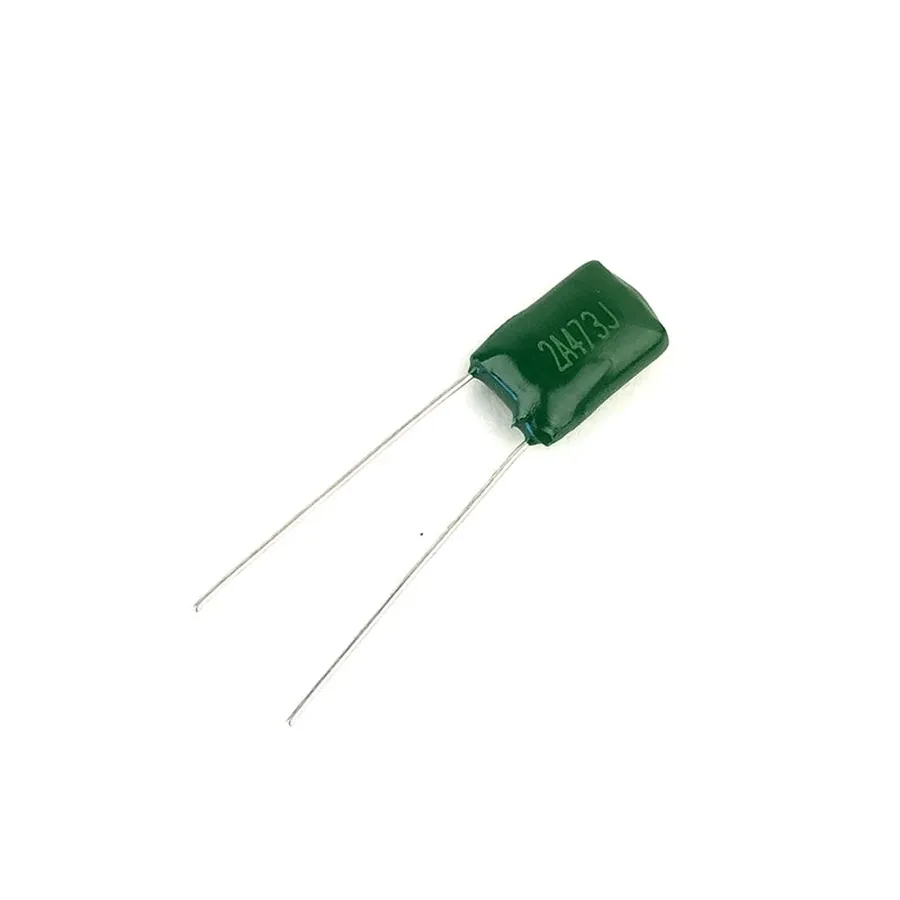
Guitar capacitors are passive electronic components that act as frequency filters within a guitar's tone circuit, primarily shaping the instrument's high-frequency response. They function in conjunction with potentiometers to create a variable low-pass filter, enabling guitarists to selectively attenuate higher frequencies, effectively 'rolling off' the treble and adjusting the overall tone.
At its core, a capacitor stores electrical energy in an electric field. In a guitar circuit, when the tone potentiometer is adjusted, it alters the amount of the signal that bypasses the capacitor to ground. With the tone control set to maximum, most of the high frequency signal is passed along, allowing for a brighter tone. As the tone control is rotated to reduce treble, more of the high frequencies are shunted through the capacitor to ground. This filtering of highs, achieved by the potentiometer and capacitor together, makes the tone control versatile.
The capacitor's value determines the frequency at which this filtering action begins. A higher value capacitor will start attenuating highs at a lower frequency, resulting in a warmer, darker tone. Conversely, a lower value capacitor will begin attenuating highs at a higher frequency resulting in a brighter tone and a more narrow tonal shift.
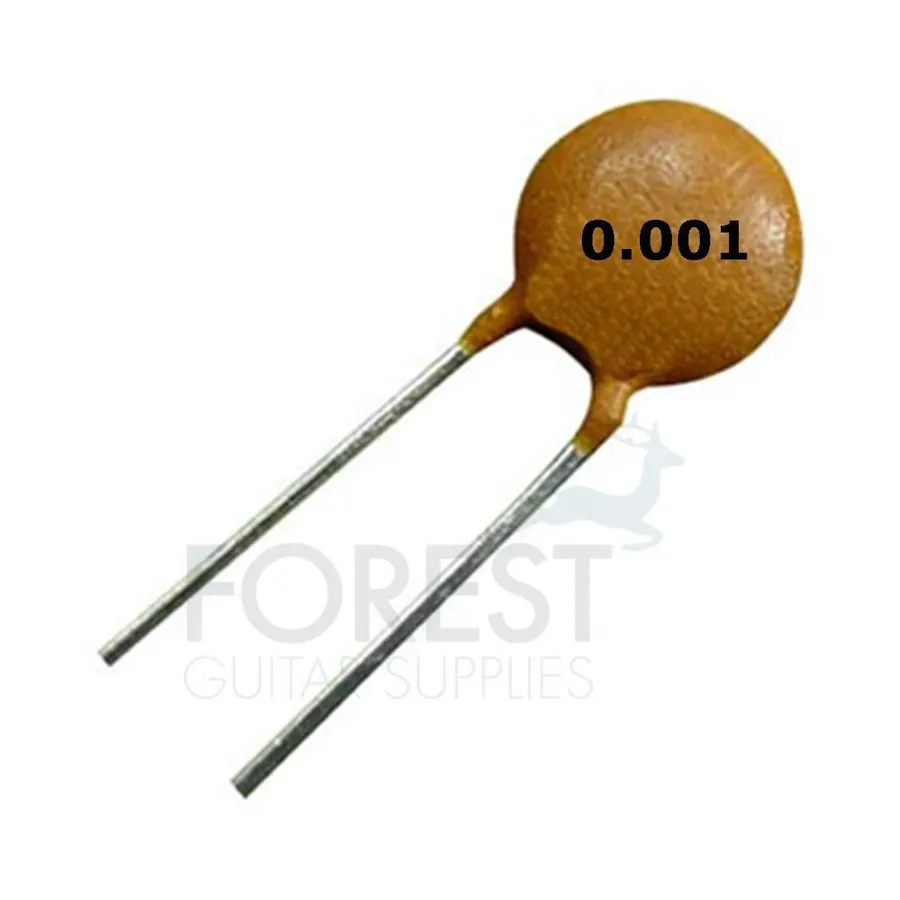
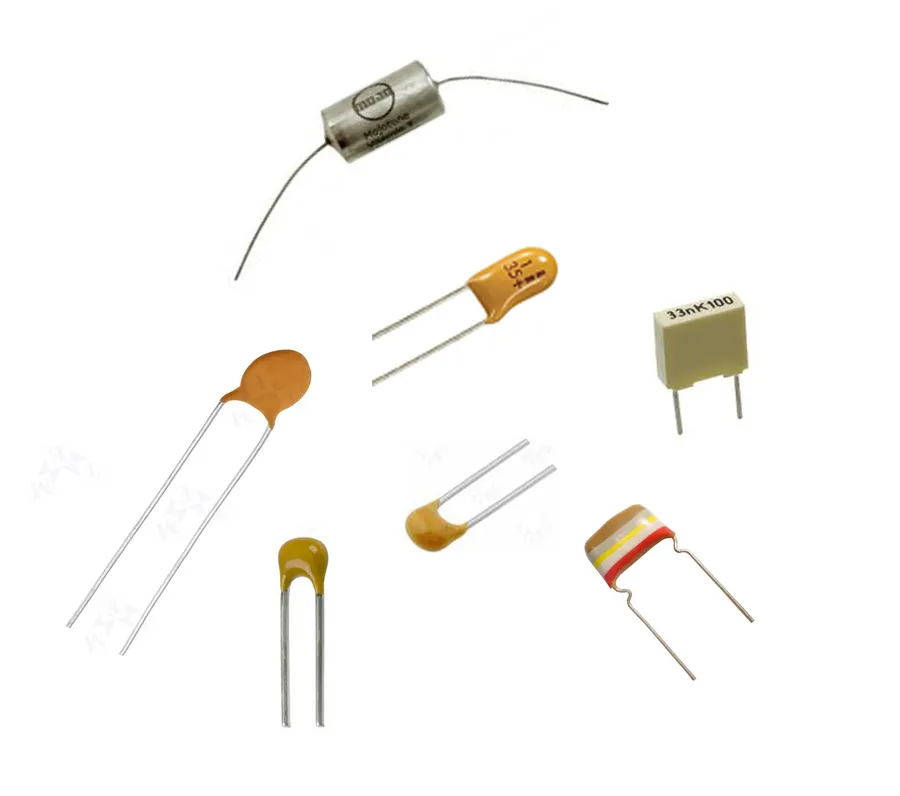
Guitar capacitors, fundamental components of passive tone circuits, are not monolithic in construction or material. The type of capacitor significantly influences its sonic characteristics due to variations in construction, dielectric material, and overall electrical properties. This section explores the most common types found in guitars: ceramic, paper-in-oil, and polypropylene.
| Capacitor Type | Dielectric Material | Construction | Sonic Characteristics | Typical Applications | Example Brands/Models |
|---|---|---|---|---|---|
| Ceramic | Ceramic | Multiple layers of ceramic material with metal electrodes | Bright, clear tone, good for high frequencies; can sound harsh at higher values. | Often found in budget-friendly guitars; suitable for bright tones. | Typically unmarked or generic brands |
| Paper-in-Oil (PIO) | Paper soaked in oil | Paper dielectric impregnated with oil, encased in a sealed body. Often vintage. | Warmer, smoother tone, considered more musical by many guitarists; can exhibit 'drift' in capacitance over time. Complex harmonic response. | Favored in vintage guitars and by players seeking vintage-like tones. | Sprague Vitamin Q, Russian K40Y-9 |
| Polypropylene | Polypropylene film | Thin layers of polypropylene film and metal foil, often housed in a plastic case | Neutral and transparent tone, preserving the original guitar signal. Very stable capacitance. | Common in modern guitars, popular for high fidelity and transparent tone. | Orange Drop, Mallory 150, Vishay MKP series |
Ceramic capacitors, typically the least expensive, utilize ceramic materials as their dielectric. Their construction involves layering ceramic materials with metallic electrodes. These capacitors are known for a brighter, more present tone in the upper frequencies, and are typically found in budget or lower end instruments. Paper-in-oil capacitors, a popular choice amongst vintage guitar enthusiasts, utilize paper soaked in oil as their dielectric. The oil impregnation allows for greater capacitance within a smaller physical footprint, and is thought to affect the resonant peak. This construction often results in a smoother, warmer tone with a perceived musical quality. Polypropylene capacitors utilize a very thin film of polypropylene and metallic foil. These capacitors are known for their linear response, stability, and neutrality, often used by musicians that wish for the tone of the instrument to be preserved.
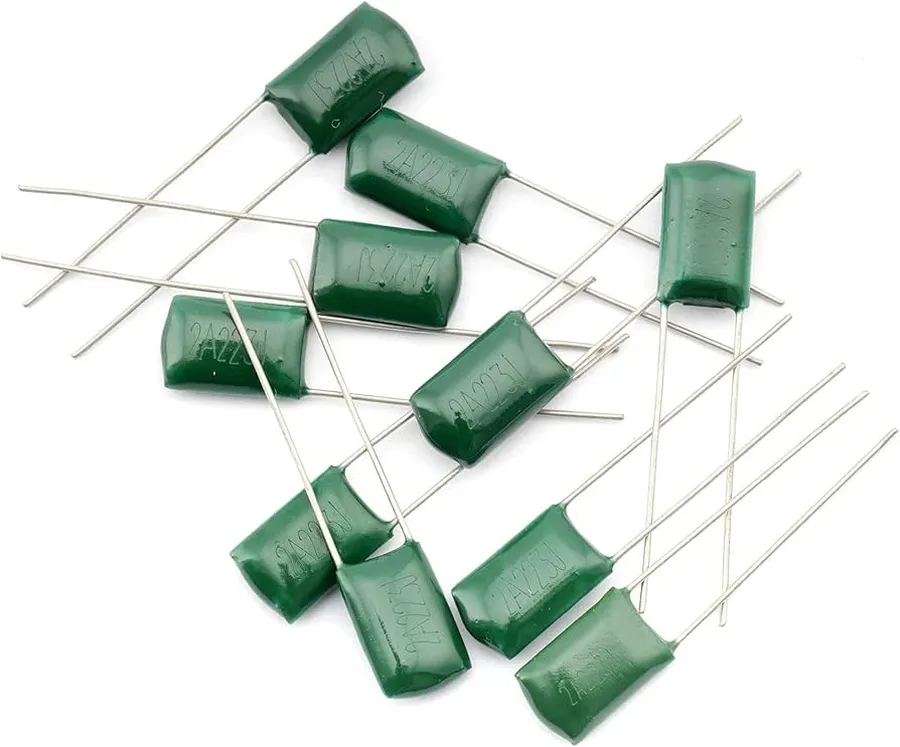
The capacitance value, measured in microfarads (µF) or nanofarads (nF), dictates the frequency at which a guitar capacitor begins to roll off high-end frequencies, significantly influencing your guitar's tone. Selecting the appropriate value is crucial for achieving your desired sonic characteristics, as it directly impacts the range and effectiveness of your tone control.
| Capacitor Value | Typical Tone Effect | Common Applications |
|---|---|---|
| 0.01µF (10nF) | Subtle high-end roll-off, bright and clear tone | Very rare in guitars, typically used for high-fidelity circuits |
| 0.022µF (22nF) | Moderate high-end roll-off, versatile for many pickup types | A very common value on guitars with humbuckers. Suitable for a wide range of musical styles. |
| 0.047µF (47nF) | Stronger high-end roll-off, darker tone | Common with single coil guitars. Used for a warmer vintage sound. |
| 0.1µF (100nF) | Aggressive high-end roll-off, very dark and muddy tone | Often used for bass guitars or when maximum tone cut is desired. |
The smaller the capacitance value (e.g., 0.022µF), the higher the frequency at which the tone control begins to attenuate, preserving more of the high frequencies when the tone pot is fully open, and providing a more subtle effect as the tone pot is turned down. Conversely, larger capacitance values (e.g., 0.1µF) start filtering lower frequencies, resulting in a more dramatic darkening of the tone when the tone pot is engaged.
For instance, a 0.022µF capacitor is often favored for its versatility and is commonly used with humbucker pickups, offering a balanced tonal adjustment suitable for diverse musical styles. A 0.047µF capacitor, on the other hand, is frequently used with single-coil pickups to achieve a warmer vintage tone by rolling off more high frequencies, giving a smoother and less harsh sound. The 0.1µF cap will provide a very dark tone and is rarely used in guitars.
Ultimately, the ideal capacitor value is subjective and depends on your guitar's pickups, the desired tonal output, and the genre of music you play. Experimenting with different capacitor values can be a valuable way to fine-tune your instrument's tone and unlock its full potential.
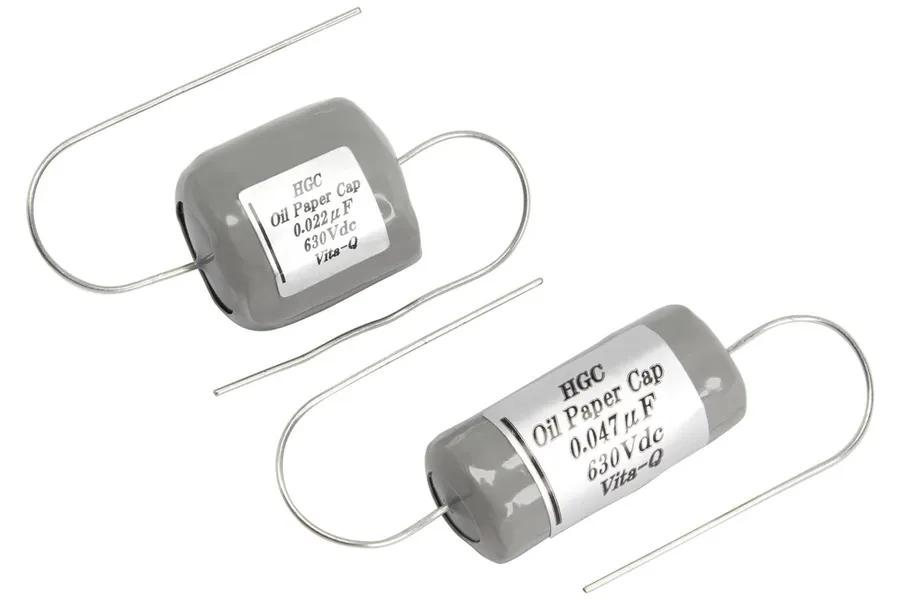
The mystique surrounding vintage paper-in-oil (PIO) capacitors in guitar circuits often sparks debate. While lauded by some for their supposedly superior tonal qualities, a rigorous examination reveals a complex reality. This section contrasts PIO capacitors with modern alternatives, analyzing their construction, performance characteristics, and the validity of their perceived advantages.
| Feature | Paper-in-Oil (PIO) | Modern Capacitors (e.g., Polypropylene, Ceramic) |
|---|---|---|
| Construction | Paper dielectric impregnated with oil, metal foil electrodes | Various dielectrics (e.g., polypropylene film, ceramic), metal electrodes |
| Tolerance | Generally wider tolerance range, values may drift over time | Tighter tolerance, more stable values over time |
| ESR (Equivalent Series Resistance) | Typically higher ESR, affects signal dampening | Typically lower ESR, less signal dampening |
| Aging | Subject to aging, oil can dry out, altering properties | Generally more stable over time, less prone to degradation |
| Cost | Significantly more expensive due to materials and manufacturing processes | More cost-effective due to modern materials and manufacturing |
| Perceived Tone | Often described as 'warmer', 'smoother' tone due to higher ESR and tolerance | Typically considered to have a more 'transparent' tone |
| Availability | Limited availability, often found in vintage and boutique components | Readily available |
The argument for PIO capacitors often centers on subjective experiences of 'warmth' or 'smoothness' in tone. This can be attributed, in part, to their higher Equivalent Series Resistance (ESR) and wider tolerance range, which subtly alter the frequency response compared to modern capacitors with tighter tolerances and lower ESR. The oil in PIO capacitors can also dry out over time, changing the capacitor's value and potentially influencing the tone further.
However, controlled measurements often reveal that these sonic differences are often subtle, and can be difficult to discern by ear in blind listening tests. The perceived advantage may also be influenced by the placebo effect and the preference for vintage components. Modern capacitors, particularly polypropylene film capacitors, offer excellent stability, low ESR, and high precision, making them a reliable and cost-effective choice.
In conclusion, while PIO capacitors carry a certain allure and a legacy of use in classic guitars, modern capacitor technology provides high-performance, stable, and more affordable alternatives. The choice between PIO and modern capacitors often comes down to personal preference and budget, rather than a demonstrably superior tonal output of one over the other. A thorough evaluation of the technical specifications of each, coupled with practical listening, allows the discerning musician to make an informed decision.
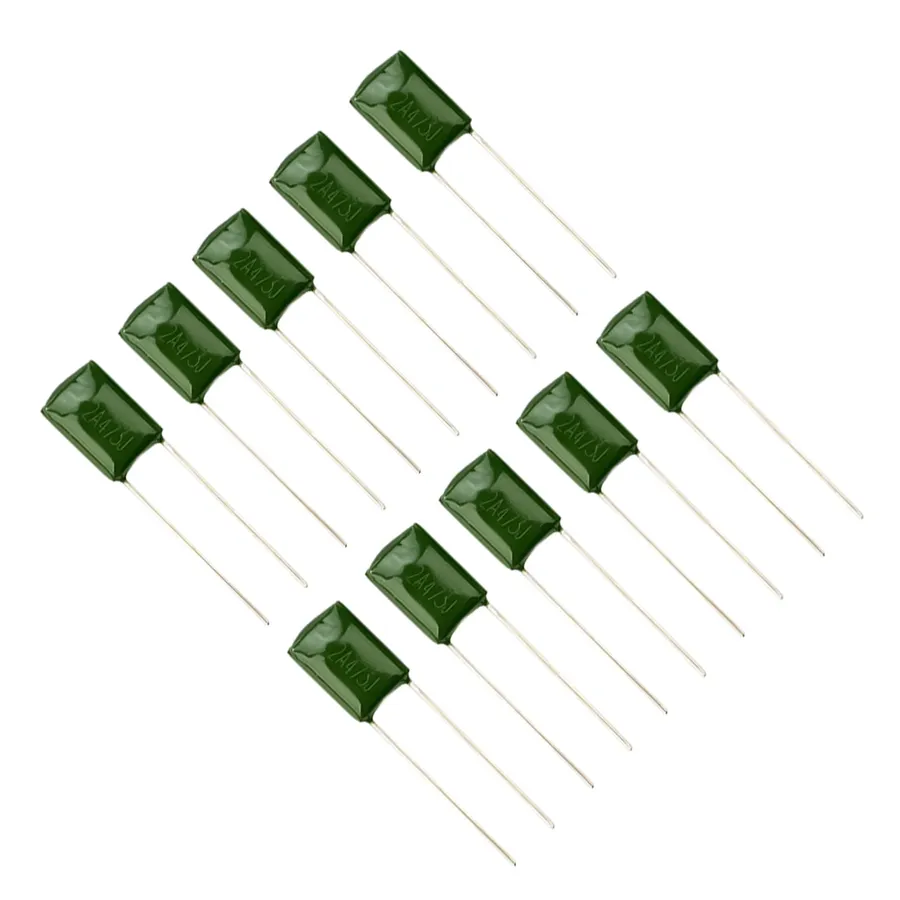
Selecting the appropriate guitar capacitor is crucial for shaping your instrument's tone. The optimal choice depends on the desired sound, the guitar type, and the specific pickups installed. This section provides practical guidance to navigate these factors effectively.
| Capacitor Type | Typical Applications | Sonic Characteristics | Considerations |
|---|---|---|---|
| Ceramic | Budget-friendly guitars, general tone control. | Bright, clear, can sound harsh at extreme settings. | Cost-effective option but may not provide the most nuanced tone shaping. |
| Paper-in-Oil (PIO) | Vintage-style guitars, warmer tones. | Warm, smooth, often considered 'musical' by some players. | Can be more expensive and require larger physical space; subject to some variability. |
| Polypropylene | Modern guitars, precise tone control. | Neutral, transparent, maintains clarity across frequency range. | Known for their consistent performance, highly regarded for clean signal path. |
Here are some examples for various music genres and pickup types:
This section addresses common queries regarding guitar capacitors, providing clear and concise answers to help guitarists better understand their function and impact on tone.
Replacing a guitar capacitor, while seemingly intricate, can be a straightforward process with the right precautions and tools. This section provides a basic guide to help you confidently handle this task, whether you're a seasoned DIY enthusiast or just looking to understand the process better. Remember, safety is paramount; if you're ever unsure, consult a professional.
The interaction between guitar capacitors and pickups is crucial in shaping the overall tonal output. Different pickup types, such as single-coils and humbuckers, exhibit distinct frequency responses, and the choice of capacitor value can significantly alter their sonic characteristics. Understanding this interplay allows guitarists to fine-tune their instrument's tone to match their preferences and playing style.
| Pickup Type | Typical Frequency Response | Recommended Capacitor Values | Tonal Characteristics |
|---|---|---|---|
| Single-Coil | Bright, with pronounced high frequencies | 0.022µF to 0.047µF | A 0.022uF can roll off highs, reducing the harshness of the high frequency. A 0.047uF, has a more significant effect on the higher frequency, leading to a darker and warmer tone. A 0.047uF capacitor is often used when players want a darker tone. |
| Humbucker | Warm, with a strong mid-range and lower high frequencies | 0.01µF to 0.022µF | A lower value such as a 0.01uF can add more subtle tonal changes. A 0.022uF capacitor may result in the most significant cut in high frequencies leading to a dark or muddy tone. |
Single-coil pickups, known for their clarity and bright top-end, often benefit from slightly smaller capacitor values (e.g., 0.022µF or 0.047µF) to shape their high frequencies and avoid excessive harshness. Humbuckers, with their naturally warmer and thicker sound, may pair well with even lower values (e.g., 0.01µF to 0.022µF) to control their high-frequency content and enhance their mid-range. Ultimately, the best capacitor value will depend on the individual guitar, pickups, and desired sonic outcome.
Guitar capacitors may seem like simple components, but they play a vital role in shaping your guitar's tone. By understanding their function, the different types and values available, and how they interact with your guitar's electronics, you can unlock a vast array of tonal possibilities. From the warm, smooth roll-off of paper-in-oil caps to the consistent performance of polypropylene, the right guitar capacitor can elevate your playing and help you achieve your ideal sound, enriching your musical journey.

