LM7805 Voltage Regulator Circuit: A Comprehensive Guide
2025.02.07
In our daily lives, from charging our smartphones to powering complex robotics, stable power is essential. The LM7805 voltage regulator circuit is a workhorse in electronics, stepping down higher voltages to a steady 5V, crucial for many microcontrollers and sensors. This article delves deep into the LM7805, explaining its functionality, circuit design, and practical applications, offering you the knowledge to reliably power your electronic creations.
Understanding the LM7805 Voltage Regulator
LM7805 Voltage Regulator
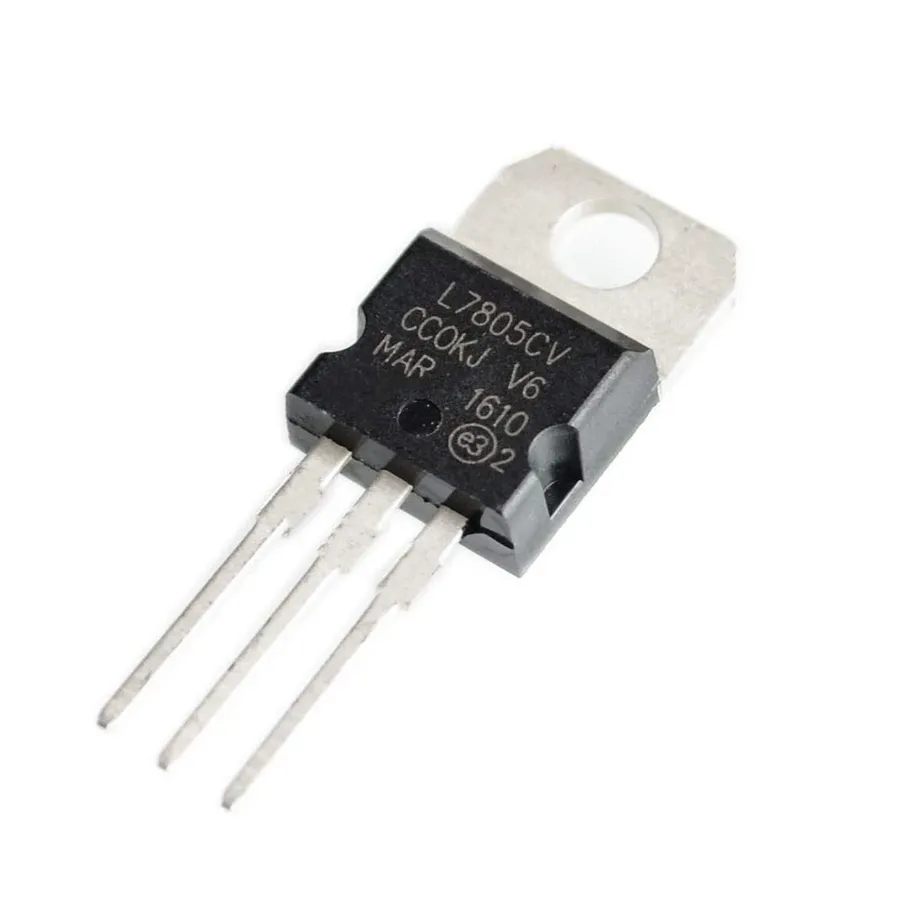
The LM7805 is a ubiquitous three-terminal linear voltage regulator, designed to provide a stable 5V DC output, even when the input voltage fluctuates. This characteristic makes it essential for powering a wide array of electronic circuits and devices requiring precise and consistent voltage levels, serving as a cornerstone in power supply design.
As a linear regulator, the LM7805 operates by dissipating excess voltage as heat to maintain a constant output voltage. This principle is in contrast to switching regulators which use electronic switches to achieve similar functionality with higher energy efficiency. The LM7805’s simplicity and reliability make it a popular choice despite its lower efficiency, especially for applications where component count and ease of use are crucial. It is commonly used in applications where the input voltage is relatively close to the output voltage, minimizing heat dissipation.
LM7805 Pinout Configuration and Functionality
LM7805 Pinout
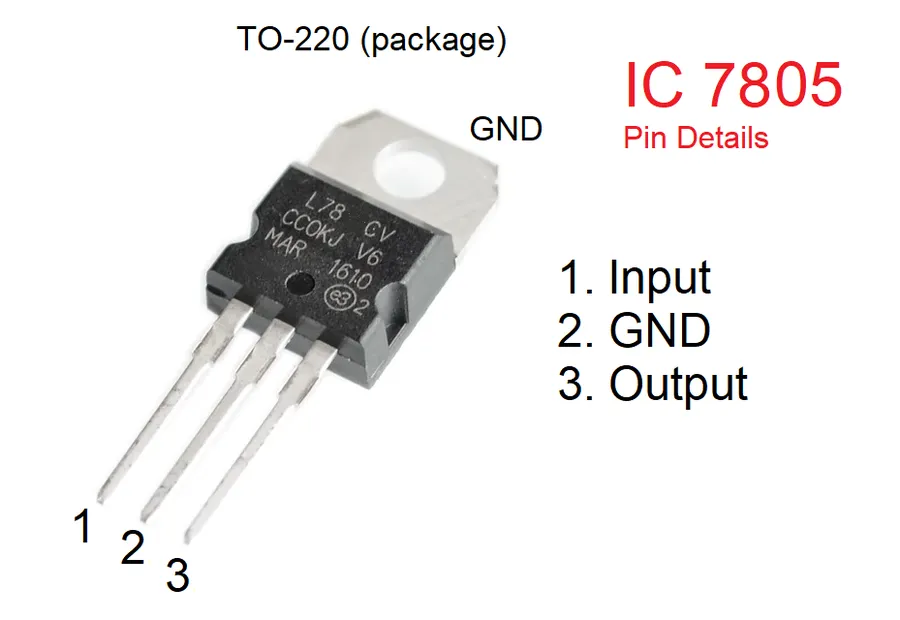
The LM7805, a staple in linear voltage regulation, is characterized by its three-terminal package, each pin performing a distinct role essential for its operation. Understanding the pinout is crucial for correct circuit design and preventing damage to both the regulator and the connected load.
Pin Number
Pin Name
Description
Function
1
Input (Vin)
The input pin is where the unregulated DC voltage is applied.
Accepts the higher, unregulated voltage source to be stepped down.
2
Ground (GND)
The ground pin serves as the reference for both input and output voltages.
Provides the common reference point for the circuit.
3
Output (Vout)
The output pin provides the regulated 5V DC voltage.
Delivers the stable 5V output to power the load.
The specific pinout is typically consistent across different manufacturers of the LM7805, but always double-check the datasheet to ensure correct connections, particularly if using a variant or package type. The physical orientation of the device also matters; the pins are typically numbered from left to right when the flat surface with the markings is facing you.
Designing a Basic LM7805 Voltage Regulator Circuit
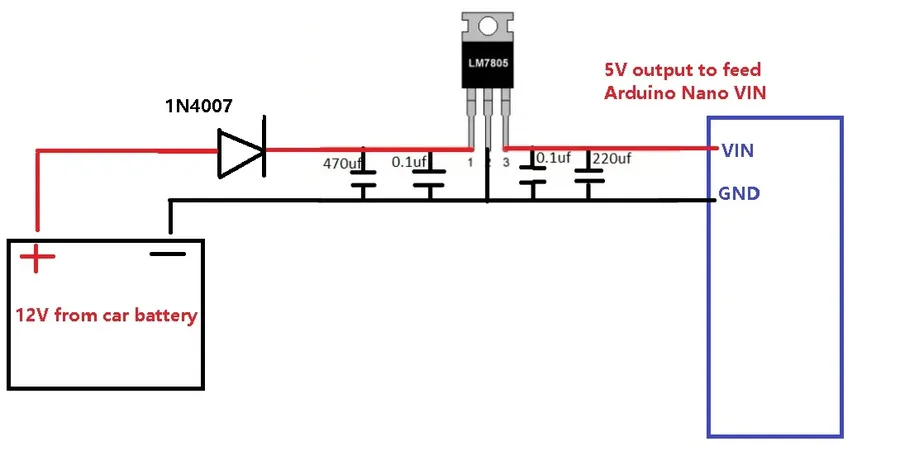
LM7805 Basic Circuit
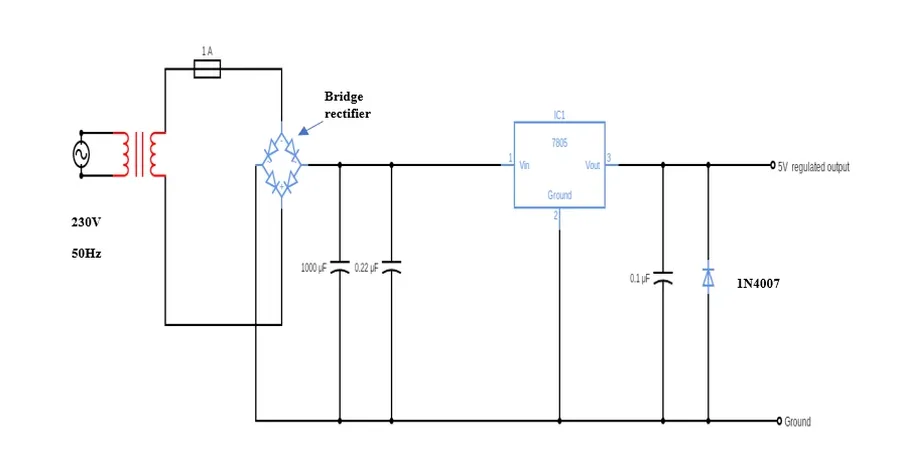
Constructing a basic LM7805 voltage regulator circuit involves connecting the regulator with appropriate input and output capacitors to ensure stable 5V output. This section provides a step-by-step approach, outlining the essential components and their roles in the circuit.
Below is a basic guide to designing a stable LM7805 circuit.
Gather Components Collect an LM7805 voltage regulator, an input capacitor (typically 0.33uF ceramic or tantalum), and an output capacitor (typically 0.1uF ceramic or tantalum). These capacitors are crucial for filtering noise and stabilizing the voltage.
Input Connection Connect the positive terminal of your input voltage source to the input pin (Pin 1) of the LM7805. Then, connect the negative terminal of the input source to the ground (Pin 2) of the LM7805.
Input Capacitor Placement Place the input capacitor as close as possible to the input pin (Pin 1) and ground pin (Pin 2) of the LM7805. This helps to reduce noise on the input voltage.
Output Connection The output pin (Pin 3) of the LM7805 is where the regulated 5V output is available. The ground of the output should be connected to the common ground of the circuit(Pin 2).
Output Capacitor Placement Position the output capacitor closely to the output pin (Pin 3) and ground (Pin 2) of the LM7805. This capacitor ensures stability and smoothes the regulated 5V output.
Verification and Testing Once the circuit is complete, use a voltmeter to measure the output voltage. You should see approximately 5V. Ensure that the input voltage is within the specified range (typically 7.3V to 35V). Also ensure that the LM7805 does not get excessively hot.
Component
Purpose
Typical Value
LM7805 Voltage Regulator
Provides regulated 5V output
Single IC
Input Capacitor
Stabilizes input voltage, reduces noise
0.33μF (ceramic or tantalum)
Output Capacitor
Stabilizes output voltage, smoothes output
0.1μF (ceramic or tantalum)
Selecting Input Voltage and Output Current Limits for LM7805
The LM7805 linear voltage regulator requires careful consideration of input voltage and output current to ensure stable operation and prevent damage. This section outlines the recommended operating ranges and the associated thermal management implications, providing practical guidance for circuit design.
Parameter
Typical Value
Notes
Input Voltage Range
7.3V to 35V
Minimum 7.3V to ensure 5V output, maximum 35V limit to prevent damage.
Output Voltage
5V ± 0.1V
Regulated output voltage, slight variations exist due to tolerances.
Output Current
Up to 1.5A
Maximum rated current, actual achievable current depends on heat dissipation.
Dropout Voltage
~2.3V
Minimum voltage difference required between input and output.
Quiescent Current
~5mA
Current consumed by the regulator itself, independent of the load.
Operating the LM7805 at the higher end of the input voltage range increases power dissipation as heat, potentially requiring a heatsink for stable operation. The output current is also directly proportional to power dissipation. For optimal performance and longevity, designers must adhere to the stated operating limits.
It is crucial to note that exceeding the specified limits of the LM7805 can lead to thermal shutdown or permanent damage. Therefore, appropriate measures for thermal management (e.g., heatsinking, airflow) and circuit design practices must be implemented.
LM7805 vs. Other Voltage Regulators
Voltage Regulators Comparison
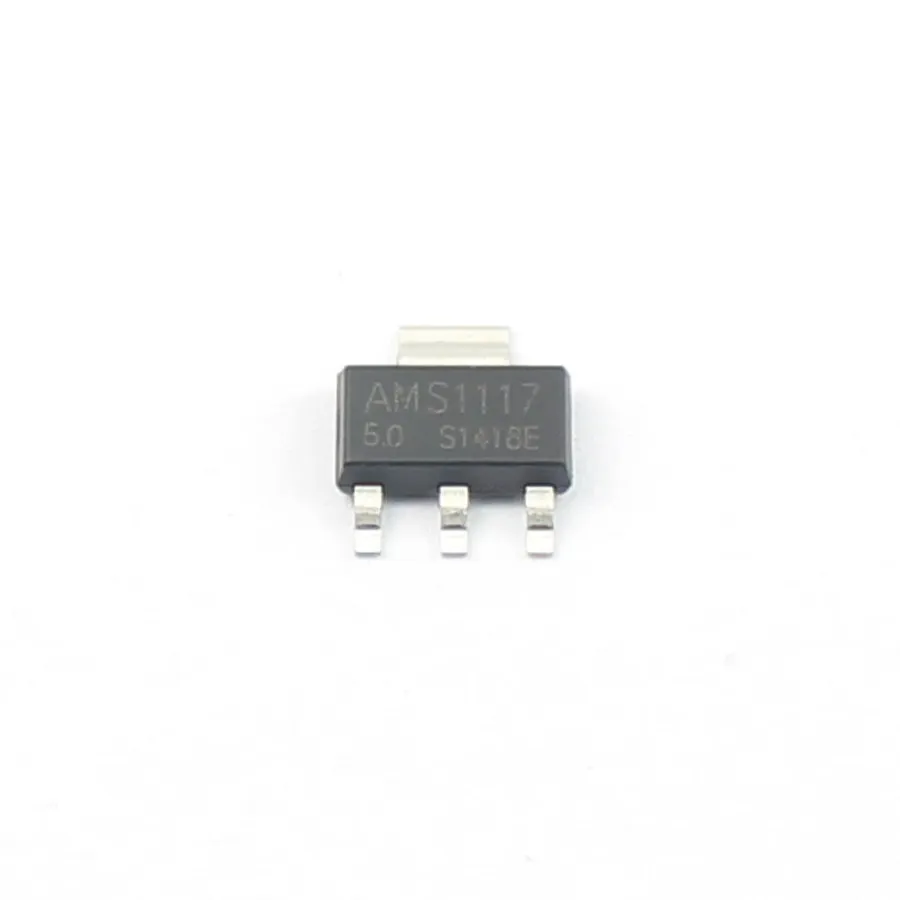
The LM7805 is a widely used linear voltage regulator, but it's crucial to understand how it stacks up against other regulators like the LM317 and switching regulators. This comparison will help in selecting the most appropriate solution for your specific power supply needs, considering factors like efficiency, flexibility, and complexity.
Feature
LM7805
LM317
Switching Regulator
Type
Fixed Linear Regulator
Adjustable Linear Regulator
Switching Regulator
Output Voltage
Fixed 5V
Adjustable (1.25V to ~37V)
Adjustable based on design
Output Current
Up to 1.5A
Up to 1.5A
Variable, often higher than linear regulators
Efficiency
Moderate, lower at higher voltage drops
Moderate, lower at higher voltage drops
High efficiency (typically 80% or more)
Heat Dissipation
Requires heatsink for higher voltage drops and currents
Requires heatsink for higher voltage drops and currents
Less heat generation; still may require heatsinking in some applications
Complexity
Simple
Simple to implement, requires external resistors to set output voltage
More complex design and component selection
Cost
Low
Low
Higher than linear regulators
Noise
Low noise
Low noise
May have higher output ripple than linear regulators
Flexibility
Limited to 5V output
Highly flexible; adjustable output
Very flexible, can handle wide input and output voltage ranges
Linear regulators like the LM7805 and LM317 work by dissipating excess voltage as heat, which makes them inefficient for large voltage differences between input and output. In contrast, switching regulators use a different mechanism to convert voltages, they store energy and regulate by switching at high frequencies. This results in much better efficiency and less heat generation making them ideal for applications with high power demands and battery powered devices, but their design is more complex and the output may contain more ripple than linear voltage regulators
LM7805 in Practical Applications: Powering Microcontrollers and Sensors
LM7805 Powering Microcontroller
The LM7805 linear voltage regulator is extensively employed in practical applications, notably for supplying a stable 5V power to microcontrollers and sensors. Its consistent output voltage is crucial for the reliable operation of these sensitive electronic components, preventing damage or malfunction due to voltage fluctuations. This section will elaborate on specific examples.
One of the most common applications for the LM7805 is in powering microcontrollers such as the Arduino. The Arduino, and many other microcontrollers, operates optimally at 5V, and the LM7805 can efficiently step down higher voltages from a power supply, battery, or adapter to a stable 5V. This ensures the microcontroller's correct function, preventing data corruption or operational errors. The following examples will detail the steps for integrating the LM7805 into these applications.
Powering an Arduino Uno with LM7805 The LM7805 is a popular choice for providing regulated 5V power to the Arduino Uno board. A typical setup includes the LM7805 with appropriate input and output capacitors. For example, if you power your system from a 9V battery, the LM7805 reduces it to a steady 5V to the Arduino.
Powering Sensors with LM7805 Many sensors require a stable 5V power supply for accurate readings. The LM7805 can be used to power sensors such as temperature sensors (e.g., DHT11), light sensors (e.g., photoresistors), and distance sensors (e.g., ultrasonic sensors). A common setup would be to provide power to the sensor using the regulated 5V output from the LM7805 to obtain precise data output.
Implementing LM7805 in Portable Devices In portable applications, such as battery-powered microcontroller projects, the LM7805 is commonly used to ensure that the microcontrollers and other components receive a steady 5V. The voltage will often be reduced from a higher voltage battery source. Note that while highly convenient and relatively easy to use, it is important to account for the heat that may be generated from the linear regulator, and incorporate a heatsink if needed to prevent overheating.
In each of these applications, the consistent 5V output of the LM7805 is instrumental for maintaining stable functionality. It's important to select appropriate capacitor values, and consider heatsinking as the LM7805 dissipates power as heat and can overheat without heat management. The thermal considerations of using the LM7805 are particularly important when dealing with higher input voltages and output currents. Careful consideration of these elements ensures the reliability of the system.
Frequently Asked Questions About the LM7805 Voltage Regulator Circuit
This section addresses common queries regarding the LM7805 voltage regulator, aiming to provide clear, concise, and technically accurate answers to enhance understanding and practical application.
How does an LM7805 voltage regulator work? The LM7805 is a linear voltage regulator. It works by maintaining a constant 5V output by dissipating excess voltage as heat. The input voltage must be higher than the desired 5V output, typically between 7.3V and 35V. Internally, it uses a pass transistor and feedback control loop to achieve this regulation, adjusting the transistor's conduction to maintain the output voltage at 5V, even with fluctuations in input voltage or load current.
Is it necessary to use capacitors with the LM7805? Yes, capacitors are generally necessary for stable operation. An input capacitor (typically 0.33uF or higher) helps to filter out noise and stabilize the input voltage. An output capacitor (typically 0.1uF or higher) helps to stabilize the output voltage and reduce transient spikes. These capacitors are crucial for minimizing oscillations and ensuring a clean, stable 5V output. Without them, the regulator may exhibit instability, noise, or reduced efficiency.
What is the purpose of using an LM7805 IC in a circuit? The LM7805’s primary purpose is to provide a stable 5V DC output from a higher, and possibly fluctuating, DC input voltage. This is critical for powering sensitive electronic components such as microcontrollers, sensors, and other digital logic circuits that require a precise and constant 5V supply to operate correctly. By ensuring a reliable voltage supply, the LM7805 prevents component damage due to voltage fluctuations and ensures system stability.
Can I use the LM7805 without a heatsink? Whether a heatsink is required depends on the input voltage and output current. The LM7805 dissipates excess voltage as heat; if the difference between the input and output voltage, and/or the output current is significant, the device will heat up considerably. A heatsink is necessary when the temperature of the LM7805 rises beyond its maximum operating temperature, typically 125°C. It is important to calculate the power dissipation, using the formula: Pd = (Vin - Vout) * Iout. If Pd results in considerable heat, a heatsink is required to protect the device from overheating.
What are the typical applications of the LM7805? The LM7805 is commonly used in various electronic circuits and projects, including powering microcontrollers like Arduino boards, providing regulated 5V supply for sensors, powering digital logic circuits, and supplying voltage to breadboard circuits. Its simplicity, low cost, and reliable performance make it an indispensable part of numerous electronic designs.
Is the LM7805 a linear or switching regulator? The LM7805 is a linear voltage regulator. Linear regulators work by dropping the excess voltage as heat. Compared to switching regulators, they are simpler to implement, have lower noise, and generate less electromagnetic interference. However, linear regulators are less efficient at higher input to output voltage differences due to this energy dissipation as heat. In contrast, switching regulators use switches to transfer energy more efficiently and have higher energy transfer. The choice of which to use is dependent on the application at hand.
What is the maximum input voltage for the LM7805? The maximum rated input voltage for the LM7805 is typically 35V. It is critical to stay below this limit to prevent damage to the regulator. Operation at or close to the maximum limit is not recommended. The difference between the input and output voltage also affects the heat generation as the regulator dissipates excess power in the form of heat; therefore, keeping input voltage low will aid efficiency and reduce the temperature.
Troubleshooting Common Issues with the LM7805 Circuit
Effective troubleshooting of LM7805 voltage regulator circuits is crucial for ensuring reliable performance. Common issues range from thermal problems and incorrect wiring to voltage instability and can significantly impact the functionality of the circuits they power. Understanding these potential pitfalls and how to address them is essential for any design incorporating this regulator.
Overheating The LM7805, being a linear regulator, dissipates excess voltage as heat. If the input-output voltage difference and/or output current is too high, the device can overheat, potentially leading to thermal shutdown or permanent damage. Mitigation involves using a heat sink, selecting a lower input voltage, or considering a switching regulator for improved efficiency.
Incorrect Pin Configuration Connecting the input, output, or ground pins incorrectly can damage the LM7805 and/or the connected circuitry. Always verify the pinout using the datasheet and double-check the connections in the circuit before applying power. The correct pinout, when facing the device with the label readable, is input, ground, output, from left to right.
Voltage Fluctuations or Instability Unstable output voltage is often caused by inadequate input or output capacitance. Use capacitors of appropriate values (typically 0.33uF at the input and 0.1uF at the output as close to the regulator pins as possible to ensure stability by suppressing voltage spikes and transient responses. Also ensure the input power is relatively stable and within specifications
No Output Voltage A complete lack of output voltage typically results from a faulty LM7805, incorrect input voltage, broken wires, or short circuits. Carefully test all wiring and components; when in doubt, test the voltage at the input and output pins and compare with the datasheet specs. If the input voltage is correct and the output is 0V with no shorts or bad connections, replace the regulator.
Excessive Input Voltage Exceeding the maximum input voltage rating will likely damage the LM7805. Ensure that the input voltage source is within the range specified in the datasheet (typically up to 35V). If the source is outside of this range, using a pre-regulator or voltage divider maybe needed to bring the input voltage into the required range.
Insufficient Output Current If the load connected to the output draws too much current than the device can supply, the voltage can drop, and the device may overheat. Ensure the load does not exceed the 1A rating or that suitable current limiting protection is in place.
Oscillations Under some conditions, the LM7805 may oscillate, indicated by a noisy output voltage. This is usually due to layout issues or insufficient capacitance. Ensure proper capacitor placement, and use a stable power supply.
Advanced LM7805 Circuit Designs and Modifications
LM7805 Advanced Circuit
While the basic LM7805 circuit is suitable for many applications, advanced designs and modifications can significantly enhance its performance, efficiency, and applicability for specialized use cases. These techniques often involve adding external components or implementing more complex circuit topologies to overcome inherent limitations of the linear regulator.
Increasing Output Current Capability To exceed the LM7805's typical 1.5A current limit, external pass transistors (like a BJT or MOSFET) can be used in parallel with the regulator. This setup allows the transistor to handle the bulk of the load current, while the LM7805 provides voltage regulation and current limiting for the base/gate drive. This method requires careful selection of the external transistor to avoid thermal overload and ensure reliable current sharing.
Adjustable Output Voltage Modification Though designed for fixed 5V output, the LM7805 can be modified to provide adjustable output. This is done by using a voltage divider and feedback network between the output and the ground pin. This method effectively raises the regulator’s ground reference, increasing the output voltage. This design is often used when a specific voltage that is not 5V is required, but the output range is limited by the design. This method requires careful consideration of the feedback components.
Adding a Heat Sink When operating at high input-to-output voltage differentials or high current loads, the LM7805 can generate a significant amount of heat due to its linear operation. Adding a heat sink is often the most effective way to improve performance by lowering the device's operating temperature, ensuring the junction temperature is within its operational limits. This improves reliability, and prevents thermal overload.
Active Cooling Solutions In addition to heat sinks, active cooling solutions such as fans can be added to further reduce the temperature and improve device operation and performance under high heat loads. These are especially important when using devices with smaller heatsinks, or high ambient temperatures. This also increases the lifetime of the device.
Reducing Dropout Voltage The LM7805 requires a minimum voltage differential (dropout voltage) between input and output to regulate correctly. By using a low-dropout (LDO) regulator in conjunction with the LM7805 or implementing additional circuitry that lowers the input voltage of the LM7805, the voltage can be better used while lowering the power being used as heat. This can improve efficiency and reduce wasted energy.
The LM7805 voltage regulator circuit stands as a testament to the importance of reliable power in electronics. By understanding its workings and incorporating best practices in circuit design, you can ensure a stable 5V supply for various projects. Whether powering a basic LED or a complex microcontroller, the LM7805 remains a fundamental component, and its proper use is essential for creating robust and reliable electronic systems. Remember, continuous learning and exploration are the keys to mastering the world of electronics, so always seek to refine and expand your skills.