In the world of electronics, resistors and capacitors are the unsung heroes, much like the traffic lights and reservoirs that manage the flow of our daily lives. Resistors control the flow of electrical current, much like a narrow road limiting the number of cars, while capacitors temporarily store energy, akin to a water reservoir. This article explores the differences and applications of these key components, unraveling their fundamental roles in modern technology.
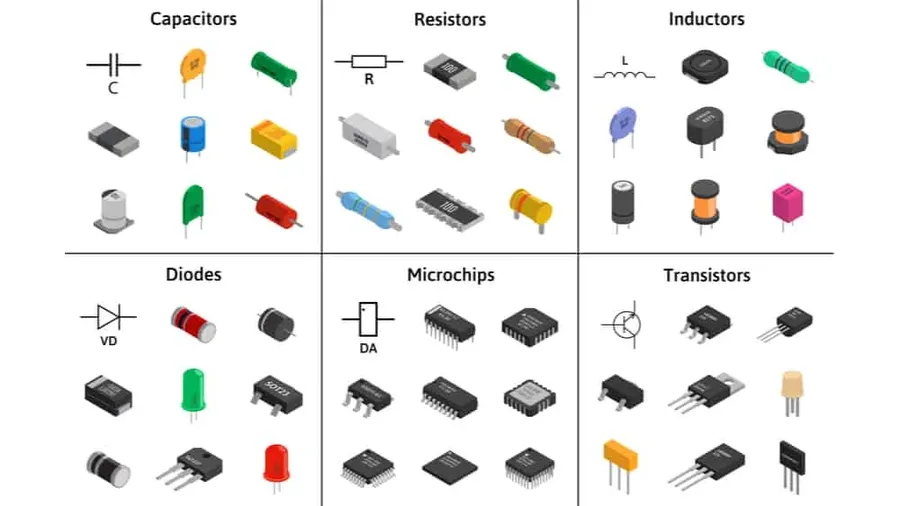
Resistors and capacitors are fundamental passive electronic components that perform distinctly different functions in electrical circuits. Resistors, characterized by their resistance, impede the flow of electrical current, converting electrical energy into heat, while capacitors, characterized by their capacitance, store electrical energy in an electric field, acting as temporary energy reservoirs. Understanding their contrasting roles is crucial for effective circuit design and analysis.
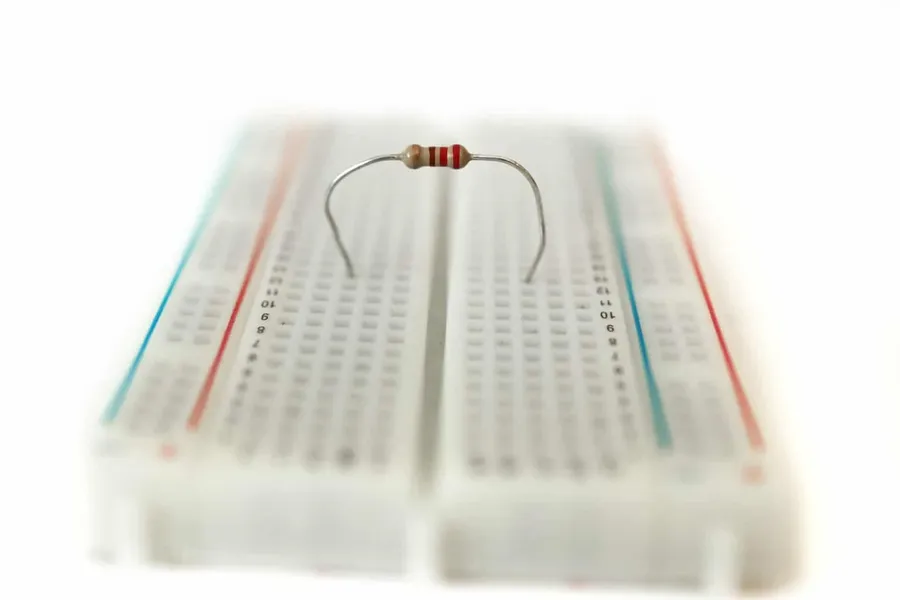
Resistors are fundamental electronic components designed to impede the flow of electrical current within a circuit. This opposition to current flow is achieved by converting electrical energy into heat through a process known as Joule heating. The primary function of a resistor is to regulate and limit the current, ensuring that other sensitive components are not overwhelmed and circuits operate safely and efficiently. Resistors are ubiquitous in virtually all electronic circuits and their precise behavior is critical to circuit functionality.
The key characteristic of a resistor is its resistance, measured in ohms (Ω). A higher resistance value means the resistor will impede current flow more strongly than a resistor with a lower resistance. The relationship between voltage (V), current (I), and resistance (R) is defined by Ohm's Law: V = IR.
| Parameter | Description | Units |
|---|---|---|
| Resistance | The measure of a resistor's opposition to current flow. | Ohms (Ω) |
| Power Rating | The maximum power a resistor can dissipate without being damaged. | Watts (W) |
| Tolerance | The percentage of variation in the actual resistance from its nominal value. | Percent (%) |
| Temperature Coefficient | The amount the resistance changes per degree Celsius change in temperature. | ppm/°C |
Resistors are available in a wide variety of types, each with specific characteristics and suitable for different applications. The most common types include:
Capacitors are fundamental electronic components that store electrical energy by accumulating electric charge on two conductive plates separated by a dielectric material. This storage capacity, measured in farads (F), dictates how much charge a capacitor can hold at a given voltage. Unlike resistors that dissipate energy, capacitors temporarily hold and release energy, making them crucial for various circuit functions.
The operational principle of a capacitor is rooted in electrostatics, where an applied voltage causes electrons to accumulate on one plate while an equal number of electrons are repelled from the other, creating an electric field in the dielectric. This stored energy can then be discharged, providing a current surge or maintaining a voltage level within a circuit.
| Capacitor Type | Typical Capacitance Range | Key Characteristics | Common Applications |
|---|---|---|---|
| Ceramic | 1 pF to 100 µF | Small, non-polarized, low cost | General purpose, bypass, coupling |
| Electrolytic | 0.1 µF to 100,000 µF | Polarized, high capacitance, small size | Power supply filtering, decoupling |
| Tantalum | 0.1 µF to 1000 µF | Polarized, stable, reliable | High reliability, mobile devices |
| Film | 1 nF to 100 µF | Low ESR, stable, non-polarized | Audio, precision applications |
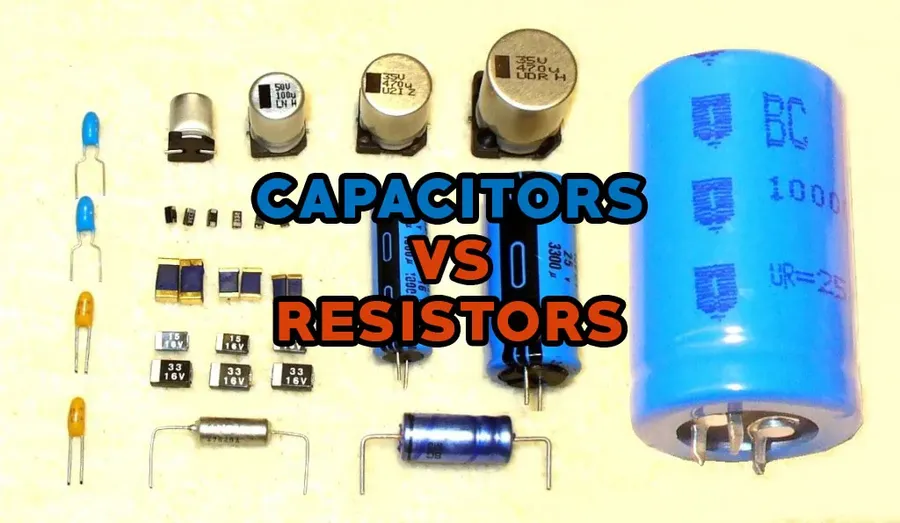
Resistors and capacitors, while fundamental passive components in electronic circuits, exhibit distinctly different behaviors and serve different purposes. Resistors primarily control current flow by impeding it, whereas capacitors store electrical energy by accumulating charge. The contrasting functionalities dictate their usage in diverse applications. Understanding these differences is crucial for effective circuit design.
| Feature | Resistor | Capacitor |
|---|---|---|
| Primary Function | Opposes current flow, converts electrical energy to heat. | Stores electrical energy in an electric field. |
| Behavior in DC Circuits | Reduces current flow; constant resistance. | Blocks DC current after charging to the source voltage. |
| Behavior in AC Circuits | Impedes current, has same resistance at all frequencies (ideal). | Offers impedance that decreases with increasing frequency; blocks low frequencies. |
| Energy Handling | Dissipates energy as heat. | Stores and releases energy. |
| Parameter | Resistance (ohms, Ω) | Capacitance (farads, F) |
| Typical Applications | Current limiting, voltage division, signal biasing, pull-up/pull-down | Energy storage, filtering, timing, decoupling, signal coupling |
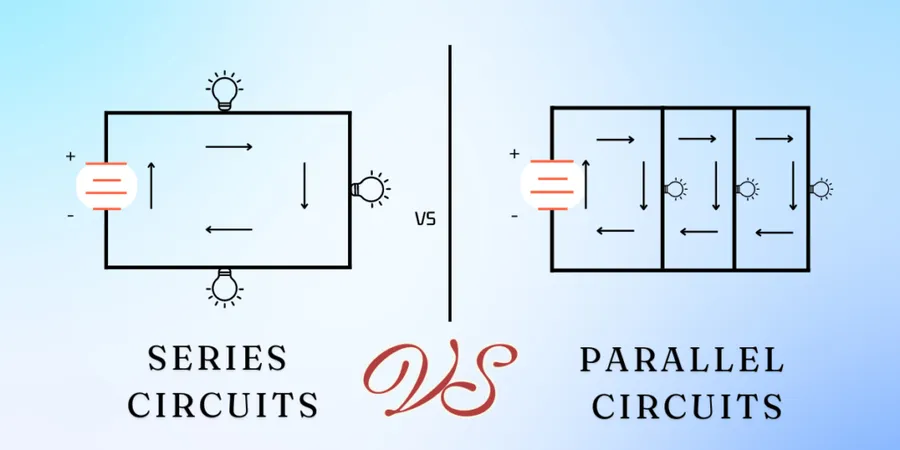
The behavior of resistors and capacitors in electrical circuits changes significantly depending on whether they are connected in series or parallel configurations. Understanding these differences is crucial for effective circuit design and analysis. In series circuits, components are connected end-to-end, forming a single path for current flow, while in parallel circuits, components are connected across each other, providing multiple paths for current.
| Property | Resistors in Series | Resistors in Parallel | Capacitors in Series | Capacitors in Parallel |
|---|---|---|---|---|
| Current | Same through each resistor | Divides among branches | Same through each capacitor | Divides among branches |
| Voltage | Divides across each resistor | Same across each resistor | Divides across each capacitor | Same across each capacitor |
| Equivalent Value | R_total = R1 + R2 + ... + Rn | 1/R_total = 1/R1 + 1/R2 + ... + 1/Rn | 1/C_total = 1/C1 + 1/C2 + ... + 1/Cn | C_total = C1 + C2 + ... + Cn |
| Total Impedance | Z_total = R1+R2+... | 1/Z_total = 1/Z1+1/Z2+... | 1/Z_total = 1/Z1+1/Z2+... | Z_total = Z1+Z2+... |
Note: For capacitors, the equivalent capacitance calculation is reversed compared to resistors. Series capacitors reduce total capacitance, while parallel capacitors increase it. Total impedance of capacitors in both series and parallel connection is calculated similarly as resistors, where Zc is the impedance of one capacitor.
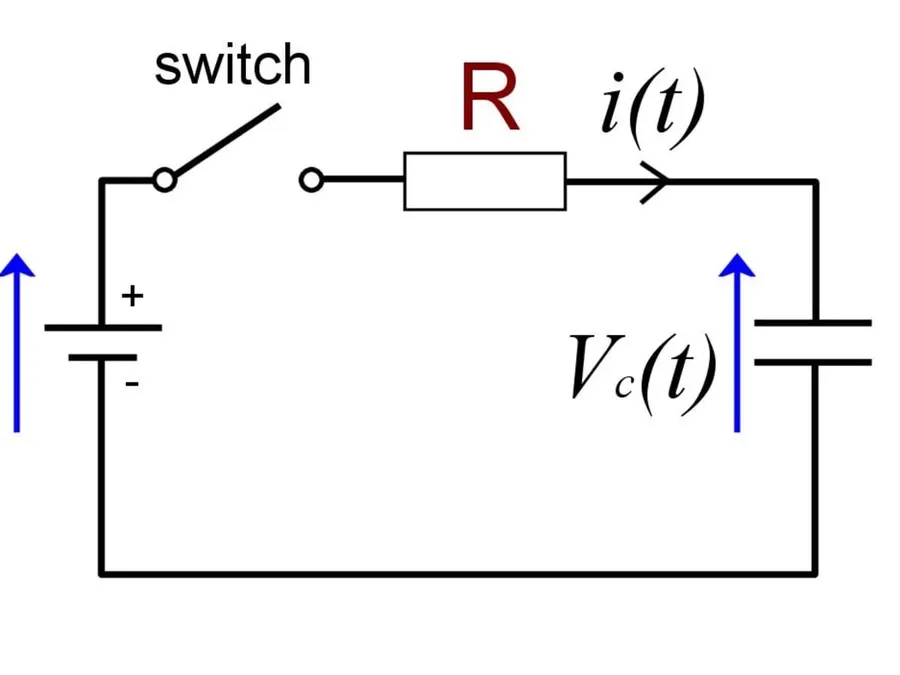
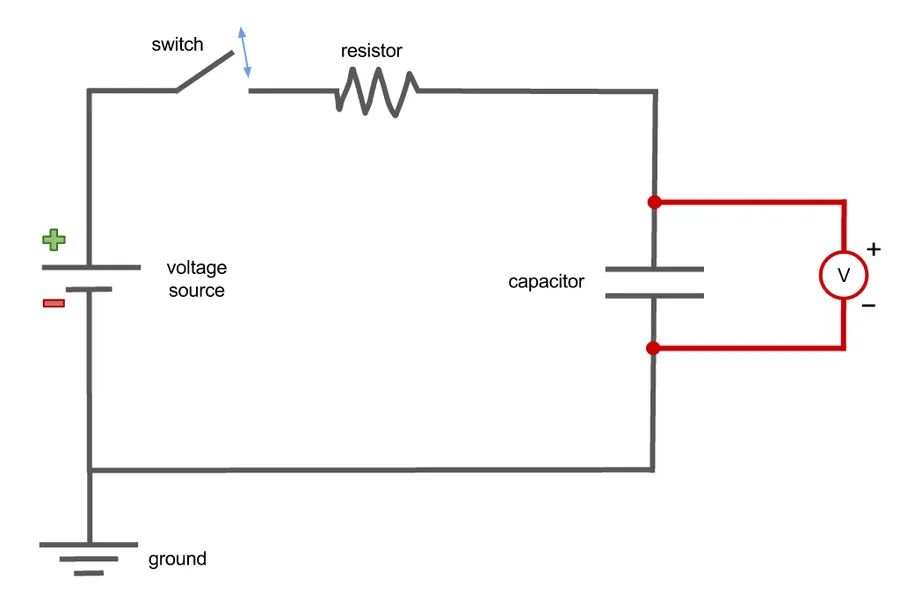
The combination of resistors and capacitors in circuits, known as RC circuits, introduces time-dependent behavior, enabling functionalities such as energy storage, filtering, and timing. These circuits are fundamental to various electronic applications, exhibiting dynamic responses due to the charging and discharging characteristics of capacitors in conjunction with the current-limiting behavior of resistors.
A key concept in understanding RC circuits is the RC time constant (τ), calculated as the product of resistance (R) and capacitance (C) (τ = RC). This value represents the time it takes for the capacitor to charge to approximately 63.2% of its maximum voltage or discharge to approximately 36.8% of its initial voltage. The time constant dictates the transient response of the circuit, making it a critical factor in circuit design.
RC circuits are utilized for both low-pass and high-pass filtering, depending on the circuit configuration. In a low-pass filter, the output voltage is taken across the capacitor, allowing low-frequency signals to pass while attenuating high frequencies. Conversely, a high-pass filter takes the output across the resistor, permitting high-frequency signals to pass and blocking low frequencies.
| Characteristic | Charging | Discharging |
|---|---|---|
| Capacitor Voltage | Increases exponentially towards source voltage | Decreases exponentially towards zero |
| Current | Decreases exponentially towards zero | Decreases exponentially towards zero |
| Time Constant (τ = RC) | Time taken to charge to ~63.2% of full voltage | Time taken to discharge to ~36.8% of initial voltage |
This section addresses common queries regarding resistors and capacitors, clarifying their individual roles and interactions within electrical circuits. Understanding these fundamental components is crucial for effective circuit design and analysis.
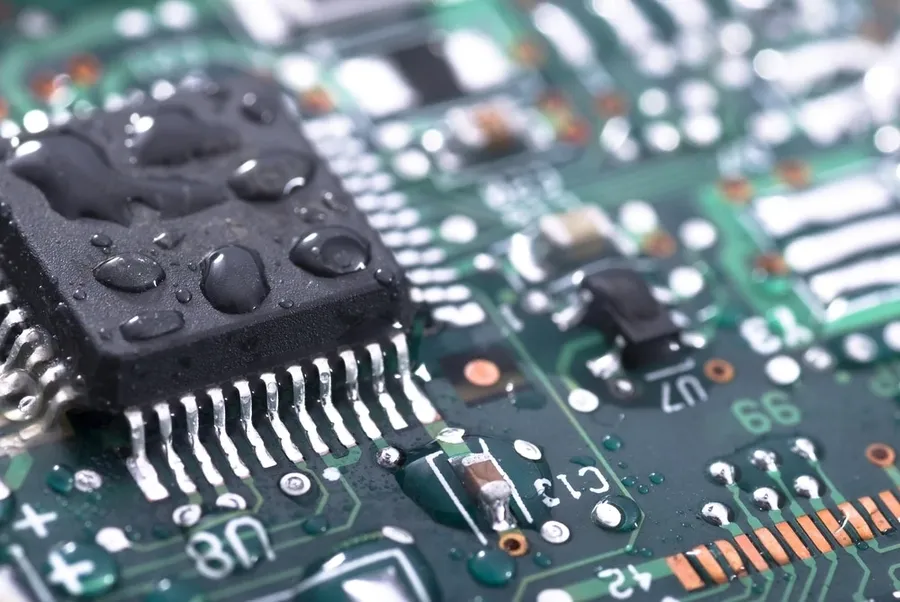
Resistors and capacitors are fundamental passive components in electronics, underpinning a vast array of applications across diverse fields. Their distinct yet complementary properties enable them to perform crucial roles in power management, signal processing, timing, and sensing circuits. Understanding how these components are leveraged in real-world scenarios is essential for practical electronic design.
Selecting the appropriate resistor and capacitor values is crucial for ensuring optimal circuit performance and reliability. This involves considering several key parameters including power rating, voltage rating, tolerance, and temperature stability. Incorrect component selection can lead to circuit malfunction, reduced lifespan, or even catastrophic failure.
| Parameter | Resistor Considerations | Capacitor Considerations |
|---|---|---|
| Power Rating | Must be greater than the anticipated power dissipation to avoid overheating and failure. | Power rating is less critical but important for high-frequency circuits, where ESR (Equivalent Series Resistance) becomes a concern and can cause heat. |
| Voltage Rating | Must withstand the maximum voltage expected across the resistor to prevent breakdown or damage. | Must withstand the maximum voltage expected across the capacitor. Exceeding this can lead to dielectric breakdown and failure. |
| Tolerance | Indicates the acceptable variation from the nominal resistance value. Lower tolerance means higher precision. | Indicates the acceptable variation from the nominal capacitance value. Tighter tolerance results in more predictable circuit behavior. |
| Temperature Coefficient | Describes how the resistance changes with temperature. Critical for circuits operating in varying temperature environments. | Indicates the capacitance change with temperature. Some capacitors have very stable capacitance over temperature while others will vary significantly. |
| Size/Package | Resistors come in various package sizes (e.g., 0603, 0805, 1206) which affect power rating and physical size. | Capacitors also have different package sizes and dimensions, affecting mounting density, ESR and current handling capability. |
| Frequency Response | Resistors are generally frequency independent but parasitic inductance may cause problems at very high frequency. | Capacitors have a frequency response limited by the Equivalent Series Inductance (ESL), important at high frequencies, some capacitors may exhibit resonance. |
| Type | Different materials and constructions (carbon, metal film, wirewound) provide varying characteristics. Use film types for precision applications. | Different dielectric materials (ceramic, electrolytic, tantalum) offer different performance characteristics and suitability for applications. Select appropriate type based on application requirements. |
Resistors and capacitors, though different in their function, are both critical for electrical circuit design. Resistors regulate current flow while capacitors manage charge storage and discharge. Understanding these roles, along with their behavior in different circuit configurations, enables us to harness the power of these humble components to bring about the innovative world we live in today. Their integration into complex systems showcases how these fundamental building blocks contribute to technological advancements across various fields.

