In the vast universe of electronics, the humble 680 ohm resistor plays a vital role, often working silently behind the scenes. Like the essential yet understated 680 ohm resistor in a circuit, many societal structures function unseen but are fundamentally important. This article delves into the specifics of the 680 ohm resistor, covering its types, color coding, applications, and more, helping you understand this essential electronic component for all your projects.

A 680 ohm resistor is a fundamental electronic component that opposes the flow of electrical current, exhibiting a resistance value of 680 ohms. This passive, two-terminal device is crucial in circuit design for controlling current and voltage levels, and is available in various forms tailored for diverse applications.
The core function of a 680 ohm resistor is to limit current flow in a circuit according to Ohm's Law (V=IR). By providing a known resistance, these devices enable designers to precisely manage electrical signals, protecting components from overcurrent, generating heat, and creating voltage dividers.
| Resistor Type | Construction | Typical Applications | Advantages | Disadvantages |
|---|---|---|---|---|
| Carbon Film | A thin carbon film deposited on an insulating substrate. | General-purpose circuits, low-power applications. | Cost-effective, widely available. | Higher temperature coefficient, less precise tolerance. |
| Metal Film | A thin metal alloy film deposited on an insulating substrate. | High-precision circuits, low-noise applications. | Lower temperature coefficient, higher tolerance. | More expensive than carbon film. |
| Wire-wound | A length of resistance wire wound around a ceramic core. | High-power circuits, current sensing applications. | High power rating, very stable. | Bulky, higher cost. |
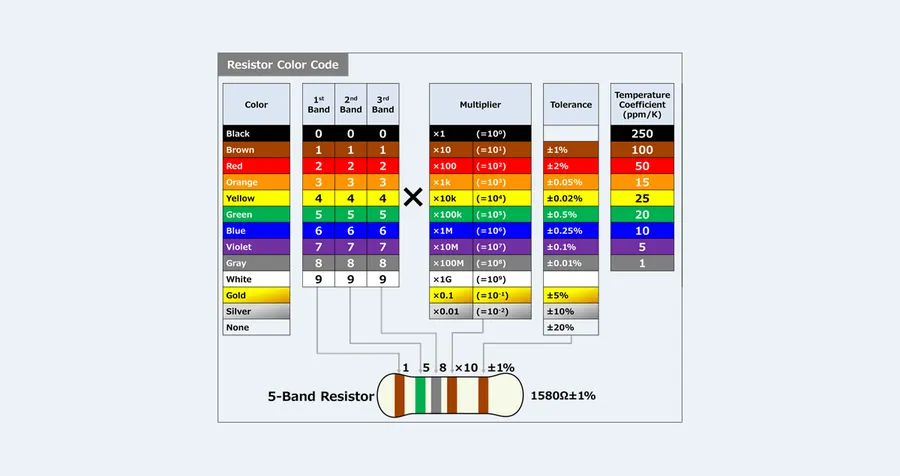
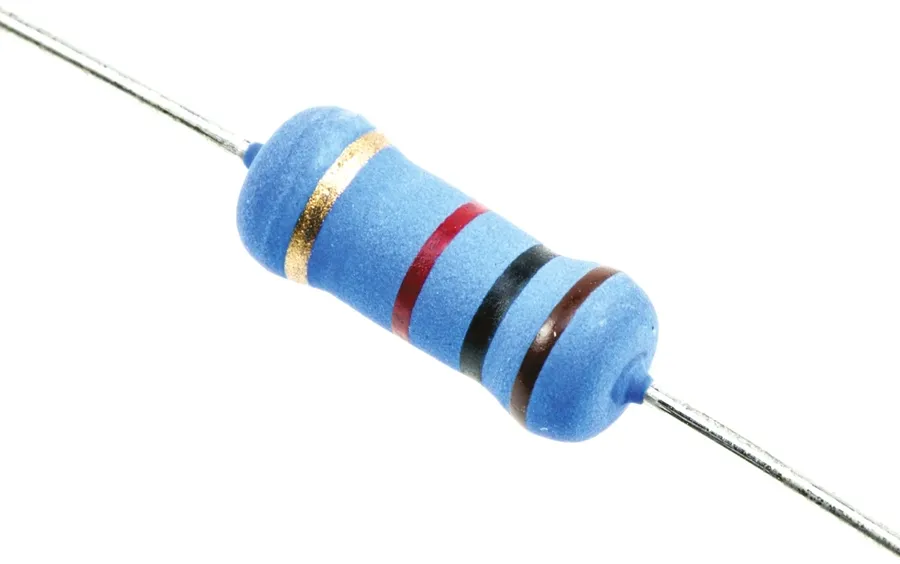
The color code on a 680 ohm resistor is essential for quick and accurate identification. This system uses colored bands to represent the resistance value and tolerance, allowing for easy determination of a resistor's properties without the need for a multimeter. For a 680 ohm resistor, the standard four-band color code is typically **Blue, Gray, Brown, Gold**
| Band | Color | Digit/Multiplier/Tolerance | Meaning |
|---|---|---|---|
| 1st Band | Blue | 6 | First Digit |
| 2nd Band | Gray | 8 | Second Digit |
| 3rd Band | Brown | 10^1 | Multiplier |
| 4th Band | Gold | ±5% | Tolerance |
The first two bands (Blue and Gray) represent the digits 6 and 8 respectively. The third band (Brown) acts as a multiplier of 10^1. Therefore, the value of the resistor is calculated as 68 * 10^1, which equals 680 ohms. The fourth band (Gold) indicates a tolerance of ±5%, meaning the actual resistance value can vary by 5% above or below the stated 680 ohms. Understanding this coding system is crucial for correctly identifying and using resistors in any electronic circuit.
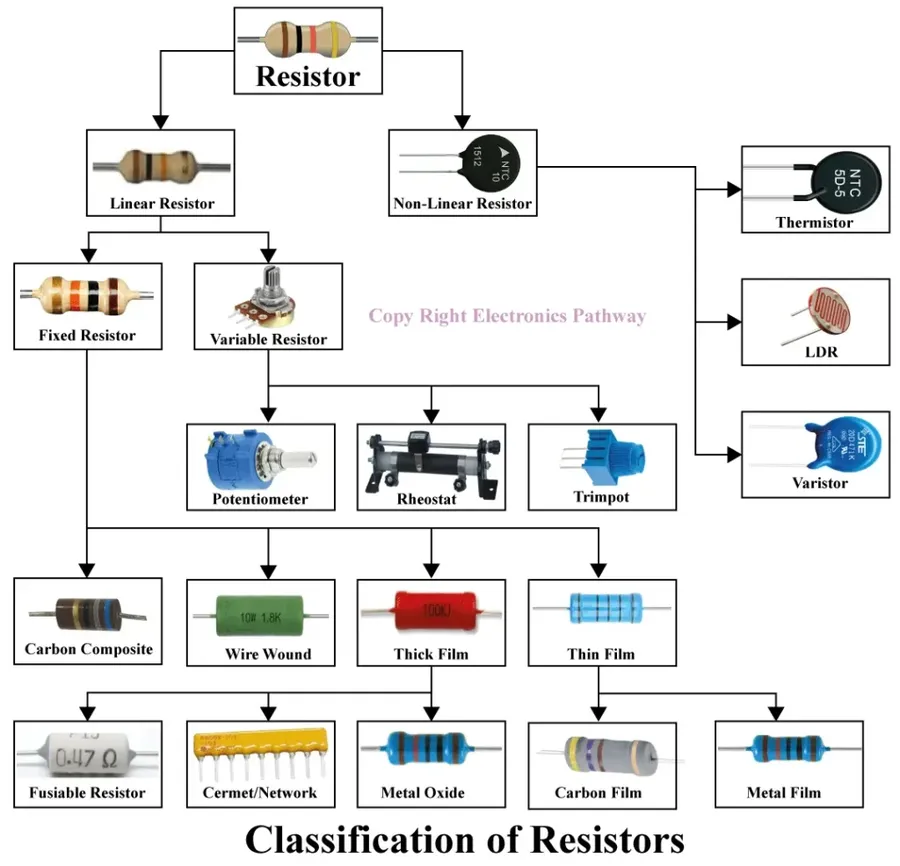
680 Ohm resistors are available in various forms, each tailored to specific applications and performance requirements. These variations include different power ratings, construction materials, and mounting styles, offering a broad range of options for circuit designers. Selecting the appropriate type is crucial for ensuring circuit reliability and optimal performance. This section details the key differences between these types and their suitability for diverse electronic applications.
| Resistor Type | Power Rating | Construction | Mounting | Applications | Advantages | Disadvantages |
|---|---|---|---|---|---|---|
| Carbon Film | 1/8W to 2W | Carbon film deposited on a ceramic substrate | Through-hole | General-purpose applications, low-cost circuits | Low cost, widely available | Higher temperature coefficient, less precise |
| Metal Film | 1/8W to 1W | Thin metal film deposited on a ceramic substrate | Through-hole | Precision circuits, audio equipment, higher accuracy needs | Lower temperature coefficient, higher precision, lower noise | More expensive than carbon film |
| Wire-wound | 1W to 10W+ | Resistance wire wound around a ceramic or fiberglass core | Through-hole | High power applications, current sensing, power supplies | High power handling, very precise at high resistance values | Bulky, can be inductive |
| Surface Mount (SMD) | 1/16W to 1W | Thick or thin film on ceramic substrate | Surface mount | Compact designs, portable electronics, automated assembly | Small size, suitable for high-density boards | Requires specialized soldering techniques |
| 1/4W | 1/4 Watt | Various (typically Carbon or Metal Film) | Through-hole | General low-power applications | Common, widely available | Lower power handling capacity |
| 1/2W | 1/2 Watt | Various (typically Carbon or Metal Film) | Through-hole | Medium low-power applications | Higher power handling than 1/4W | Larger size compared to 1/4W |
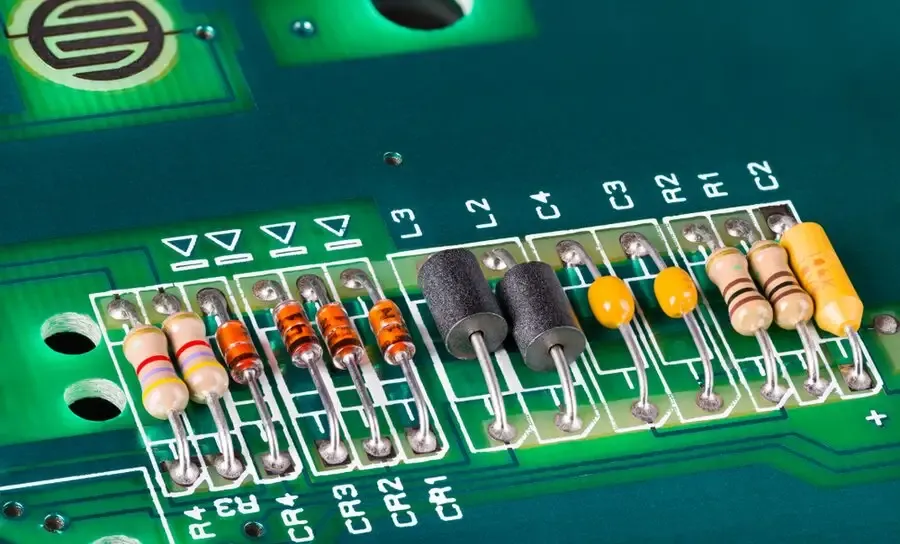
The 680 ohm resistor, a fundamental passive component, plays a crucial role in a wide array of electronic circuits. Its primary function is to impede current flow, and this property is leveraged in numerous applications, from basic current control to complex signal processing. This section will explore several practical applications, highlighting the versatility of this essential component.
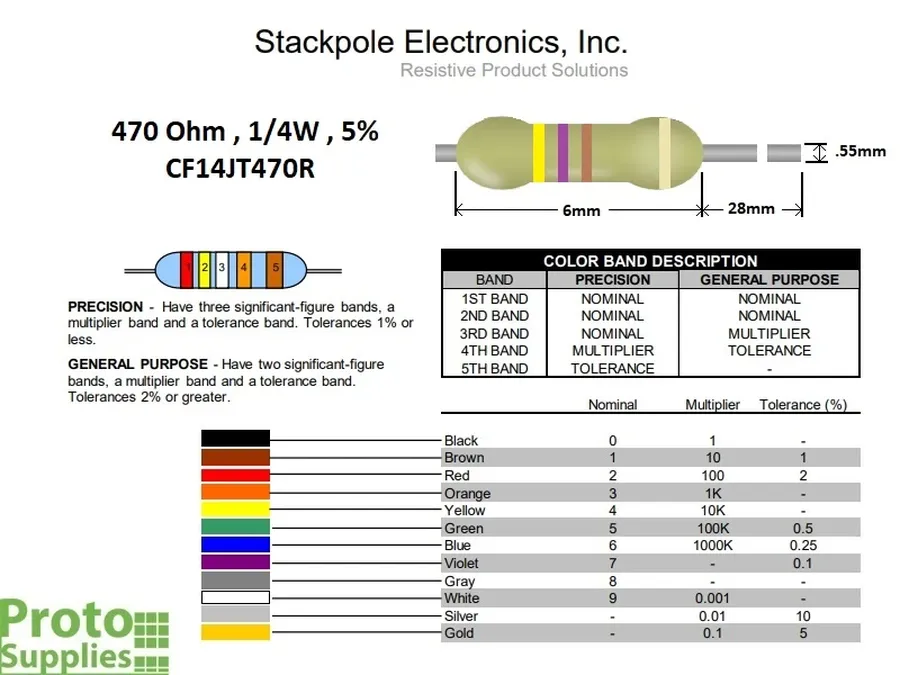
The performance of a 680 ohm resistor is defined not only by its nominal resistance but also by its tolerance, which indicates the acceptable deviation from the stated value. This section details the significance of these tolerances and how they impact the precision of electronic circuits. Crucially, selecting the appropriate tolerance level is vital for ensuring the intended behavior of the circuits in which they're used.
| Tolerance (%) | Resistance Range (Ω) for a 680Ω Resistor | Application Impact |
|---|---|---|
| 1% | 673.2 to 686.8 | High-precision applications such as measurement circuits, sensors and audio equipment, where a small variation can have significant consequences. |
| 5% | 646 to 714 | General-purpose use where less precise resistance is adequate such as hobby projects or power regulation circuits. The increased variability is acceptable for most common electronics applications. |
| 10% | 612 to 748 | Circuits where a high degree of precision is not required, like non-critical parts of power delivery or basic LED circuits where a more significant margin of error is permissible. |
Resistor tolerance is crucial in circuit design. A 1% tolerance resistor offers higher precision than a 5% tolerance resistor. For example, a 680-ohm resistor with 1% tolerance will have a resistance between 673.2 and 686.8 ohms, whereas a 5% tolerance resistor could have a resistance between 646 and 714 ohms. This difference is particularly important in sensitive analog circuits, precision voltage dividers and current sources. The impact on the overall circuit performance should be considered and assessed.
Accurately measuring a 680 ohm resistor is crucial to verifying its value and ensuring its suitability for your circuit. This process, typically done with a digital multimeter, is straightforward but requires careful setup and interpretation of readings to ascertain whether the resistor's actual value falls within its specified tolerance.
Selecting the appropriate 680 ohm resistor requires a comprehensive understanding of your circuit's requirements. This guide outlines crucial factors such as power rating, tolerance, physical size, and temperature coefficient to ensure optimal performance and reliability for your application. Proper selection is paramount for circuit accuracy and longevity.
| Parameter | Description | Impact on Selection |
|---|---|---|
| Power Rating | The maximum power (in Watts) the resistor can dissipate without damage. | Must exceed the expected power dissipation in the circuit to prevent overheating and failure. Standard options include 1/4W, 1/2W, and 1W for general purposes. |
| Tolerance | The permissible deviation of the actual resistance from the nominal value (680 ohms). | Lower tolerance (e.g., 1%) offers better accuracy but at a higher cost. 5% tolerance resistors are common and suitable for many applications. The selection depends on the sensitivity of the circuit. |
| Physical Size | The physical dimensions of the resistor, which can be a leaded or surface mount (SMD) configuration. | Leaded resistors (through-hole components) are used for prototyping and breadboarding, while SMD resistors are suited for compact PCB designs. SMD resistors have standardized package sizes like 0805, 0603, etc. |
| Temperature Coefficient | The change in resistance value per degree Celsius of temperature change, typically expressed in ppm/°C. | Important in applications where temperature variations are expected. Low temperature coefficient materials (metal film) provide better temperature stability. |
| Resistor Type | The materials used in resistor construction, e.g., Carbon film, Metal film, Wire-wound. | Metal film provides better precision and stability than carbon film, and Wire-wound provides higher power handling capabilities. Each type has a specific range of tolerance, temperature stability, power, and cost implications. |
Datasheets provide detailed specifications for each resistor type. Understanding how to interpret these specifications ensures you select the appropriate component for your specific design.
This section addresses common inquiries regarding 680 ohm resistors, offering practical solutions and troubleshooting advice for users encountering typical challenges. These FAQs are designed to provide clear, concise answers based on fundamental electrical engineering principles, ensuring a robust understanding of the component and its applications.
Acquiring 680 ohm resistors from trustworthy sources is paramount to ensure the quality and authenticity of the components, which directly impacts the performance and reliability of your electronic circuits. This section provides practical advice on where to purchase these resistors, both individually and in bulk, highlighting the key factors to consider when making a purchase.
When purchasing 680 ohm resistors, especially from online marketplaces, be sure to check the seller's feedback and product ratings. Prioritize retailers known for their quality products and fast delivery times. Look for detailed specifications, including the tolerance, power rating, and type of resistor (e.g., metal film, carbon film). This will help you make an informed decision.
The 680 ohm resistor, though small, plays a critical role in many electronic circuits. By understanding its specifications, color codes, and diverse applications, users can harness its full potential. Like a well-placed 680 ohm resistor, the knowledge you gain here provides a stable foundation for your electronic projects. As the field of electronics continues to advance, the fundamental understanding of components like the 680 ohm resistor will remain a constant and essential aspect of any circuit design.

