Understanding Digital Integrated Circuits: A Comprehensive Guide
2025.01.28
From smartphones to supercomputers, the digital revolution is powered by digital integrated circuits. These tiny yet powerful components, often referred to as microchips, are the heart of modern electronics. This article delves into the core concepts of digital integrated circuits, exploring their definition, types, design processes, and wide-ranging applications, providing you with a solid foundation for understanding how these essential building blocks of technology work.
What are Digital Integrated Circuits?
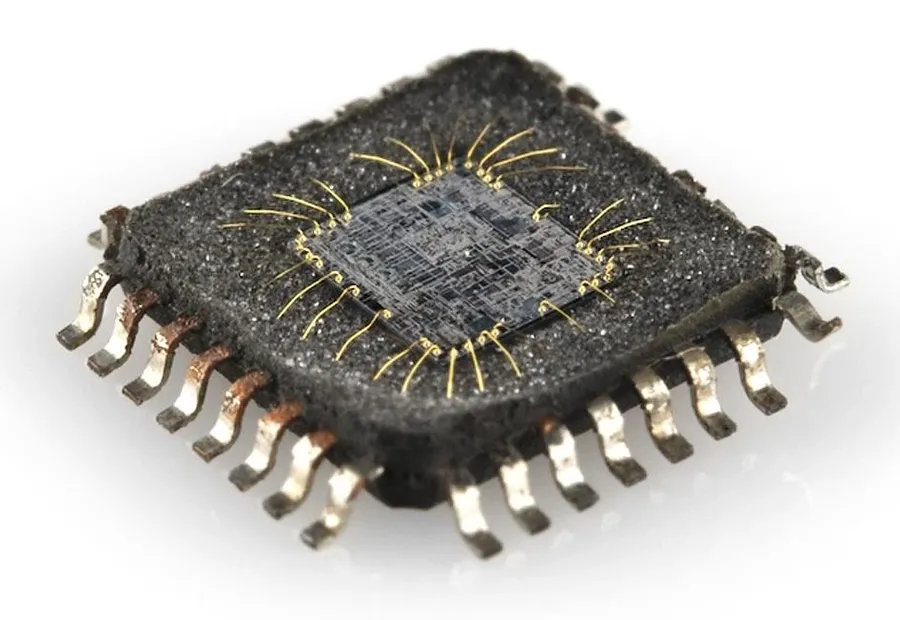
Integrated Circuit Chip
Digital integrated circuits (ICs), often referred to as microchips or chips, are fundamental building blocks of modern electronic devices. At their core, these components are miniature electronic circuits fabricated on a small piece of semiconductor material. They function by processing and manipulating digital signals, which are represented by discrete values, typically binary (0s and 1s). The concept of integration, where multiple electronic components are combined into a single unit, has revolutionized technology, enabling complex functionalities within compact, efficient, and cost-effective packages. Digital ICs are indispensable, underlying a vast array of technologies, from smartphones to supercomputers, thus becoming an integral part of our digital world.
The use of semiconductor materials, such as silicon, is paramount in the creation of digital integrated circuits. These materials' unique electrical properties allow for the precise control of current flow, which is crucial for implementing logic gates and memory elements. The integration of numerous transistors, diodes, and other electronic components onto a single semiconductor substrate results in a digital IC capable of performing complex operations with exceptional speed and reliability.
Types of Digital Integrated Circuits
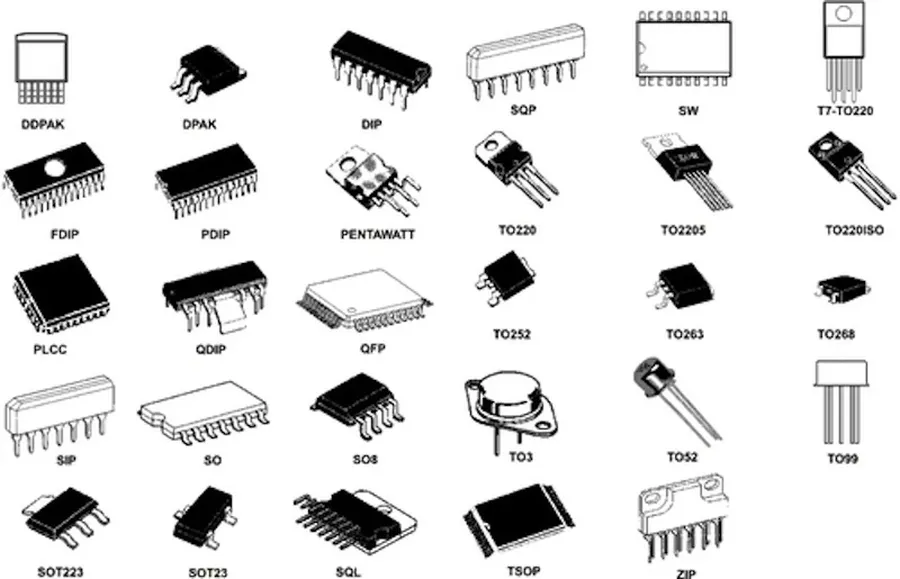
Various Integrated Circuits
Digital integrated circuits (ICs) are categorized based on their functionality and complexity, each serving unique roles in electronic systems. These classifications range from basic logic gates to sophisticated microprocessors, representing the building blocks of modern digital technology.
Standard Logic ICs These are the fundamental building blocks of digital circuits, including gates like AND, OR, NOT, NAND, and NOR. They perform basic Boolean logic operations and are used to construct more complex digital functions.
Memory ICs These ICs are designed for storing digital data. They include Random Access Memory (RAM), which is volatile and used for temporary storage, and Read-Only Memory (ROM), which is non-volatile and used for permanent storage of data or instructions. Different types of RAM exist, such as SRAM (Static RAM) and DRAM (Dynamic RAM), each with different characteristics regarding speed, power consumption and density. Also there are different types of ROM, such as PROM, EPROM, and EEPROM. Memory ICs are essential in almost all digital systems from computers to embedded systems.
Microprocessors These are complex ICs that perform arithmetic and logical operations, as well as control the flow of data and instructions in a computer system. They are the central processing units (CPUs) of computers, executing programs and performing calculations. Microprocessors are at the heart of most computing devices, from personal computers to servers.
Microcontrollers These are integrated circuits designed to control embedded systems. They include a microprocessor core, memory (RAM, ROM, or Flash), and peripherals (such as timers, analog-to-digital converters, and serial communication interfaces) on a single chip. Microcontrollers are widely used in applications requiring real-time control of devices, such as automotive systems, industrial control, and consumer electronics.
Complex Programmable Logic Devices (CPLDs) and Field-Programmable Gate Arrays (FPGAs) These ICs are programmable hardware devices that can be configured by users to implement custom digital logic circuits. FPGAs offer more flexibility and are used for complex, high-speed digital design projects. CPLDs, while less flexible than FPGAs, are simpler and more cost-effective for some applications. They are used for implementing custom logic circuits or digital systems.
Prototyping, specialized digital hardware, custom computing platforms
Digital IC Design Principles
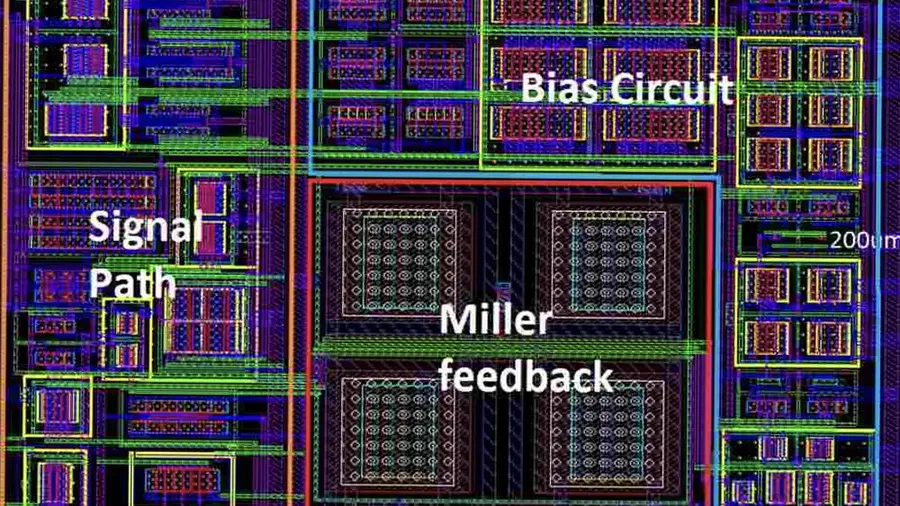
IC Layout Design
The design of digital integrated circuits (ICs) is a systematic process that transforms high-level specifications into physical implementations. This intricate journey involves logical design, circuit design, and physical layout, each phase demanding meticulous attention to detail and adherence to design methodologies. The process is highly iterative, often requiring trade-offs between performance, power consumption, and area.
Design Stage
Description
Key Activities
Specification
Defining the functionality, performance, and constraints of the digital IC.
Translating the specifications into a logical representation using Boolean algebra and logic gates.
Logic synthesis, functional verification.
Circuit Design
Implementing the logical design using specific circuit elements (transistors, capacitors, etc.).
Circuit simulation, power analysis, timing analysis.
Physical Layout
Creating the physical arrangement of circuit elements on the semiconductor die.
Placement, routing, layout verification.
Verification and Testing
Confirming the design meets specifications and ensuring proper functionality through simulation and testing.
Design for testability, test pattern generation.
Hardware Description Languages (HDLs) such as Verilog and VHDL play a pivotal role, serving as the lingua franca for digital IC design. They allow designers to express complex digital systems in a text-based format that can be simulated, synthesized, and implemented. Design methodologies include top-down design, bottom-up design, and meet-in-the-middle approaches, each offering a structured path to efficient circuit realization.
Design Considerations: Performance, Power Consumption, Area, Cost, Testability
Combinational Logic in Digital ICs
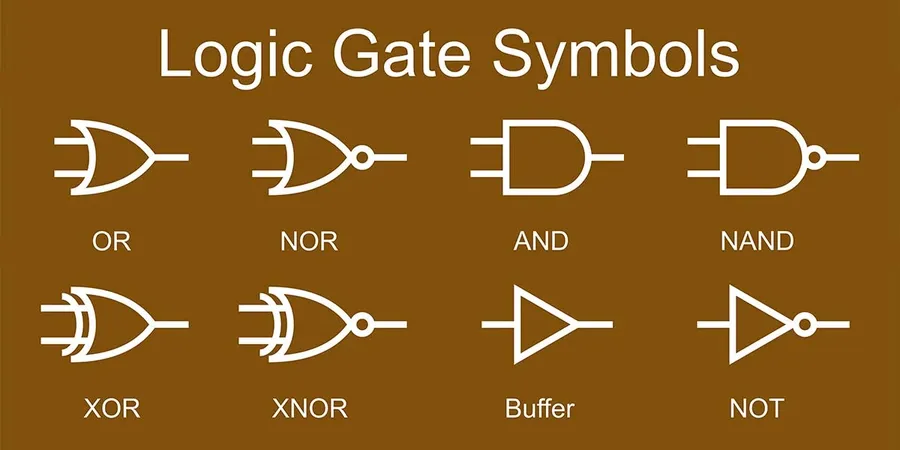
Logic Gate Circuits
Combinational logic forms the foundation of many digital integrated circuits (ICs), wherein the output is solely determined by the current inputs, with no memory of past states. This section explores the principles of combinational logic, emphasizing its role in building complex digital systems. Crucial to this understanding is Boolean algebra, the mathematical language used to describe logic operations.
Boolean algebra provides a formal system for analyzing and simplifying logic circuits. It uses variables that can have one of two values (0 or 1), representing false or true, respectively. Basic operations include AND, OR, and NOT, which can be combined to form more complex functions. These operations are implemented in digital ICs using logic gates.
Within digital ICs, combinational logic is employed to perform various signal processing and control tasks. Encoders translate data from one format to another, such as converting decimal numbers to binary, while decoders reverse this process. Multiplexers act as switches, selecting one of several inputs to pass on to a single output. These components are essential in designing efficient digital systems.
Component
Function
Application
Encoder
Converts data from one format to another (e.g., decimal to binary).
Keyboard inputs, data compression.
Decoder
Reverses the encoding process, converting back to the original format.
Memory addressing, display drivers.
Multiplexer
Selects one of several input signals to pass on to a single output.
Data routing, communication systems.
Sequential Logic in Digital ICs
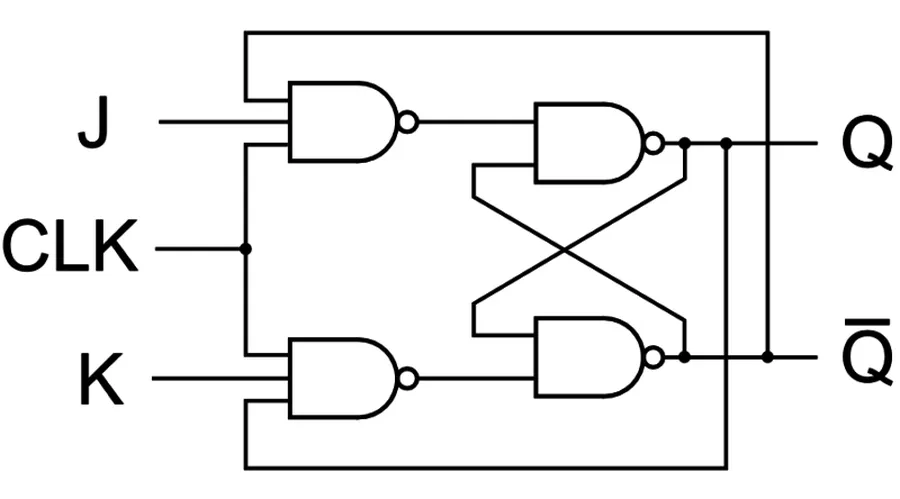
Flip-Flop Circuits
Sequential logic circuits, a cornerstone of digital systems, distinguish themselves from combinational logic by incorporating memory elements. This capability allows them to exhibit state-dependent behavior, where the output is a function not only of the current inputs but also of past input states. This introduces the concept of time into the digital circuit's operation, enabling the creation of complex functionalities such as data storage and timing control.
These circuits utilize memory elements such as flip-flops, registers, and counters. Flip-flops act as the fundamental building blocks, storing a single bit of information. Registers, formed by grouping multiple flip-flops, can hold binary data of various lengths. Counters are designed to sequentially progress through a series of states, often used for timing or address generation. Understanding these elements and their operational characteristics is vital for constructing advanced digital logic systems.
Flip-Flops The fundamental memory elements in sequential logic, they can store a single bit of information, and there are different types including SR, JK, D, and T flip-flops, each with unique operational characteristics, are triggered by clock pulses for synchronous operation.
Registers Composed of multiple flip-flops that can store binary data. They are capable of holding data of varying widths and are crucial for data storage and transfer within digital circuits. Data is typically transferred in parallel.
Counters Circuits designed to advance through a sequence of states, often triggered by clock pulses. They are employed in various timing and address generation applications, which provide necessary signals to operate other digital components.
The design of sequential logic circuits presents unique challenges, primarily related to managing timing and ensuring that data changes occur predictably, because they are dependent on previous states. Synchronous design, where all changes are synchronized to a clock signal, is a common approach to manage these timing challenges, preventing glitches or unexpected behaviors. Thorough simulation and verification are critical to ensure the reliability of sequential logic circuits.
Characteristic
Combinational Logic
Sequential Logic
Memory
No Memory
Utilizes Memory
Output Dependence
Output depends only on current input
Output depends on both current and past inputs
Time Dependence
No time dependence
Time-dependent (state-dependent)
Examples
Logic Gates (AND, OR, NOT), Encoders, Decoders
Flip-Flops, Registers, Counters
Applications of Digital Integrated Circuits
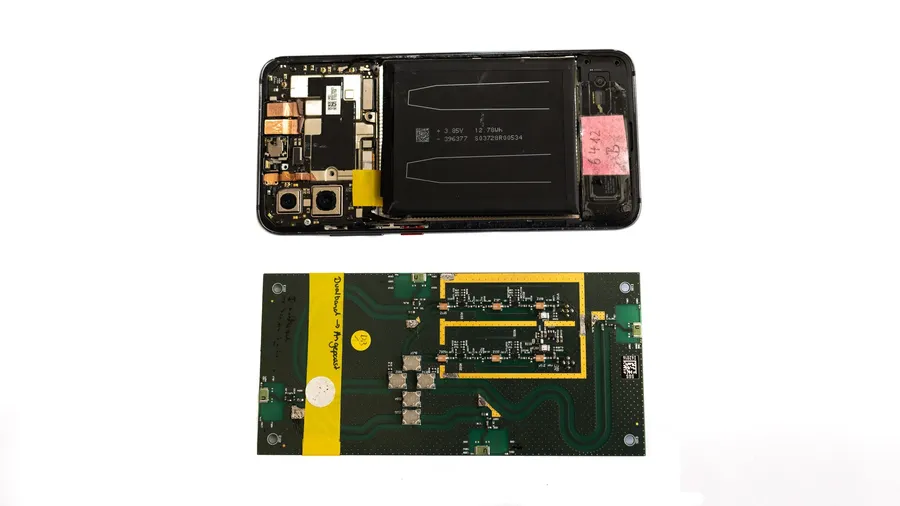
Smartphone Circuit Board
Digital integrated circuits (ICs) are the ubiquitous workhorses of modern electronics, underpinning a vast array of applications from everyday consumer devices to highly sophisticated systems. Their versatility and scalability have enabled the digital revolution, powering everything from simple logic operations to complex computational tasks. The integration of multiple transistors on a single chip allows for compact, efficient, and reliable electronic solutions across various industries.
Consumer Electronics Digital ICs are the cornerstone of devices like smartphones, tablets, digital cameras, and televisions. They manage signal processing, data storage, and control functions, facilitating the high performance and rich user experiences of these devices. For example, Application Specific Integrated Circuits (ASICs) are designed for specific tasks like image processing or audio decoding, optimizing efficiency and performance.
Telecommunications In the telecommunications sector, digital ICs are essential for signal transmission, network routing, and data encoding/decoding. From cell towers to modems, digital circuits play a critical role in the infrastructure and devices that allow us to communicate globally. They facilitate high-speed data transfer and are integral in implementing advanced protocols for wireless communication.
Healthcare Digital ICs are vital in medical equipment such as diagnostic imaging devices (MRI, CT scanners), patient monitoring systems, and implantable devices (pacemakers). They provide precise control and data processing capabilities critical for accurate medical diagnostics and treatments. Their integration enables smaller, more reliable medical devices, improving patient care and outcomes. For example, advanced ICs facilitate the processing of complex imaging data, providing doctors with critical insights.
Automotive The automotive industry has seen a transformative shift with the integration of digital ICs. They are used in engine control units (ECUs), advanced driver-assistance systems (ADAS), and infotainment systems. These circuits enable real-time data analysis and decision-making, contributing to enhanced safety features like lane departure warnings and adaptive cruise control. The increasing complexity of automotive electronics also drives innovation in digital IC design, for example self driving and assisted parking applications.
Aerospace and Defense Digital ICs play a crucial role in aerospace and defense systems, including navigation, radar systems, satellite communications, and missile guidance. Their robustness, precision, and high performance are vital in these demanding environments. Advanced ICs are used in signal processing, data acquisition, and high-speed computations for defense applications.
Industrial Automation In industrial settings, digital ICs are used in programmable logic controllers (PLCs), robotics, and process control systems. They enable automated manufacturing processes, improve productivity, and enhance safety. These ICs are crucial for data acquisition, motor control, and automation systems that rely on high-speed and reliable processing capabilities.
High-Performance Computing Digital ICs are at the heart of supercomputers and data centers, which require extreme processing power. These applications utilize high-speed, low-latency ICs to perform complex calculations, simulations, and data analysis. Custom digital IC designs are often developed for these applications to improve performance and efficiency.
Digital ICs in Computer Memory
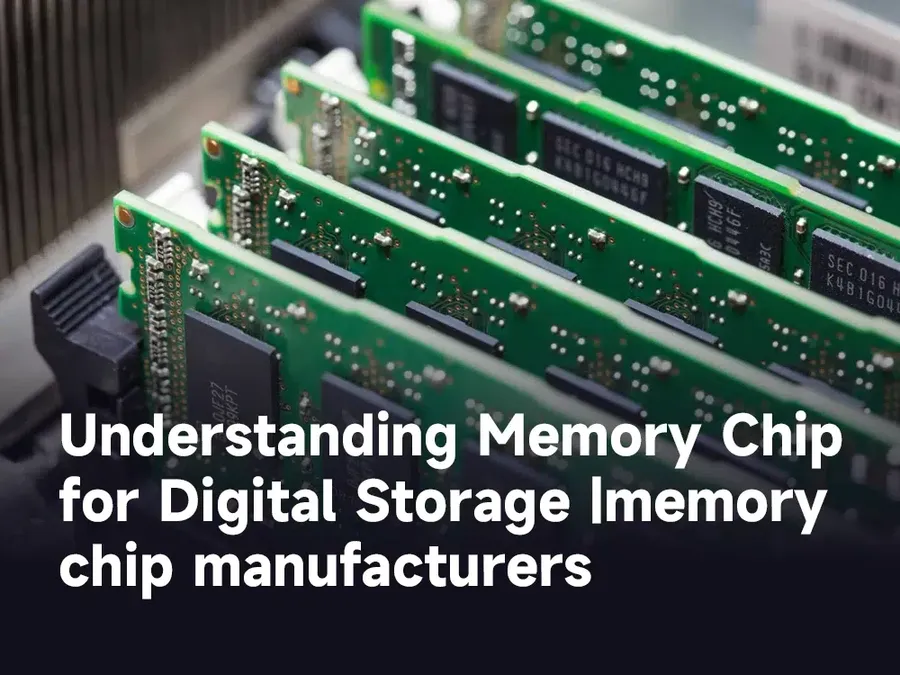
Computer Memory Chip
Digital integrated circuits (ICs) are the foundational elements of modern computer memory systems, enabling the storage and retrieval of digital information. These ICs form the core of Random Access Memory (RAM) and Read-Only Memory (ROM), which are essential for computer operation.
Memory Type
Digital IC Implementation
Characteristics
Use Cases
SRAM (Static RAM)
Flip-flops (latches)
Faster, more expensive, volatile
Cache memory, small fast storage
DRAM (Dynamic RAM)
Capacitors and transistors
Slower, less expensive, volatile, Requires refresh
Main system memory
ROM (Read-Only Memory)
Logic gates programmed at production
Non-volatile, read-only, data is permanent
Firmware, BIOS
The performance of computer systems is significantly impacted by the characteristics of the digital ICs used in memory. SRAM’s speed is suited for caching, while DRAM's density and cost-effectiveness make it suitable for larger main memory. These differing characteristics reflect the tradeoffs made in digital IC design for specific applications. The selection and design of ICs for memory must balance speed, density, cost, and power consumption.
Frequently Asked Questions About Digital Integrated Circuits
This section addresses common queries regarding digital integrated circuits, offering clear and concise answers to enhance understanding of these fundamental components of modern electronics.
What distinguishes digital integrated circuits from analog integrated circuits? Digital ICs process discrete signals, typically represented as binary values (0s and 1s), using logic gates. Analog ICs, on the other hand, process continuous signals that can take any value within a given range, like voltages and currents. Digital circuits are primarily used for computation, data processing, and control systems, while analog circuits are used for tasks like amplification, filtering, and signal conditioning.
How are digital integrated circuits manufactured? Digital ICs are manufactured through a complex process using semiconductor materials, primarily silicon. The process involves several key steps: growing high-purity silicon crystals, depositing thin layers of materials on silicon wafers, using photolithography to pattern the layers, etching to remove unwanted material, doping to create regions with specific electrical properties, and finally, connecting individual transistors with metal layers to form the complete circuit. This is all performed in extremely clean environments.
What are the latest trends in digital IC technology? Current trends include advancements in miniaturization (leading to smaller and more powerful chips), improved energy efficiency, the adoption of new semiconductor materials, such as Gallium Nitride (GaN) and Silicon Carbide (SiC), advanced packaging techniques (like 3D stacking), and the integration of AI accelerators and quantum computing elements. There is a strong focus on designing specialized ICs for specific applications, such as AI inference, high-performance computing, and edge devices.
How do digital integrated circuits enable the digital world? Digital ICs are the fundamental building blocks of all digital devices, from smartphones and computers to IoT devices and large-scale data centers. Their ability to process and store digital information is the backbone of the digital revolution. They enable computational processes, data storage and retrieval, communication, and automation. Without digital ICs, many aspects of modern life would not exist.
Can you give some examples of digital ICs? Common examples include microprocessors (CPUs) that are the 'brains' of computers, memory chips (RAM and ROM) for data storage, logic gates (AND, OR, NOT) that perform basic logical operations, microcontrollers for embedded systems, FPGAs (Field-Programmable Gate Arrays) for custom logic implementation, and ASICs (Application-Specific Integrated Circuits) designed for particular purposes.
What are the primary types of digital integrated circuits? Digital ICs are primarily categorized into standard logic ICs (gates), memory ICs (RAM, ROM), microprocessors, and microcontrollers. Standard logic ICs perform elementary logic operations, memory ICs store digital data, microprocessors serve as central processing units, and microcontrollers integrate a processor core, memory, and peripherals. Each type has specific functions and capabilities tailored to various applications.
What is the role of Hardware Description Languages (HDLs) in digital IC design? Hardware Description Languages (HDLs) like Verilog and VHDL are essential tools for designing digital integrated circuits. They allow engineers to describe the behavior and structure of complex digital systems at a high level of abstraction. HDLs enable the simulation, verification, and synthesis of digital designs, making the process faster and less error-prone. They play a crucial role in bridging the gap between conceptual design and physical implementation.
Future Trends in Digital Integrated Circuits
The landscape of digital integrated circuits (ICs) is in constant evolution, driven by the relentless pursuit of higher performance, lower power consumption, and increased functionality. Future trends are focusing on advancements in miniaturization, novel materials, and innovative circuit design techniques, while exploring groundbreaking technologies such as quantum and neuromorphic computing.
Miniaturization Beyond Moore's Law While Moore's Law, which predicts the doubling of transistors on a chip every two years, is slowing down, research is focusing on innovative techniques such as three-dimensional (3D) integration and extreme ultraviolet (EUV) lithography to continue to shrink transistor sizes and increase circuit density. This is leading to more powerful and energy-efficient devices.
Advanced Semiconductor Materials Traditional silicon is reaching its performance limits. Research into alternative materials with superior electrical properties, such as Gallium Nitride (GaN), Silicon Carbide (SiC), and two-dimensional materials like graphene and transition metal dichalcogenides (TMDs), aims to improve performance and reduce power consumption of digital ICs. These materials offer higher electron mobility, higher breakdown voltages and better thermal conductivity than silicon.
Neuromorphic Computing Neuromorphic computing mimics the human brain's neural networks to perform complex tasks with low power consumption, including pattern recognition and machine learning applications. Digital ICs designed with neuromorphic principles using memristors and spiking neural networks (SNNs), are being developed for implementing these brain-inspired computing architectures.
Quantum Computing Quantum computing, leveraging quantum mechanical phenomena to solve complex problems currently intractable for classical computers, is gaining traction. Digital ICs play a vital role in developing the control systems and interfaces required for quantum computing architectures. This field is rapidly evolving, with continuous advancements in quantum devices and control circuits.
AI and Machine Learning Accelerators With the proliferation of Artificial Intelligence (AI) and Machine Learning (ML), there is an increased demand for specialized hardware accelerators. Digital ICs such as Application-Specific Integrated Circuits (ASICs) and Field Programmable Gate Arrays (FPGAs) are being designed to efficiently run AI algorithms, which are transforming various industries and domains.
Digital integrated circuits are the cornerstone of the digital age, driving innovation across industries. By understanding their fundamental principles, types, design and applications, we gain a deeper appreciation for the technology that surrounds us. As technology continues to advance, the future of digital integrated circuits promises even more revolutionary advancements, further enhancing our capabilities and the way we interact with the world, leading to more powerful, efficient and compact devices.