In the realm of electronics, the 4k7 resistor, a seemingly small component, plays a crucial role in shaping the behavior of circuits. Similar to how a precise ingredient in cooking impacts flavor, the 4k7 resistor with its 4.7 kilo-ohm resistance influences current flow and voltage distribution. This article will unravel the essence of the 4k7 resistor, its specifications, its diverse applications, and how it is used in everything from simple LED circuits to sophisticated audio devices.
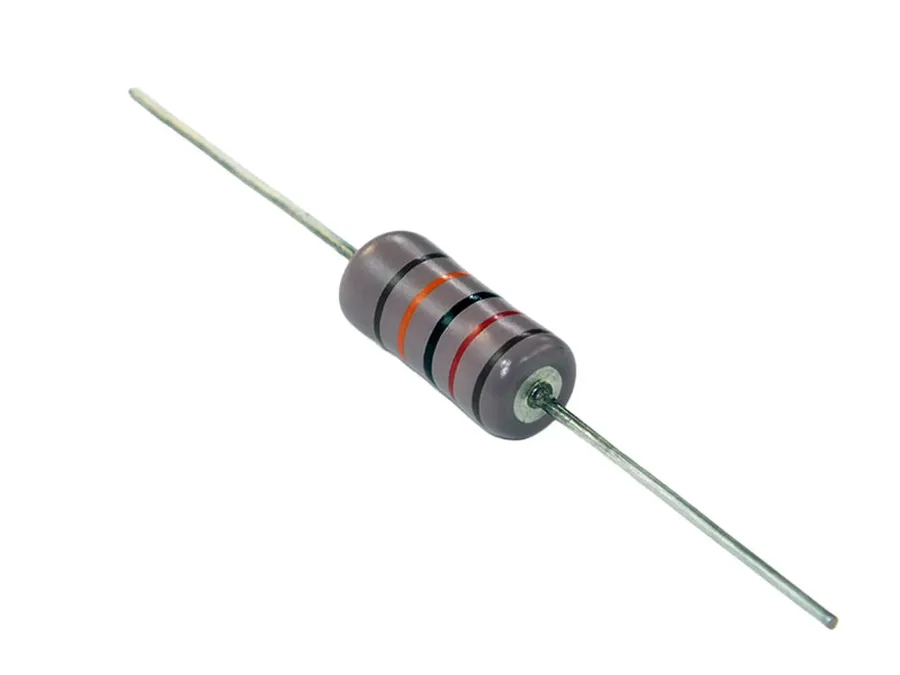
A 4k7 resistor, also commonly referred to as a 4.7k ohm resistor, is a fundamental passive electronic component that provides a fixed electrical resistance of 4,700 ohms. This component is crucial in circuit design for controlling current flow and voltage levels. Its value is typically indicated by a series of colored bands, which adhere to an industry-standard coding system to denote both the resistance value and its tolerance.
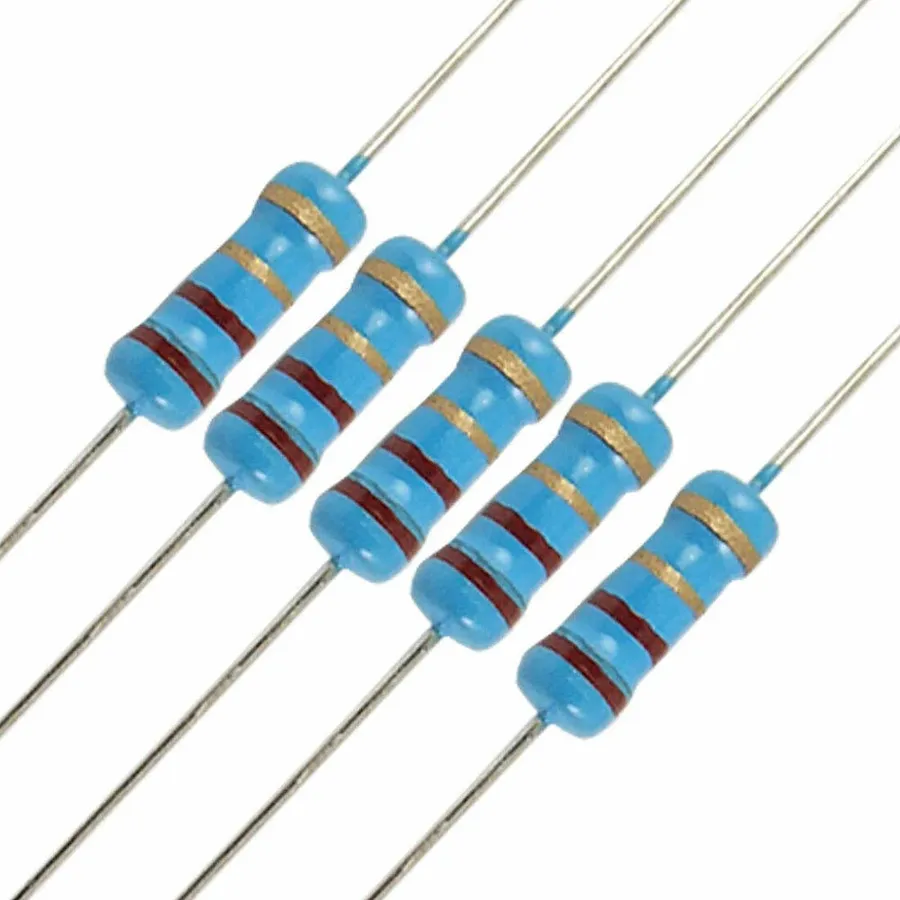
The 4k7 resistor, with a resistance of 4.7 kilo-ohms, employs a standardized color-coding system to denote its electrical characteristics. This system uses colored bands around the resistor body, each band corresponding to a specific numerical value or multiplier, allowing for easy identification of its resistance and tolerance.
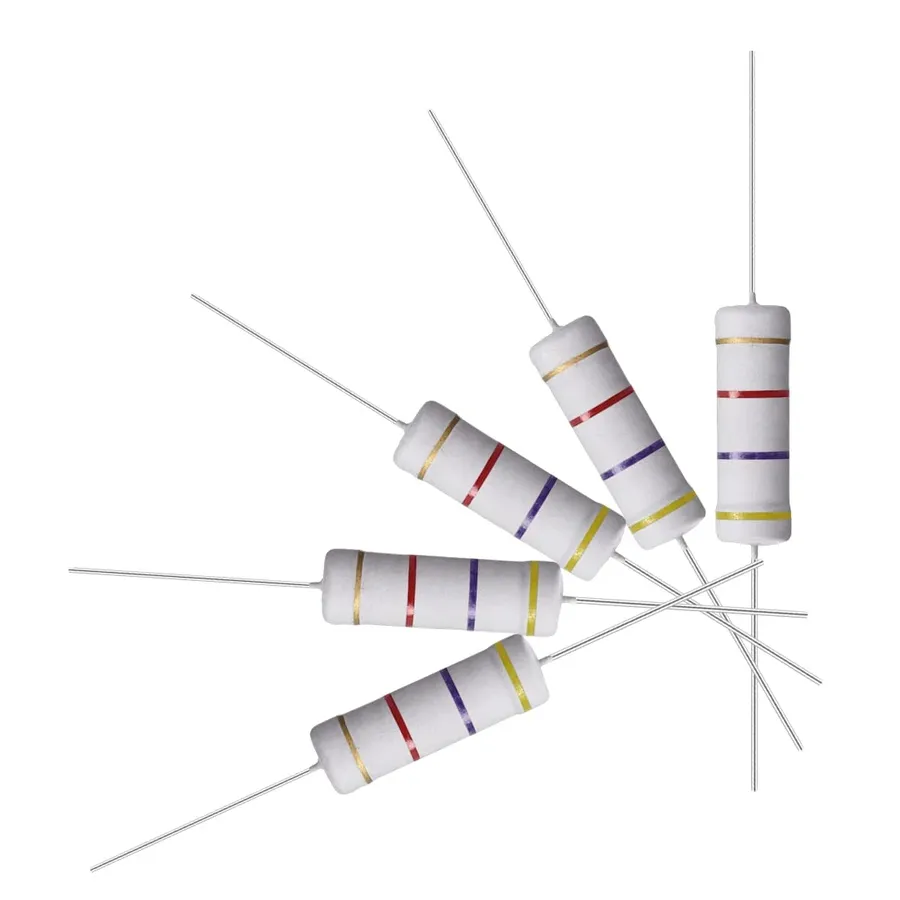
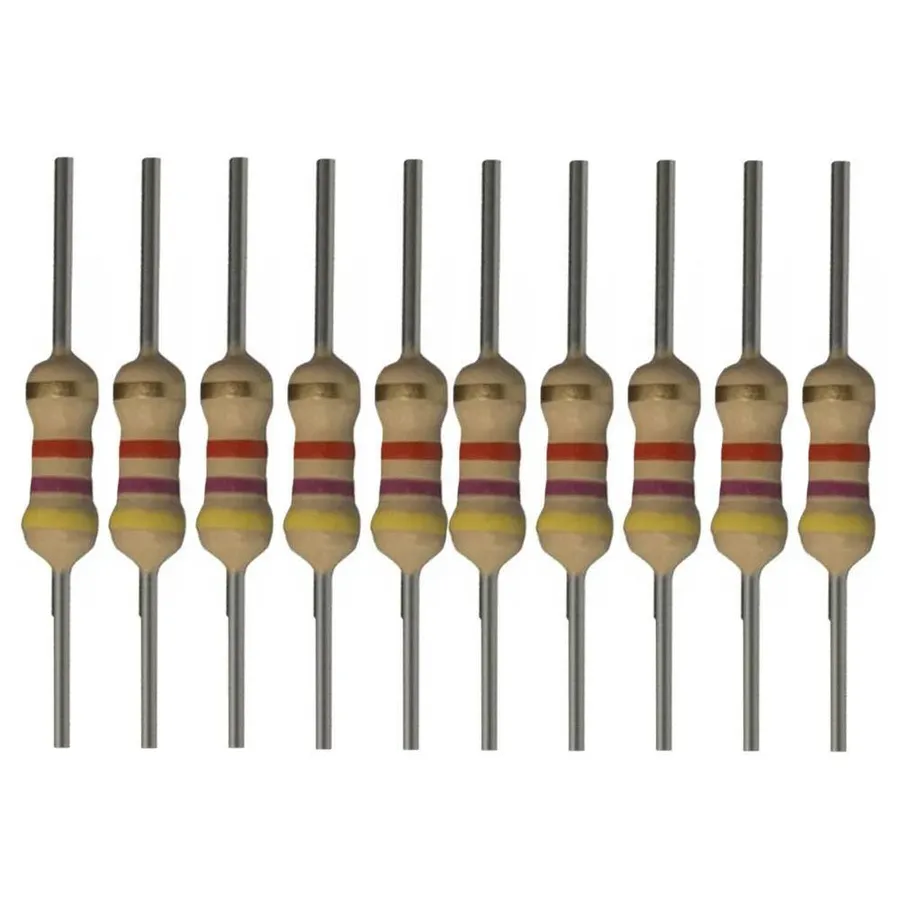
For a standard 4.7kΩ resistor with a 5% tolerance, the color code is typically four bands. The first three bands specify the resistance value, while the fourth band indicates the tolerance. The color sequence for a 4.7kΩ resistor is: Yellow, Violet, Red, and Gold.
| Band | Color | Digit/Multiplier | Meaning |
|---|---|---|---|
| 1st Band | Yellow | 4 | First Digit of Resistance Value |
| 2nd Band | Violet | 7 | Second Digit of Resistance Value |
| 3rd Band | Red | 100 | Multiplier |
| 4th Band | Gold | 5% | Tolerance |
In a five-band resistor, which provides more precision, the color code for a 4.7kΩ resistor would be slightly different. The first three bands represent the numerical value, the fourth band serves as a multiplier, and the fifth band indicates tolerance. For example, it may be Yellow, Violet, Black, Brown and Gold for a 4.7K ohm resistor with a 1% tolerance.
In electronics, the notations '4k7' and '4.7k' are interchangeable and represent the same resistance value of 4,700 ohms. The 'k' symbol denotes kilo-ohms, a unit of resistance equal to 1,000 ohms. The practice of using 'k' in place of a decimal point is a common convention in electronics to avoid misinterpretation, especially in hand-written or poorly printed documentation.
This substitution is especially useful because it prevents the decimal point from being obscured or misinterpreted, especially in older or less precise printing methods. It is an important notation to be aware of in order to clearly understand schematic diagrams and documentation for electronic circuits.
| Notation | Value (Ohms) | Interpretation |
|---|---|---|
| 4k7 | 4700 | 4.7 kilo-ohms or 4700 ohms |
| 4.7k | 4700 | 4.7 kilo-ohms or 4700 ohms |
While both notations are accepted, it's essential to consistently use one or the other within the same documentation or project to avoid confusion. This notation convention is not limited to just 4.7k ohms and is commonly used in all resistor values. For example, 2k2 is the same as 2.2k.
The 4k7 resistor, with its 4,700-ohm resistance, serves as a fundamental component in a wide array of electronic circuits due to its versatility and common resistance value. Its applications span from basic signal manipulation to crucial roles in device functionality. This section outlines its most common applications, highlighting the function of a 4k7 resistor in various circuits.
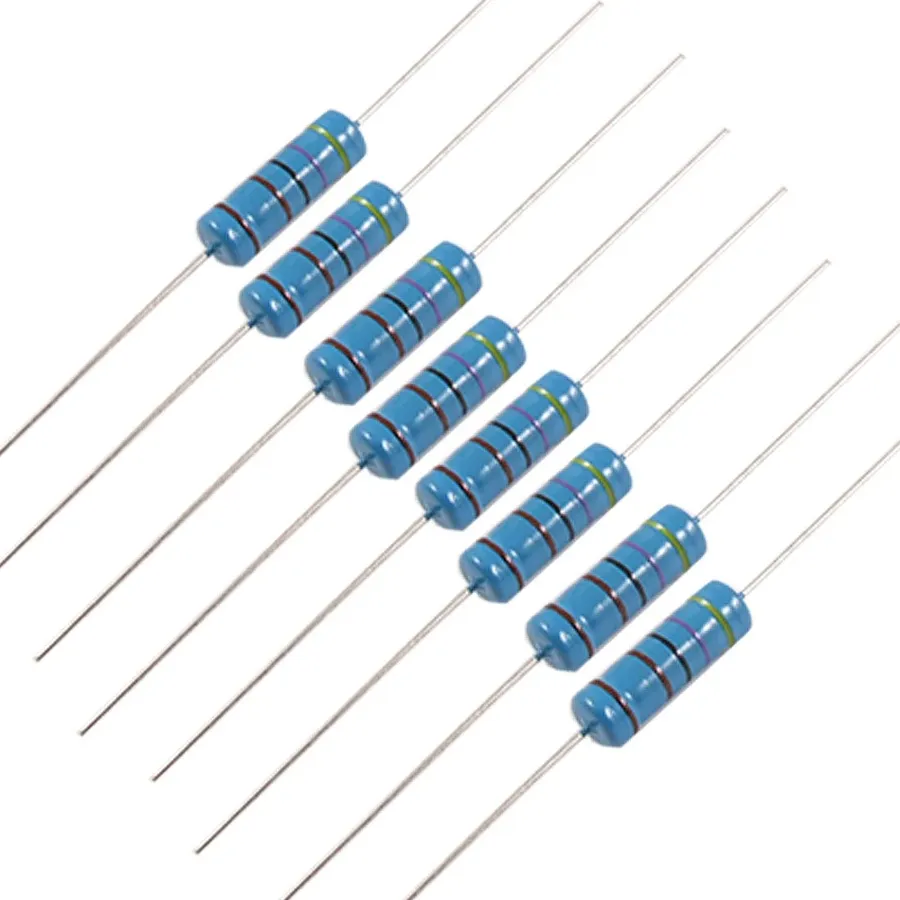
4k7 resistors, while unified by their 4.7 kΩ resistance, are manufactured in a range of forms and with varying specifications to meet diverse application needs. Understanding these differences is crucial for selecting the appropriate resistor for a given circuit.
| Parameter | Through-Hole Resistors | Surface Mount (SMD) Resistors |
|---|---|---|
| Form Factor | Leaded components with axial or radial leads for insertion into PCB holes. | Leadless components designed for direct mounting onto the PCB surface. |
| Size | Larger physical size, making them easier to handle and prototype with. | Smaller size, enabling higher component density on PCBs. |
| Power Rating | Typically available in 1/8W, 1/4W, 1/2W, 1W and higher, allowing for moderate to high power dissipation. | Available in various standardized sizes (e.g., 0603, 0805, 1206) with power ratings from 1/16W to 1W or more, depending on size. |
| Tolerance | Common tolerances are 5%, 1%, and 0.1% which is indicated through color band on resistor. | SMD resistors come in common tolerance values such as 5%, 1% and 0.1%, marked with a code on the resistor. |
| Material | Carbon film, metal film, or wire-wound. | Thick film or thin film materials deposited on a ceramic substrate. |
| Applications | Suitable for breadboard prototyping, through-hole PCB designs, and higher-power applications | Ideal for high-density PCB designs, automated assembly, and space-constrained environments. |
Selecting the correct type of 4k7 resistor depends on several factors, including the physical space available, the power requirements of the circuit, the necessary level of precision and cost. Through-hole resistors are generally easier to use in prototyping and for hobbyists but take up space. SMD resistors, while smaller, often require reflow soldering equipment for PCB assembly. The choice of resistor also depends on tolerance: higher precision is needed in measurement circuits, lower precision suffices in non-critical circuits.
The power rating of a 4k7 resistor is a critical parameter that determines how much power the resistor can safely dissipate without overheating or failing. Exceeding this rating can lead to irreversible damage, altered resistance values, and potentially hazardous circuit conditions. Therefore, understanding and calculating power dissipation is paramount for ensuring the reliable and safe operation of electronic circuits.
Power dissipation in a resistor is quantified using the following formula:
P = I^2 * R
Where:
Alternatively, if the voltage across the resistor is known, the power dissipation can be calculated using:
P = V^2 / R
Where V is the voltage drop across the resistor (measured in volts).
Key Considerations:
By accurately calculating and considering the power rating of a 4k7 resistor, designers can ensure the stability and reliability of their electronic systems.
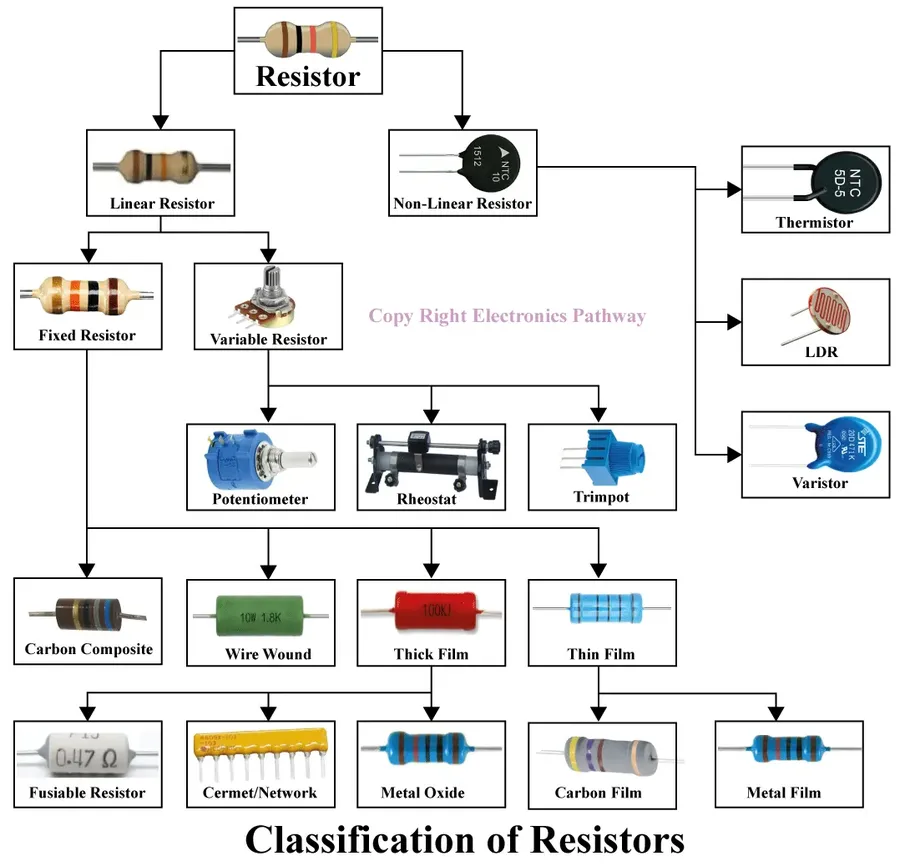
When a 4k7 resistor is unavailable, substituting it with equivalent alternatives is often feasible, though certain factors must be considered to ensure the replacement performs adequately in the circuit. These considerations include the resistor's resistance, tolerance, power rating, and physical size.
The most critical parameter is the resistance value. A direct replacement should ideally have a resistance as close to 4.7kΩ (4700 ohms) as possible. Tolerance indicates the precision of the resistance value, and power rating specifies the maximum power the resistor can dissipate without damage. The physical dimensions, particularly for through-hole and surface mount components, should also be compatible with the available space on the circuit board.
| Parameter | Considerations |
|---|---|
| Resistance | Closely match the target of 4.7kΩ. |
| Tolerance | Lower tolerance for higher precision. |
| Power Rating | Equal or higher than the original. |
| Physical Size | Compatible with the circuit board. |
This section addresses common queries about 4k7 resistors, clarifying their properties, usage, and identification.
Sourcing 4k7 resistors involves considering various factors such as availability, cost, quantity, and required specifications. This section provides guidance on where to purchase 4k7 resistors, covering both online and offline options, and also touches on price considerations.
When sourcing 4k7 resistors, remember to verify the product specifications such as tolerance (e.g., 1%, 5%), power rating (e.g., 1/4W, 1/2W), temperature coefficient, and packaging (e.g., through-hole, SMD). These characteristics can affect performance and suitability for specific applications.
| Factor | Online Retailers | Specialized Suppliers | Local Stores | Auction Sites |
|---|---|---|---|---|
| Selection | Wide | Good, with technical detail | Limited | Variable |
| Price | Competitive | May be higher, but value added | Generally higher | Potentially lower, but riskier |
| Shipping | Fast | Fast, often with options for professionals | Immediate, local | Variable |
| Support | Limited to online reviews | Technical datasheets and application notes available | Face-to-face support if available | Limited |
| Risk | Low, if reputable retailer | Low, typically high quality | Low | High risk of counterfeit |
In summary, the best place to buy a 4k7 resistor depends on the specific needs. For those who prioritize convenience and a wide selection at competitive prices, major online retailers are a good choice. For projects requiring more technical support or specialized parts, consider suppliers. For immediate needs or prototyping, local stores might suffice, and be cautious when using marketplace sites. Always verify product authenticity and specifications before making a purchase.
The 4k7 resistor is a ubiquitous, essential electronic component. Understanding its resistance value of 4.7k ohms, its color coding, and how it's used is crucial for both beginners and experienced electronic hobbyists and professionals. From LED lighting to precision circuitry, this seemingly small component plays a significant role. Whether you're building a new circuit or replacing an existing resistor, knowing the ins and outs of the 4k7 resistor, allows you to make informed decisions in electronics projects. Understanding how this simple resistor works is a fundamental building block to creating complex electronics applications.

