In the realm of electronics, the 4R7 resistor might seem like a small component, but it plays a crucial role in countless circuits. Like a traffic controller for current, the 4R7, with its 4.7 ohms resistance, helps regulate flow and protect components. This article delves into the details of this workhorse, exploring its specs, uses, and where to find replacements, offering insights into this fundamental building block of modern technology.
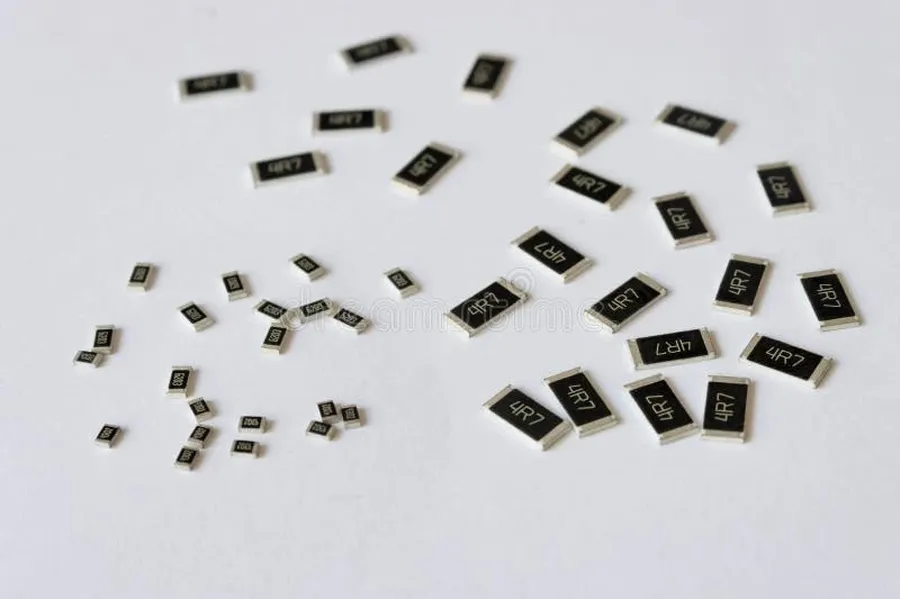
A 4R7 resistor is a fundamental electronic component characterized by a resistance of 4.7 ohms. The notation '4R7' explicitly denotes this value, where 'R' functions as a decimal separator. This resistor is crucial for controlling current flow within electrical circuits.
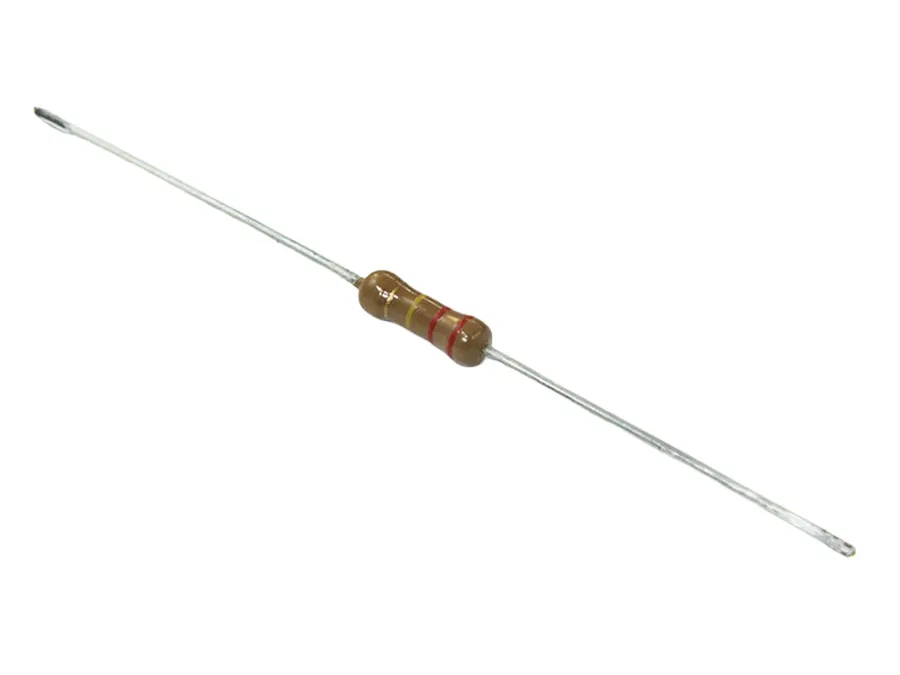
4R7 resistors, characterized by their 4.7-ohm resistance, are available in several physical forms tailored to diverse application requirements. These variations include surface mount devices (SMD), through-hole components, and wirewound resistors, each with distinct attributes in terms of size, mounting method, power handling capabilities, and tolerance.
| Type | Mounting | Typical Applications | Power Rating | Tolerance | Key Features |
|---|---|---|---|---|---|
| SMD (Surface Mount Device) | Surface Mount | Compact circuit boards, consumer electronics | 0.1W - 2W | 1%, 5% | Small size, suitable for automated assembly |
| Through-hole | Through-hole | Breadboarding, prototyping, DIY projects | 0.25W - 3W | 1%, 5% | Easy to handle, ideal for experimentation |
| Wirewound | Through-hole | High-power circuits, precision applications | 5W - 50W | 1%, 5% | High precision, excellent stability and high power handling capabilities |
The choice of 4R7 resistor type is dictated by the specific application, considering factors like board space constraints, power dissipation needs, and the desired precision in the circuit design.
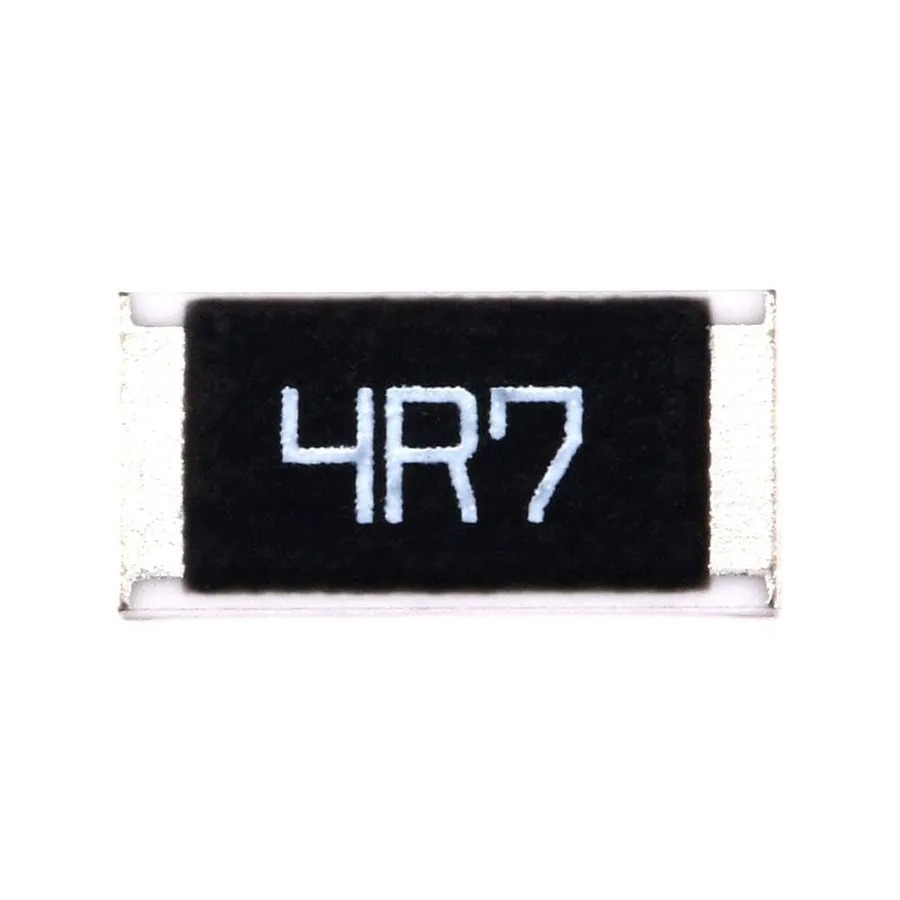
Surface Mount Device (SMD) 4R7 resistors are integral to modern electronics, characterized by their small size and direct surface mounting onto printed circuit boards. These resistors are typically identified by their package size, tolerance, and power rating, which are critical parameters for circuit design and performance. The common markings are the alphanumeric code ‘4R7’ or ‘4.7’.
| Parameter | Typical Values | Description |
|---|---|---|
| Package Sizes | 0603, 0805, 1206, 2512 | Standardized dimensions for automated assembly. |
| Resistance | 4.7 Ω | The specified resistance value. |
| Tolerance | 1%, 5% | Deviation from the nominal resistance value. |
| Power Rating | 0.1 W to 2W (dependent on package size) | Maximum power the resistor can dissipate safely. |
| Marking | 4R7 or 4.7 | Alphanumeric code indicating resistance value. |
The package size of an SMD 4R7 resistor directly correlates to its power handling capabilities. Larger packages, such as 2512, can dissipate more heat and thus handle higher power compared to smaller packages like 0603. Selecting the appropriate package size ensures the resistor operates within its specifications, preventing overheating and potential failure. Tolerance, typically 1% or 5%, indicates the precision of the resistor’s value.
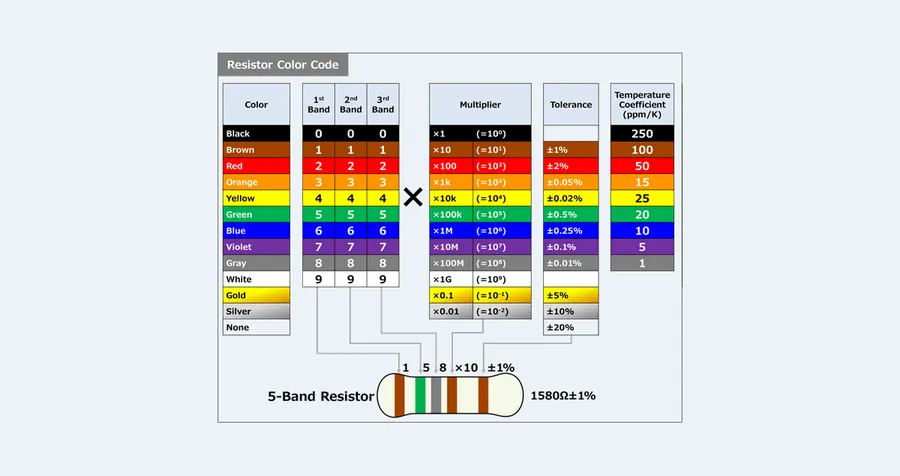
While through-hole 4R7 resistors may employ a color-band system to indicate their resistance value, Surface Mount Device (SMD) resistors utilize alphanumeric markings for direct identification. These markings, such as '4R7' or '4.7', provide a straightforward way to determine the resistor's value, tolerance, and power rating, adhering to standardized practices across manufacturers.
Understanding these markings is essential for correct component identification and replacement.
| Marking Type | Description | Example | Interpretation |
|---|---|---|---|
| Color Code (Through-hole) | Uses colored bands to indicate resistance value and tolerance. | Yellow-Violet-Gold-Gold | 4.7 ohms, 5% tolerance. |
| Alphanumeric (SMD) | Directly indicates the resistance value using numbers and the letter 'R' as a decimal point. | 4R7 | 4.7 ohms |
| Alphanumeric (SMD) | Directly indicates the resistance value using numbers and a decimal point. | 4.7 | 4.7 ohms |
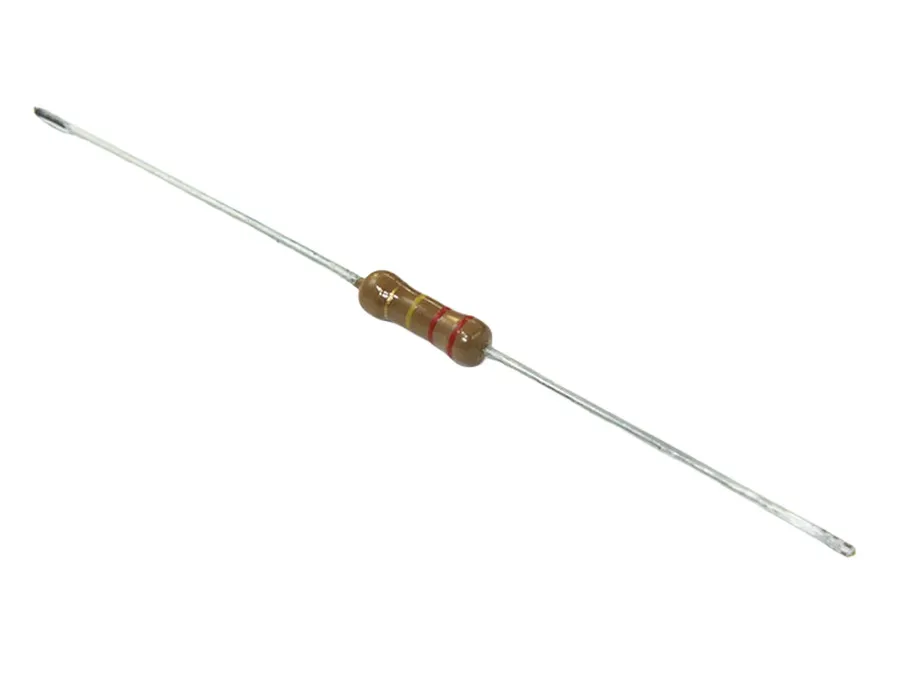
The 4R7 resistor, with its precise 4.7-ohm resistance, is a versatile component employed across a wide range of electronic applications. Its primary function revolves around controlling current flow, making it indispensable in various circuit designs.
It is frequently found in power supply circuits, where it serves to regulate current, limit inrush current during power-up to protect other components, or act as a shunt for precise current measurements. The 4R7 resistor plays a crucial role in ensuring that circuits receive the correct current levels, enhancing stability and reliability.
In amplifier circuits, 4R7 resistors are essential for setting gain and providing appropriate biasing, contributing to the signal's accurate amplification. They are also used in signal processing circuits for impedance matching, filtering, and current limiting. Their applications extend from consumer devices to industrial equipment, showcasing their critical role in electronics.

Certain 4R7 resistors are specifically engineered to function as fusible resistors, playing a critical role in circuit protection. These components are designed to act as a sacrificial element within a circuit. When an overcurrent condition occurs, the fusible resistor intentionally increases its resistance rapidly, generating heat, and eventually creating an open circuit. This action effectively cuts off the excessive current, preventing damage to more sensitive and costly components downstream. Their primary application is in protecting power supply units and other critical parts of electronic devices from damage caused by electrical surges or faults.
Replacing a 4R7 resistor requires careful consideration to ensure the replacement component meets the original specifications. The primary factors to match are resistance (4.7 ohms), physical size, power rating, and tolerance. If the original resistor is a fusible type, it's crucial to use a fusible replacement to maintain the circuit's safety measures.
This section addresses common questions about 4R7 resistors, clarifying their value, markings, and usage in electronic circuits.
A comparative analysis of different 4R7 resistor types reveals variations in their application, performance, and physical characteristics. Understanding these differences is critical for selecting the correct component for a given electronic design. This section presents a structured comparison of SMD, through-hole, wirewound, and fusible 4R7 resistors, highlighting their respective strengths and weaknesses.
| Type | Application | Advantages | Disadvantages | Package Size | Tolerance | Power Rating |
|---|---|---|---|---|---|---|
| SMD | Compact circuit boards | Small size, automated assembly | More difficult to handle manually | 0603, 0805, 2512 | 1%, 5% | 0.1-2 W |
| Through-hole | Breadboarding and prototyping | Easy to handle, good for experimentation | Bulky compared to SMDs | Axial lead | 1%, 5% | 0.25-3 W |
| Wirewound | High-power applications | High precision, good stability | Larger size, heat dissipation concerns | Radial lead | 1%, 5% | 5-50W |
| Fusible | Circuit protection | Fuses during overcurrent, protects components | Can be more expensive | Any | 5% | 0.25-5W |
The 4R7 resistor, whether a small SMD or a robust wirewound type, is fundamental in electronics. From regulating current to protecting against overloads, understanding its specifications, applications, and how to choose a suitable replacement is essential for any electronics enthusiast or professional. The 4R7 resistor is a ubiquitous component that forms the bedrock of countless electronic devices. Whether you're a hobbyist or a professional, having a solid grasp of this component will empower you to troubleshoot, design, and bring your electronic ideas to life.

