Imagine a tiny component, often overlooked, playing a critical role in countless electronic devices – that's the 5 ohm resistor. Much like a traffic regulator in a city's network, the 5 ohm resistor manages the flow of electrical current in circuits, ensuring optimal performance and preventing damage. From the simple LED in your remote control to the complex circuitry in industrial equipment, 5 ohm resistors are ubiquitous. This article serves as your definitive guide to 5 ohm resistors, covering their types, uses, and how to make the best use of them for your electronic projects.
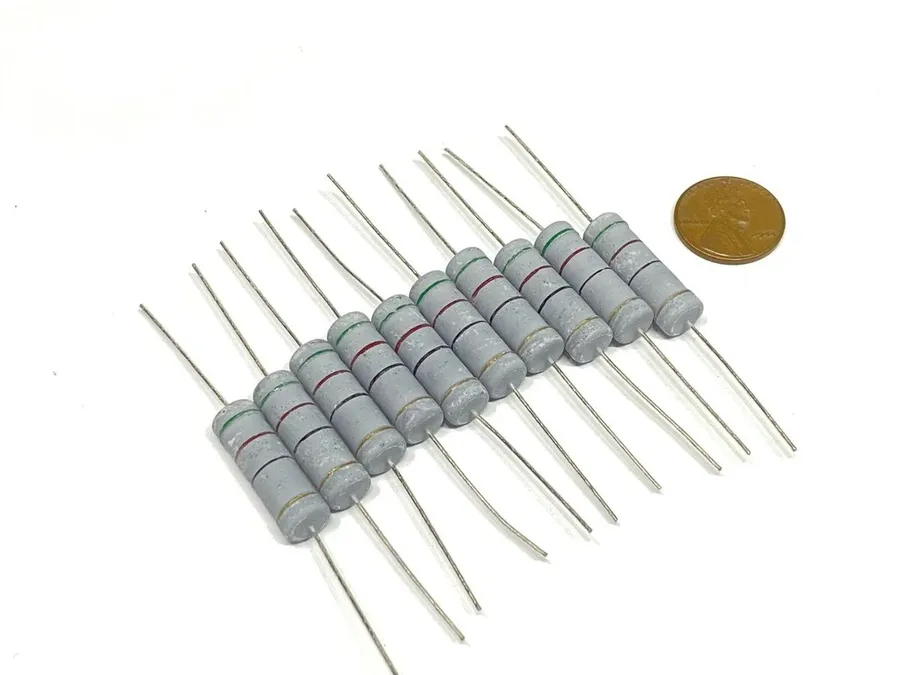
A 5-ohm resistor is a fundamental electronic component designed to impede the flow of electrical current by a specific amount, in this case, five ohms. Its core function is to introduce a defined resistance within an electrical circuit, thereby controlling current flow and enabling stable operation. This resistance is a property of the material and geometry of the resistor, opposing the movement of electrons, and its value is crucial in setting up the required operating conditions for electronic devices.
Electrical resistance, measured in ohms (Ω), is the opposition that a material offers to the flow of electric current. In a circuit, resistors are used to limit current, divide voltage, and provide the required signal levels for other components. The 5-ohm resistor specifically provides a moderate level of impedance, and is common in various electronic applications requiring this specific value to achieve desired performance.
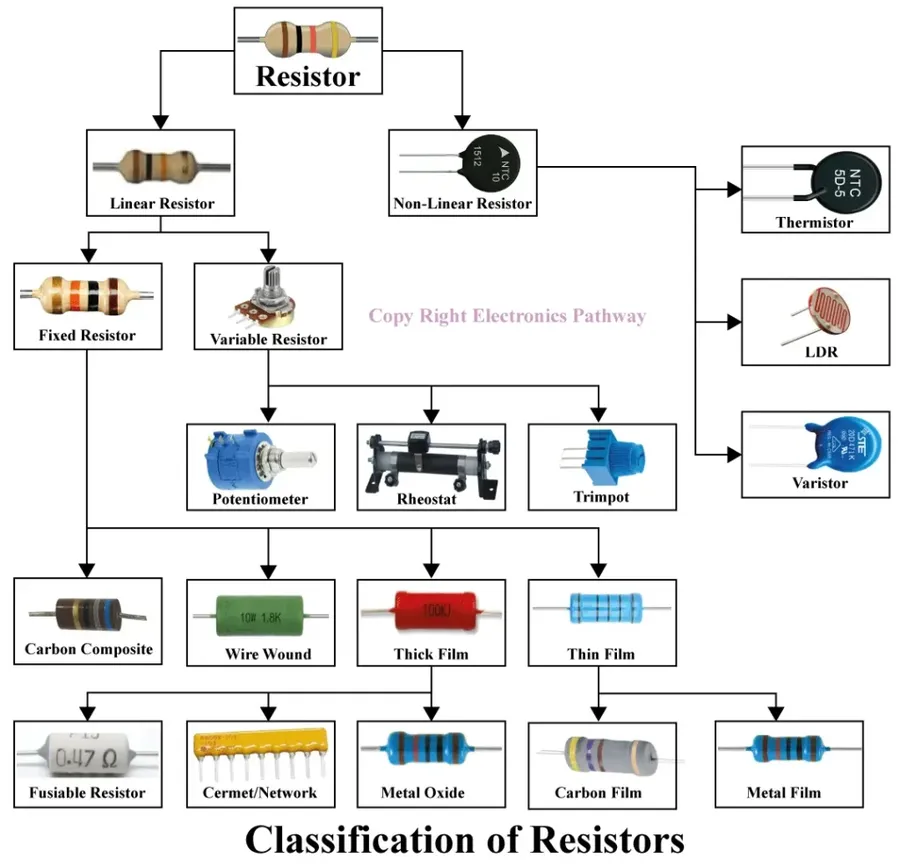
5 Ohm resistors, while unified by their resistance value, manifest in several types, each tailored for specific applications based on material, performance, and power handling needs. Understanding these variations is crucial for effective circuit design and implementation.
| Resistor Type | Material | Performance Characteristics | Power Handling | Typical Applications |
|---|---|---|---|---|
| Wire-Wound | Metallic wire (e.g., Nichrome) wound around a ceramic core | High precision, low temperature coefficient, good stability | High, generally from 1W to several hundred watts | Power supplies, high-current applications, precision instrumentation |
| Metal Film | Thin metal film deposited on a ceramic substrate | Good precision, low noise, good temperature stability | Low to medium, typically up to a few watts | General purpose applications, signal processing, audio circuits |
| Carbon Film | Thin film of carbon deposited on a ceramic substrate | Moderate precision, moderate temperature stability | Low, typically up to a few watts | General purpose applications, suitable for cost-sensitive designs |
| Carbon Composition | Carbon powder mixed with a binder and molded into a cylindrical shape | Robust, can withstand high surge currents | Low to medium, typically up to a few watts | High-voltage applications, surge protection |
| Ceramic (Cement) | Wire wound with ceramic coating | High-power applications | High, typically up to 100 watts | High-power applications, suitable for chassis mounting |
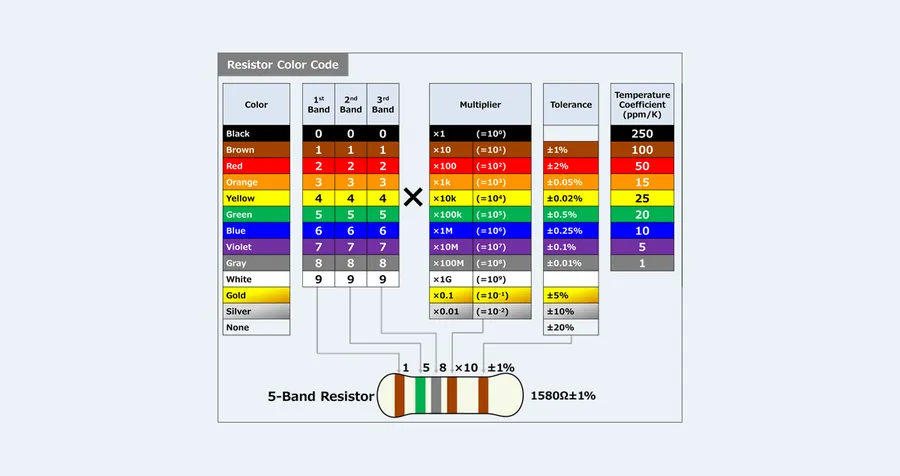
The color code on a 5 Ohm resistor is a standardized system to identify its resistance value. These color bands, each representing a numerical value, allow for quick and accurate identification without needing a multimeter. This method is particularly useful in circuit design and troubleshooting.
| Color | 1st Band | 2nd Band | Multiplier | Tolerance |
|---|---|---|---|---|
| Black | 0 | 0 | 1 | N/A |
| Brown | 1 | 1 | 10 | ±1% |
| Red | 2 | 2 | 100 | ±2% |
| Orange | 3 | 3 | 1,000 | N/A |
| Yellow | 4 | 4 | 10,000 | N/A |
| Green | 5 | 5 | 100,000 | ±0.5% |
| Blue | 6 | 6 | 1,000,000 | ±0.25% |
| Violet | 7 | 7 | 10,000,000 | ±0.1% |
| Gray | 8 | 8 | N/A | ±0.05% |
| White | 9 | 9 | N/A | N/A |
| Gold | N/A | N/A | 0.1 | ±5% |
| Silver | N/A | N/A | 0.01 | ±10% |
For a standard 4-band resistor, the first two bands represent the first two digits of the resistance value, the third band is the multiplier, and the fourth band indicates the tolerance. However, 5-band resistors offer higher precision and have three significant figures, and one multiplier band, and one tolerance band. To identify a 5 Ohm resistor, you need to determine the color for each band in sequence.
Since 5 ohm is a simple value, it can be represented by a 4-band or 5-band resistor. A 5 ohm resistor would typically be coded as follows:
Understanding and correctly interpreting the color code is crucial for circuit building and maintenance to avoid errors that could lead to equipment malfunction or damage. Always double-check the color code to ensure the correct resistor is used in a circuit.
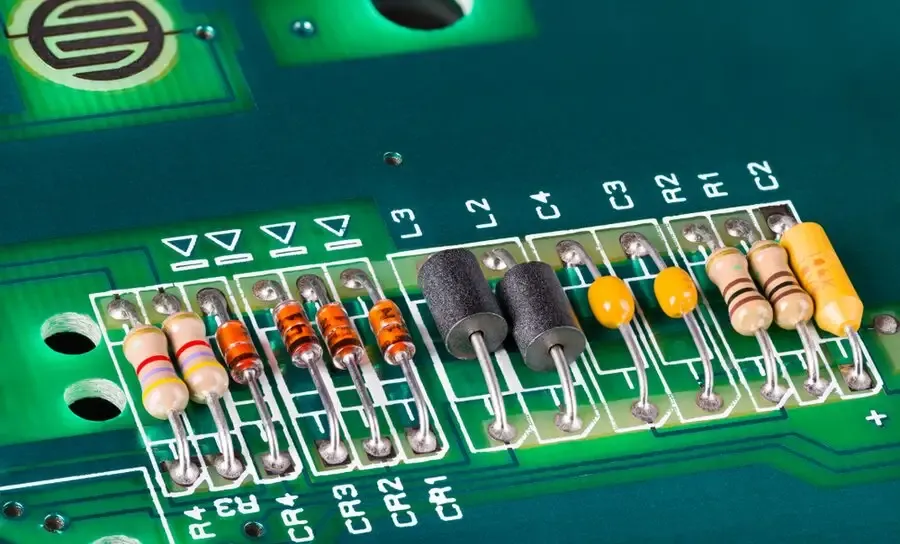
The power rating of a resistor is a critical specification that dictates the maximum amount of power it can dissipate without damage. Selecting the correct power rating for a 5-ohm resistor is crucial for circuit reliability and longevity. Insufficient power rating can lead to resistor failure due to overheating, while an excessively high rating adds unnecessary cost and size.
Power dissipation in a resistor is calculated using Joule's Law: P = I²R or P = V²/R, where 'P' is power in watts, 'I' is current in amperes, 'R' is resistance in ohms, and 'V' is voltage in volts. For a 5-ohm resistor, if the current is 1 amp, the power dissipated is 5 watts, and if the voltage is 5 volts, the power dissipated is also 5 watts. When selecting a 5 ohm resistor, ensure its power rating is above the anticipated power dissipation, usually by a safety factor of 2 or more, to allow for variations and transients.
| Application | Typical Power Dissipation | Recommended Power Rating for 5 Ohm Resistor |
|---|---|---|
| LED current limiting | 0.1 to 0.5 W | 1 W (at least) |
| Audio circuit | 0.25 to 1 W | 2 W (at least) |
| Motor control circuit | 1 to 5 W | 10 W (at least) |
| Power supply filtering | 2 to 10 W | 20 W (at least) |
In practical applications, 5-ohm resistors are used in scenarios requiring moderate current limiting, voltage division, or current sensing. Examples include current limiting resistors for LEDs (where lower power ratings are usually sufficient), in audio circuits as part of impedance matching networks (typically requiring higher wattage ratings), in motor control circuits for sensing current (requiring moderate to high wattage ratings), and in power supplies for load applications (which may require high wattage ratings). Always calculate or simulate power dissipation to match your application requirements, and adhere to resistor power rating specifications to avoid malfunctions.
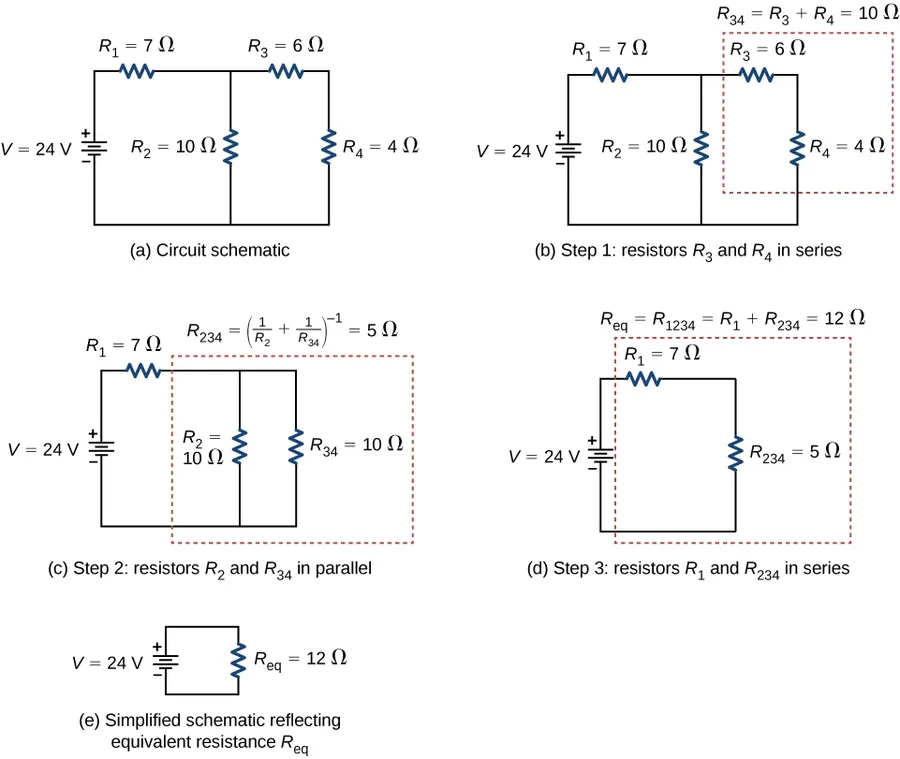
Understanding how 5 ohm resistors behave in series and parallel configurations is crucial for effective circuit design. The total resistance, and thus the current and voltage distribution, changes depending on the connection method, necessitating careful calculation and planning.
| Configuration | Total Resistance Formula | Current Behavior | Voltage Behavior |
|---|---|---|---|
| Series | R_total = R1 + R2 + ... + Rn | Same current through all resistors | Voltage is divided across resistors |
| Parallel | 1/R_total = 1/R1 + 1/R2 + ... + 1/Rn | Current is divided across resistors | Same voltage across all resistors |
Let's delve deeper into these configurations.
In a series circuit, resistors are connected end-to-end, forming a single path for current to flow. Consequently, the current is the same through each resistor, and the total resistance is the sum of individual resistances. Consider two 5 ohm resistors in series; the total resistance is simply 5 ohms + 5 ohms = 10 ohms. Crucially, the voltage is divided across each resistor based on its resistance value.
In contrast, in a parallel circuit, resistors are connected side-by-side, providing multiple paths for current. The total resistance of parallel resistors is less than that of any single resistor. The reciprocal of the total resistance is equal to the sum of the reciprocals of the individual resistances. For two 5 ohm resistors in parallel, the total resistance is calculated as follows: 1/R_total = 1/5 + 1/5, giving R_total = 2.5 ohms. The key point here is that the voltage across each resistor in a parallel circuit is the same, but the current divides across the branches in inverse proportion to the resistance.
Understanding the series and parallel concepts is paramount for predicting circuit behavior, particularly for calculations and designs involving multiple 5 ohm resistors. Misinterpreting these connections can lead to inaccurate voltage and current predictions, and potentially damaging the electronic circuits.
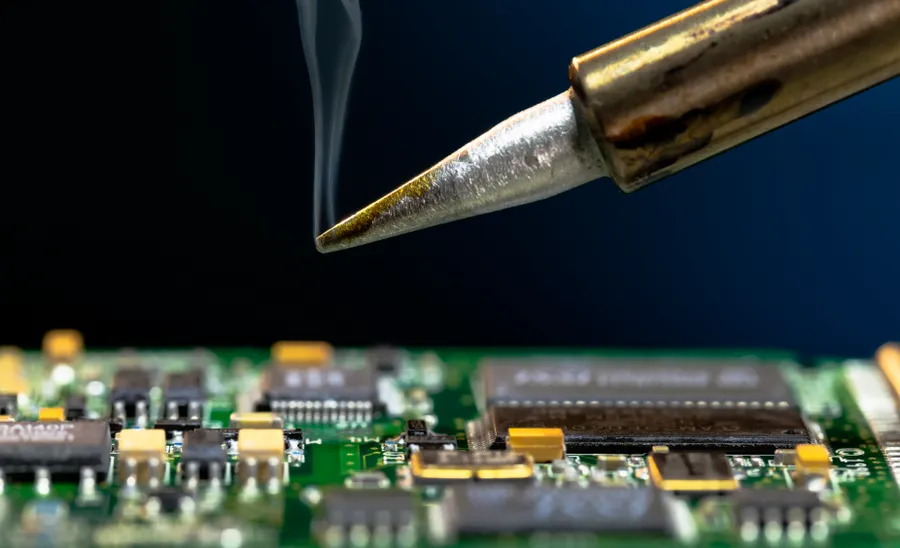
The 5-ohm resistor, while seemingly a specific value, finds broad application across diverse industries due to its ability to manage current flow and heat dissipation within electrical circuits. Its use cases range from delicate signal processing to robust power management, highlighting its versatility and importance.
This section addresses common questions regarding 5 ohm resistors, providing clear and concise answers to aid in your understanding and application of these components in electronic circuits. We aim to clarify typical usage scenarios and address potential user concerns.
Sourcing a 5-ohm resistor involves navigating various options, each offering different advantages in terms of availability, cost, and selection. The ideal choice depends on project requirements, desired quantities, and time constraints.
| Factor | Online Retailers | Physical Stores | Direct from Manufacturers | Specialty Component Distributors |
|---|---|---|---|---|
| Selection Variety | Extensive | Limited | Limited (usually custom) | Moderate (focus area) |
| Price | Competitive | Generally Higher | Variable (volume based) | Competitive |
| Availability | Wide, shipped | Immediate (local availability) | Lead times (volume dependent) | Moderate |
| Support | Limited | Moderate | High (technical) | High (technical focus) |
| Quantity | Flexible (from single units to bulk) | Limited | Bulk (large minimum order) | Flexible |
When selecting a supplier, it's crucial to verify the authenticity of the components and compliance with relevant standards. Ensure the resistor's specifications (resistance value, tolerance, power rating, temperature coefficient) match your project's requirements. Considering all of these factors leads to a more reliable purchase.
Proper handling of 5 ohm resistors during installation and use is crucial to ensure optimal performance and longevity. This section outlines key considerations, focusing on soldering techniques and preventative measures against damage to preserve their functionality within electrical circuits.
The 5 ohm resistor, despite its diminutive size, plays a critical role in the smooth operation of a vast array of electronic devices. Understanding its characteristics and applications is vital for anyone working with electronics. Whether you are using the 5 ohm resistor in simple hobby projects or complex industrial applications, a solid understanding of its fundamental role in electrical circuits is key. As technology advances, the 5 ohm resistor will continue to be an essential component, adapting and evolving to meet new demands. Remember to always check the color code, and the appropriate power rating to ensure optimal performance and safety in your circuits.

