In the realm of electronics, where digital often takes center stage, lies the vital foundation of analog design. Like the flowing of a river compared to the on/off nature of a switch, analog design deals with continuous signals, allowing us to interact with the world around us. From the microphone in your phone converting sound to electrical signals to the power management in your laptop, analog circuits underpin our everyday technologies. This article will explore the core of analog design, its importance, and how it shapes the world we live in. Let's embark on this journey to understand the subtle art of shaping continuous waveforms.
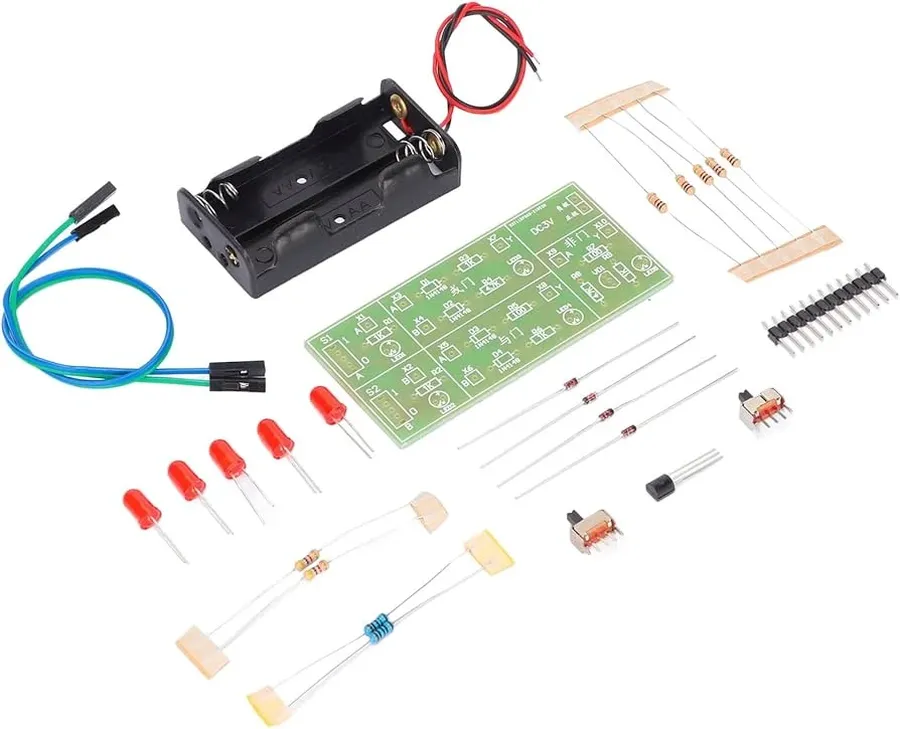
Analog design is the engineering discipline focused on creating electronic systems that process continuous signals, representing real-world information such as temperature, pressure, sound, and light. Unlike digital circuits, which operate on discrete levels (0s and 1s), analog circuits handle signals that vary smoothly and continuously over time. This capability is essential for interfacing with the physical world, making analog design fundamental to numerous technologies.
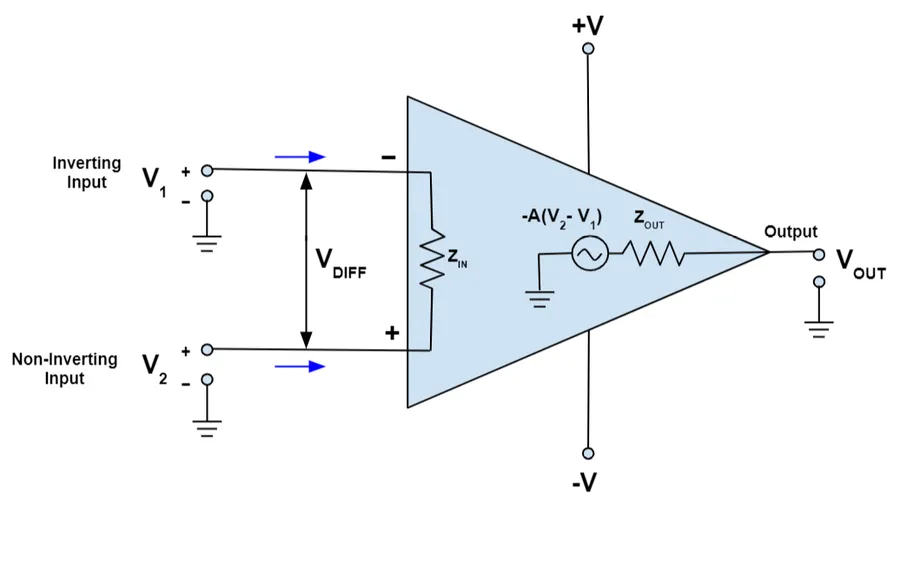
Analog circuit design is fundamentally built upon the interactions of basic electronic components, each contributing uniquely to the manipulation of continuous electrical signals. These components, including resistors, capacitors, inductors, transistors, and diodes, form the foundation of analog circuits, enabling the processing of real-world information through intricate circuit topologies. The understanding of these components in both time and frequency domains is essential for effective analog design.
| Component | Symbol | Function | Behavior |
|---|---|---|---|
| Resistor | R | Limits current flow | Obeys Ohm's Law (V=IR); Dissipates energy as heat |
| Capacitor | C | Stores electrical energy | Blocks DC signals, passes AC signals; Reactance decreases with frequency |
| Inductor | L | Stores energy in a magnetic field | Passes DC signals, blocks AC signals; Reactance increases with frequency |
| Transistor | BJT/FET | Amplifies or switches electronic signals | Current-controlled (BJT) or voltage-controlled (FET); Various operating regions (active, saturation, cutoff) |
| Diode | D | Allows current flow in one direction | Conducts current when forward biased; Blocks current when reverse biased |
These components are interconnected to form various circuit topologies. Analyzing the behavior of these circuits in both the time and frequency domains is paramount. Time-domain analysis involves observing how the circuit responds to transient signals, while frequency-domain analysis examines how the circuit behaves at different frequencies.
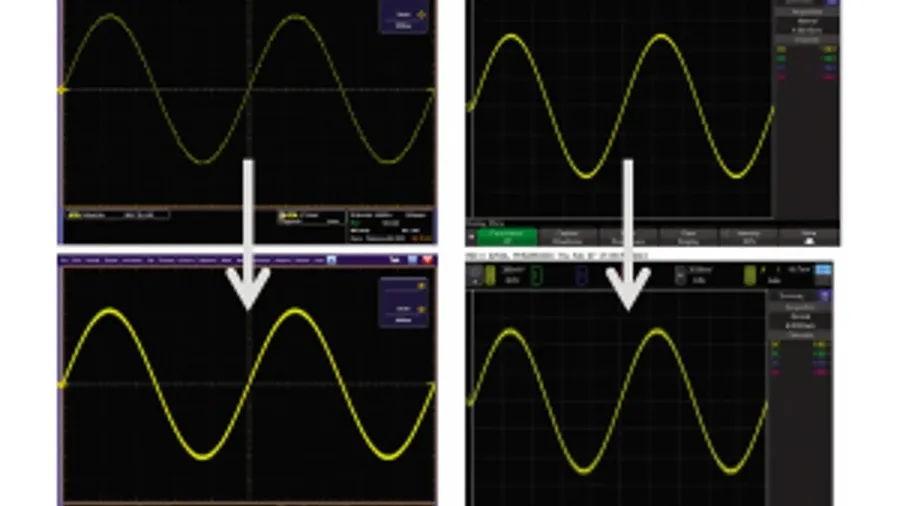
Analog and digital design represent fundamentally different approaches to processing information, each with its unique characteristics, applications, and challenges. The core distinction lies in how they handle signals: analog design deals with continuous signals that vary smoothly over time, while digital design operates on discrete signals represented by distinct levels, typically binary (0s and 1s).
| Feature | Analog Design | Digital Design |
|---|---|---|
| Signal Type | Continuous, varying smoothly over time. | Discrete, represented by distinct levels (typically binary). |
| Signal Representation | Voltage, current, or other physical quantities. | Binary digits (bits) 0 and 1. |
| Nature of Data | Directly represents physical quantities, naturally occurring signals. | Represents information as coded data. |
| Processing Method | Signal manipulation through circuits that alter the signal's amplitude, frequency, etc. | Logic gates and processors that perform operations on binary data. |
| Accuracy and Precision | Limited by noise and component tolerances, often less precise. | Higher accuracy and precision, less susceptible to noise and component variation. |
| Circuit Complexity | Can be complex due to the non-linear behavior of components, requiring careful analysis. | Often simpler in terms of individual components, complexity arises from the interconnectivity of large number of components. |
| Power Consumption | Can vary significantly, some circuits are power efficient, some are not. | Typically has well-defined power characteristics; power management techniques are mature. |
| Typical Applications | Sensors, audio amplifiers, radio frequency (RF) circuits, power management. | Computers, digital signal processors (DSPs), control systems, embedded systems. |
| Design Focus | Precise component selection, thermal management, and noise management. | Logic design, architecture, and algorithm development. |
Analog signals are often the direct representation of physical phenomena, such as temperature, light intensity, or sound waves. Analog design focuses on processing these signals in their natural form, preserving the nuances of the original data. Digital design converts these continuous signals into a series of discrete values for processing, allowing for precise operations and storage of data. Although digital systems are more robust and often easier to design, they rely on analog components at their input and output interfaces.
For instance, an audio amplifier is an analog circuit that boosts the amplitude of an audio signal without altering its fundamental shape. A digital audio processor, however, would convert the analog audio signal into a sequence of numbers, which it can then manipulate to adjust the audio parameters. This difference underscores why analog and digital designs are used in different areas with distinct goals.
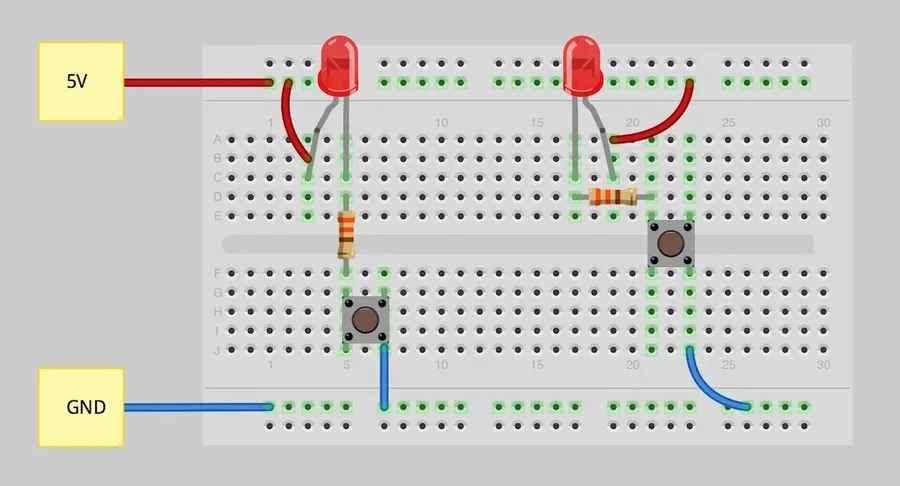
Analog circuit design relies heavily on specialized software tools that facilitate the entire design process, from initial concept to final implementation. These tools enable engineers to simulate circuit behavior, analyze performance characteristics, and design physical layouts, ensuring a streamlined and efficient workflow.
| Tool Category | Functionality | Examples (Commercial/Open Source) |
|---|---|---|
| Circuit Simulation Software | Simulates circuit behavior under various conditions, enabling analysis of voltage, current, and power. Includes transient, AC, and DC analysis. | LTSpice (Free), Cadence Spectre (Commercial), Synopsys HSPICE (Commercial) |
| Circuit Analysis Software | Performs in-depth analysis of circuit performance, including stability, noise, and distortion characteristics. Helps verify design specifications. | MATLAB (Commercial), Mathcad (Commercial), Qucs (Free) |
| Layout Design Tools | Creates physical layouts of circuits, optimizing for performance and manufacturability. Essential for converting schematic designs into physical implementations. | Cadence Virtuoso (Commercial), Mentor Graphics/Siemens Xpedition (Commercial), Klayout (Free) |
| Mathematical and Data Processing Tools | Used for post processing of simulation data, mathematical modeling, and visualization of results. Necessary for interpreting complex circuit characteristics. | Python with Libraries (Free), GNU Octave (Free), Origin (Commercial) |
The selection of appropriate tools is contingent on the complexity of the design, project budget, and the specific design environment. Proficiency in utilizing these tools is essential for any analog design engineer to effectively navigate the complexities of circuit design, ensuring that performance requirements and manufacturability are achieved.
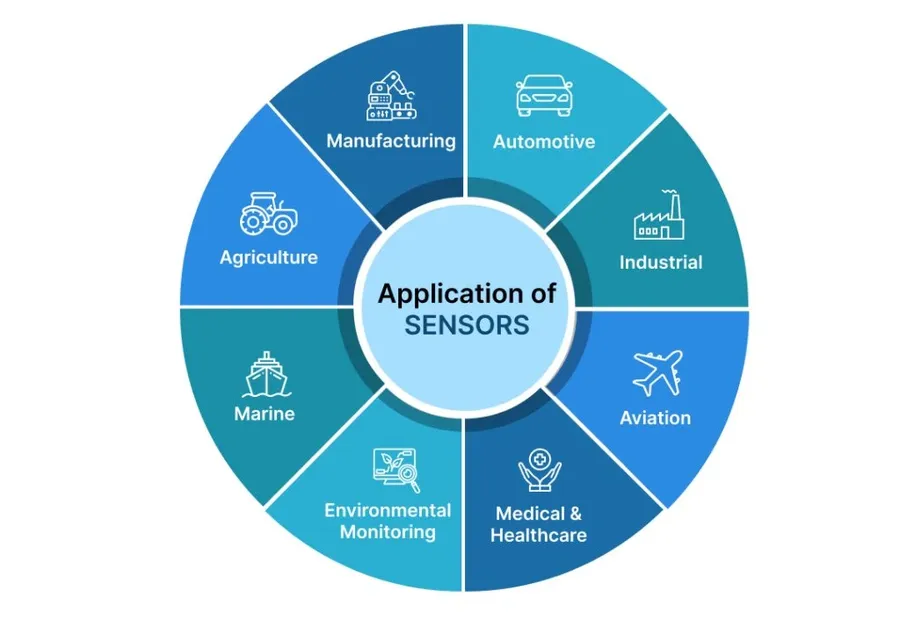
Analog design is the cornerstone of numerous technologies that interface with the real world, processing continuous signals to enable a wide array of functionalities. Its applications span multiple sectors, demonstrating its critical role in various aspects of modern life and industry.
Analog design presents a unique set of challenges that demand a deep understanding of physics, material science, and circuit theory. These challenges span from dealing with the inherent complexities of continuous signals to the practical limitations imposed by real-world manufacturing processes. Overcoming these hurdles requires a blend of theoretical knowledge and practical experience.
Experienced engineers mitigate these challenges by employing strategies such as careful component selection, advanced simulation techniques, and rigorous testing and verification. The iterative design process often involves several cycles of simulation, prototyping, and testing to ensure that the final product meets the required specifications and operates reliably in diverse operating conditions.
The trajectory of analog design is being significantly shaped by advancements in materials science, manufacturing technology, and the increasing integration of artificial intelligence (AI). These developments are not only enhancing the capabilities of existing analog circuits but are also paving the way for new applications in emerging technological frontiers.
The next phase of innovation in analog design is being driven by several key trends.
This section addresses common questions about analog design, offering clear and concise answers to enhance understanding and provide valuable insights into this crucial engineering field. We aim to clarify common points of confusion and provide career guidance.
Analog design, often working behind the scenes, plays a crucial role in bridging the gap between the physical world and the digital realm. From signal conditioning to power management, its application is all encompassing in current technology. Understanding the principles and mastering the challenges of analog design is crucial for the next generation of engineers. As technology advances, the field of analog design continues to evolve, presenting exciting opportunities for innovation and growth. Whether you're interested in pursuing a career in analog or simply curious about the technology that makes the world go round, delving into analog design is a journey that offers a deep understanding of electronic engineering and its real-world impact.

