In today's digital age, video encoding plays a crucial role in a myriad of applications, from streaming services and broadcasting to video conferencing and surveillance systems. At the heart of every efficient video encoder lies a well-designed Printed Circuit Board (PCB). Zero One Solution Limited specializes in providing comprehensive video encoder PCB solutions, empowering our clients to develop cutting-edge video processing technologies. But what exactly constitutes an optimal PCB solution for video encoders, and how can it impact the overall performance and success of your product? Join us as we delve into the intricacies of video encoder PCBs, exploring design considerations, manufacturing processes, and the vital role they play in delivering high-quality video experiences. From rapid prototyping to full-scale production, we are your trusted partner in bringing innovative video solutions to life.
Introduction: The Critical Role of PCBs in Video Encoders
Video encoders are the unsung heroes behind the seamless delivery of digital video, converting raw video signals into compressed formats for efficient storage and transmission. From broadcasting and streaming to surveillance and medical imaging, the demand for high-performance video encoding is constantly escalating. At the heart of every robust video encoder lies a meticulously engineered Printed Circuit Board (PCB), serving as the foundational platform that dictates its overall performance, reliability, and power efficiency. A well-designed PCB is not merely a component carrier; it is an active participant in signal integrity, thermal management, and power delivery, directly impacting the encoder's ability to process vast amounts of data at high speeds with minimal latency and error.
Understanding Video Encoding Video encoding is the process of compressing digital video to reduce its file size without significantly compromising quality. This compression is vital for efficient storage, transmission over networks, and playback on various devices. Common encoding standards include H.264, H.265 (HEVC), and VP9, each offering different levels of compression efficiency and quality for various applications like live streaming, video conferencing, and broadcast television.
The PCB's role extends beyond simply connecting components; it forms an intricate network of traces, vias, and layers that must precisely manage high-frequency signals, dissipate significant heat generated by powerful processing units, and distribute stable power across a complex array of ICs. Any compromise in PCB design can lead to signal degradation, thermal throttling, and ultimately, encoder malfunction or suboptimal performance. Therefore, the meticulous design and manufacturing of the PCB are paramount for achieving the stringent performance requirements of modern video encoding solutions.
Key Design Considerations for Video Encoder PCBs
Designing Printed Circuit Boards (PCBs) for video encoders demands meticulous attention to several critical factors, as these directly impact the device's performance, reliability, and longevity. The complexity of high-speed video data processing necessitates a PCB that can maintain signal integrity, manage significant heat dissipation, ensure stable power delivery, and optimize component placement to mitigate interference. A failure in any of these areas can lead to compromised video quality, system instability, or even component failure, making these design considerations paramount for robust video encoder solutions.
Signal Integrity Maintaining signal quality is crucial for high-speed data transmission in video encoders. This involves careful impedance matching, minimizing reflections and crosstalk, and designing proper trace routing to prevent signal degradation. Poor signal integrity can lead to data loss, increased bit error rates, and ultimately, a reduction in video quality, making it a cornerstone of high-performance video encoder PCB design. Techniques such as differential routing and controlled impedance traces are indispensable.
Thermal Management Video encoder components, especially powerful processors and FPGAs, generate substantial heat. Effective thermal management is essential to dissipate this heat efficiently, preventing overheating and ensuring the stable operation and extended lifespan of components. Strategies include using thermal vias, integrating heat sinks, selecting appropriate PCB materials with good thermal conductivity, and optimizing component placement to facilitate airflow and heat dissipation pathways.
Power Distribution Providing stable and clean power to all components is vital for the reliable operation of video encoders. A well-designed Power Delivery Network (PDN) minimizes voltage drops and noise, ensuring that sensitive digital and analog circuits receive consistent power. This involves careful selection of decoupling capacitors, proper plane design for power and ground, and optimizing trace widths to handle current demands, thereby preventing performance degradation and unexpected system behavior.
Component Placement Optimizing component layout is critical for minimizing electromagnetic interference (EMI) and maximizing performance. Strategic placement considers the flow of signals, power, and heat. Sensitive analog and high-speed digital components should be isolated where necessary, and critical signal paths should be kept short and direct. Proper component placement also aids in assembly efficiency and simplifies testing, contributing to overall product reliability and cost-effectiveness.
Material Selection: Choosing the Right Substrate for Video Encoding
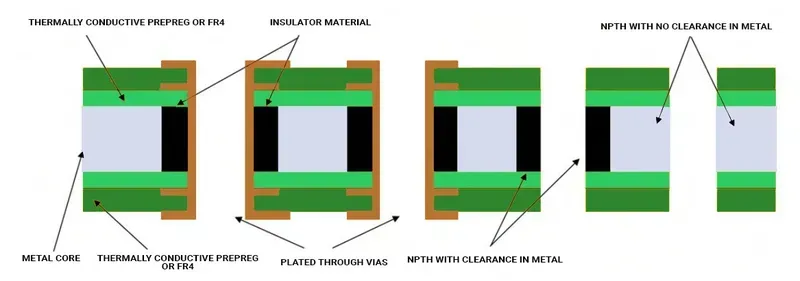
Metal Core PCB
Selecting the optimal PCB substrate is paramount for the performance and longevity of video encoder solutions, directly influencing signal integrity, thermal dissipation, and overall reliability. The choice of material is not merely a cost consideration but a critical engineering decision that dictates how effectively high-speed video data is processed and transmitted, especially with increasing demands for higher resolutions and advanced compression algorithms. This foundational decision impacts everything from impedance control and dielectric loss to the ability to manage significant heat generated by high-performance encoder chipsets.
Material Type
Key Properties
Advantages for Video Encoders
Considerations
FR-4 (Standard Epoxy-Glass)
Good dielectric properties, cost-effective, widely available
Suitable for general-purpose video encoding, lower frequency applications, and cost-sensitive projects
Higher dielectric loss at high frequencies, less stable Dk/Df, not ideal for ultra-high-speed interfaces (e.g., HDMI 2.1, DisplayPort 2.0)
Low Dk/Df (dielectric constant/dissipation factor), excellent signal integrity, stable performance across temperature and frequency
Crucial for high-resolution (4K/8K) and high-bandwidth video encoding to minimize signal degradation and insertion loss
Higher cost, may require specialized fabrication processes
Thermal Management Materials (e.g., Metal Core PCB, Copper Inlay)
High thermal conductivity, efficient heat dissipation
Essential for high-power video encoder ICs to prevent overheating, improve reliability, and extend lifespan
Increased complexity and cost in manufacturing, heavier boards
Flexible/Rigid-Flex Materials (e.g., Polyimide)
Bendable, space-saving, high durability
Enables compact designs, integration into small form-factor devices or complex mechanical assemblies where traditional rigid boards are impractical
Higher cost, specific design rules for bending and routing, often combined with rigid sections
Manufacturing Processes: Ensuring Quality and Reliability
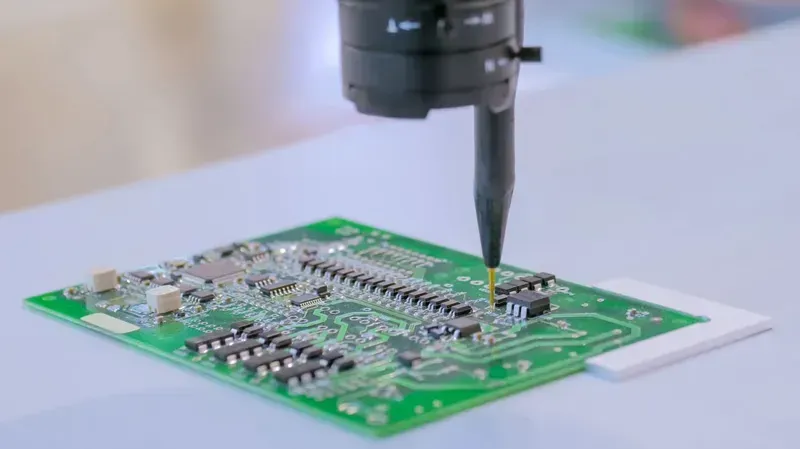
SMT Assembly
The robustness and performance of a Video Encoder PCB Solution hinge critically on the precision and quality of its manufacturing processes. Beyond superior design and material selection, the meticulous execution of fabrication, assembly, and rigorous testing phases is paramount to ensuring that these complex boards meet the demanding requirements for high-fidelity video processing and long-term reliability in diverse applications.
PCB Fabrication: Foundation of Performance The initial stage involves transforming the design into a physical board. This includes meticulous layer stacking, where conductive traces and insulation layers are precisely laminated. Etching defines the circuit patterns, removing unwanted copper, while drilling creates vias for inter-layer connections and component mounting. Advanced fabrication techniques are crucial to maintain signal integrity for high-speed video data, ensuring precise impedance control and minimizing signal loss or distortion.
Component Assembly: Precision in Integration Following fabrication, components are mounted onto the PCB. Surface Mount Technology (SMT) is predominantly used for the miniaturized, high-density components common in video encoders, offering efficiency and space savings. Through-Hole Technology (THT) may still be employed for larger or higher-power components requiring greater mechanical stability. The accuracy of component placement and soldering is critical to prevent defects like shorts or open circuits, which can severely impair video processing capabilities.
Testing and Inspection: Upholding Quality Standards Rigorous testing and inspection protocols are indispensable to validate the functionality and reliability of the assembled Video Encoder PCB. This includes Automated Optical Inspection (AOI) for solder joint quality and component presence, X-ray inspection for hidden connections like BGAs, In-Circuit Testing (ICT) to verify electrical connectivity and component values, and functional testing to ensure the encoder performs according to specifications. These multi-faceted tests identify potential defects early, ensuring only high-quality boards proceed to deployment.
High-Speed PCB Design Techniques for Video Encoding
Optimizing Printed Circuit Board (PCB) design for high-speed video encoding is paramount to ensuring signal integrity, minimizing data loss, and achieving superior video quality. The core challenge in high-speed applications lies in managing electromagnetic interference (EMI) and maintaining consistent signal characteristics across the board. Implementing advanced design techniques, such as meticulous impedance control, strategic differential signaling, and robust grounding strategies, is critical for achieving reliable performance in cutting-edge video encoder solutions.
Controlled Impedance: Precision in Signal Transmission Controlled impedance is a fundamental high-speed design technique where the characteristic impedance of a trace is precisely matched to the impedance of the transmission line and the components connected to it (typically 50 or 75 ohms for video). This matching minimizes signal reflections, which can cause signal degradation, timing errors, and increased noise. Achieving controlled impedance requires careful consideration of trace width, trace spacing, dielectric constant of the PCB material, and board thickness. Advanced PCB manufacturers utilize specialized software and fabrication processes to ensure these parameters are met with high accuracy, often to within ±10% or tighter tolerances.
Differential Signaling: Superior Noise Immunity Differential signaling involves transmitting a signal using two complementary traces, one carrying the original signal and the other carrying an inverted version. The receiver then processes the difference between these two signals. This technique is highly effective for high-speed video data transmission because it provides exceptional immunity to common-mode noise. Any noise coupled onto both traces tends to be canceled out at the receiver, significantly improving signal-to-noise ratio (SNR) and allowing for faster data rates and longer trace lengths without degradation. Common differential pairs in video encoding include HDMI, DisplayPort, and LVDS.
Grounding Strategies: The Foundation of Noise Reduction Effective grounding is the bedrock of stable high-speed PCB performance. A robust ground plane provides a low-impedance return path for high-frequency currents, minimizing ground bounce and crosstalk. Key strategies include using a solid, unbroken ground plane underneath signal layers, ensuring short and direct ground connections for all components, and isolating analog and digital grounds when necessary to prevent noise propagation. Proper via stitching between ground planes and careful consideration of return current paths are also crucial to prevent electromagnetic radiation and ensure signal integrity in complex video encoder designs.
Design Technique
Primary Benefit
Application in Video Encoding
Key Design Parameter
Controlled Impedance
Minimizes signal reflections, ensures data integrity
High-speed data paths (e.g., video data lines, clock signals)
Entire PCB layout, especially around high-speed ICs
Solid ground planes, via stitching, short return paths
Zero One Solution Limited: Your Partner for Video Encoder PCB Solutions
At Zero One Solution Limited, we understand the intricate demands of modern video encoder PCB solutions. Leveraging over a decade of industry leadership since our founding in 2011, we specialize in delivering high-performance, reliable, and cost-effective printed circuit board solutions tailored precisely for the complexities of video encoding applications. Our commitment to rapid prototyping and comprehensive one-stop services ensures that your innovative video encoder designs move from concept to market with unparalleled speed and efficiency.
Rapid Prototyping Excellence Our core strength lies in accelerating your R&D cycles. We offer ultra-fast PCB fabrication and assembly services, enabling engineers to quickly test and iterate their video encoder designs. This rapid turnaround significantly reduces time-to-market for cutting-edge video processing technologies.
Comprehensive One-Stop Services From initial PCB design and layout optimization, particularly for high-speed signal integrity critical in video encoders, to advanced manufacturing and assembly, we provide a seamless, integrated solution. Our expertise spans component sourcing, SMT/THT assembly, rigorous testing, and quality control, simplifying your supply chain and ensuring a cohesive production process.
Global Supply Chain Network Headquartered in Shenzhen, China, with a strategic branch in Dubai, Zero One Solution Limited is positioned at the nexus of the global electronics manufacturing landscape. This dual presence grants us direct access to a vast network of high-quality material suppliers and advanced manufacturing capabilities, ensuring competitive pricing and consistent material availability for your video encoder PCB projects, regardless of complexity or volume.
Expertise in High-Performance Video Applications Our veteran engineering team possesses deep knowledge in designing PCBs for demanding video encoder environments, including considerations for high-resolution formats (4K/8K), efficient codecs (HEVC), and robust thermal management. We apply advanced design techniques such as controlled impedance routing, differential pair signaling, and optimized grounding to ensure superior signal integrity and performance for your video encoding hardware.
Partner with Zero One Solution Limited to transform your video encoder concepts into market-ready products. Our proven track record, combined with our strategic capabilities, makes us the ideal choice for developers seeking reliable, high-quality, and rapidly deployable video encoder PCB solutions.
Case Studies: Successful Video Encoder PCB Projects
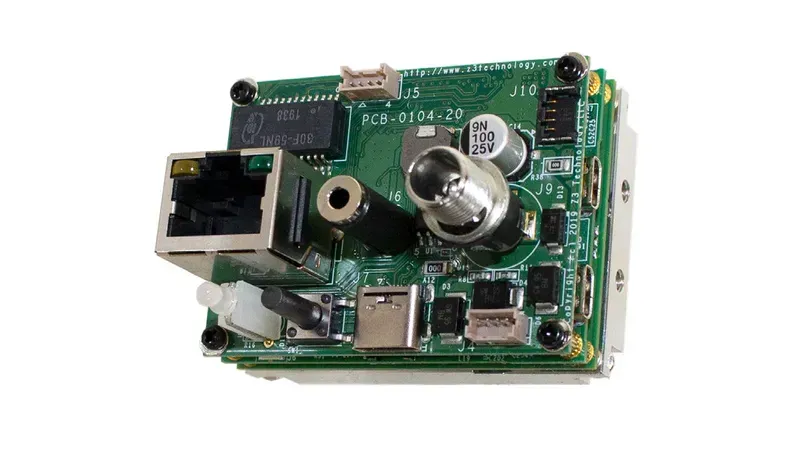
Video Encoder PCB
At Zero One Solution Limited, our extensive experience in rapid prototyping and high-performance PCB manufacturing has empowered numerous clients to bring cutting-edge video encoder products to market. These case studies underscore our expertise in navigating complex design challenges, ensuring signal integrity, managing thermal loads, and delivering robust, reliable solutions tailored to specific application requirements.
High-Density 8K HEVC Encoder for Broadcast A prominent broadcast technology firm required a compact, high-density PCB for their next-generation 8K HEVC encoder, demanding exceptional signal integrity at extremely high data rates. Zero One Solution Limited utilized a multi-layer stack-up with advanced high-speed laminates (e.g., Megtron 6) and implemented meticulous controlled impedance routing, along with optimized power and ground planes. Our thermal management expertise, including strategic component placement and the integration of thermal vias, ensured stable operation within a constrained footprint. The resulting PCB enabled the client to achieve unparalleled 8K video compression efficiency and quality, meeting stringent broadcast industry standards and accelerating their product launch by 30%.
Low-Power H.265 Encoder for UAV Surveillance A defense contractor approached us for a lightweight, low-power H.265 video encoder PCB for their unmanned aerial vehicle (UAV) surveillance systems, operating in harsh environmental conditions. We designed a compact, rigid-flex PCB incorporating lightweight, durable substrates suitable for aerospace applications. Our design focused on optimizing power efficiency through meticulous power distribution network (PDN) design and careful selection of low-power components. Furthermore, we implemented robust EMI shielding techniques to ensure reliable signal transmission in electromagnetically noisy environments. This solution significantly extended the UAV's operational battery life and provided stable, high-quality video feeds under challenging field conditions, proving critical for mission success.
Multi-Channel Video Encoder for Medical Imaging A medical device company required a highly reliable, multi-channel video encoder PCB for their advanced diagnostic imaging equipment, demanding exceptional image fidelity and minimal latency. Zero One Solution Limited engineered a sophisticated PCB with isolated analog and digital sections to prevent noise interference, crucial for medical applications. We implemented precise differential signaling for critical data paths and employed a comprehensive grounding strategy to ensure signal purity. Our manufacturing processes adhered to strict medical device quality standards (e.g., ISO 13485-compliant), including rigorous testing and inspection. The delivered PCB enabled the client's system to capture and encode multiple high-resolution video streams simultaneously with pristine clarity, enhancing diagnostic accuracy and patient care.
Future Trends in Video Encoder PCB Technology
The evolution of video encoding is a relentless pursuit of higher quality, greater efficiency, and more intelligent processing. These advancements profoundly influence the design and manufacturing of Video Encoder PCBs, demanding increasingly sophisticated solutions. As we move towards ubiquitous high-resolution content and AI-driven video analytics, the demands on PCB technology for video encoders will continue to intensify, driving innovation in material science, signal integrity, and power delivery.
High-Resolution Video (4K, 8K) and Beyond The proliferation of 4K and 8K displays necessitates video encoders capable of processing massive data streams. This trend impacts PCB design by requiring even higher bandwidth traces, enhanced signal integrity measures (e.g., tighter impedance control, advanced routing), and superior power distribution networks to support the increased processing power of next-generation codecs. PCBs must mitigate insertion loss and crosstalk effectively at these extreme data rates, often leading to the adoption of low-loss dielectric materials.
Advanced Codecs (HEVC, AV1, VVC) and Their Demands Newer video codecs like High Efficiency Video Coding (HEVC), AV1, and the Versatile Video Coding (VVC) standard offer significant compression efficiency but demand substantially more computational power from the encoder chips. This translates to higher power densities, necessitating advanced thermal management solutions on the PCB, such as specialized thermal vias, copper pours, and potentially integrated heat sinks. Furthermore, the complexity of these algorithms often requires more intricate digital interfaces and tighter synchronization, pushing the boundaries of multi-layer PCB stack-up design.
Artificial Intelligence (AI) Integration for Video Processing AI is increasingly being integrated into video encoders for tasks like intelligent scene analysis, noise reduction, and content-aware encoding. This integration means that Video Encoder PCBs will need to accommodate specialized AI accelerators (e.g., NPUs, GPUs) alongside traditional encoding ASICs or FPGAs. The PCB design must facilitate high-speed communication between these diverse processing units, manage their combined thermal output, and provide robust power delivery, often incorporating advanced power integrity solutions for transient current demands.
Edge Computing and Low-Latency Encoding The shift towards edge computing for video processing aims to reduce latency and bandwidth consumption. This trend drives the need for compact, power-efficient video encoder PCBs that can operate reliably in diverse environmental conditions. Miniaturization and increased integration density become critical, requiring advanced manufacturing techniques like HDI (High-Density Interconnect) and potentially System-in-Package (SiP) solutions for optimized footprint and performance.
Sustainability and Energy Efficiency With growing environmental consciousness, future Video Encoder PCB technology will also focus on greater energy efficiency. This involves optimizing power delivery networks to minimize losses, selecting components with lower power consumption profiles, and potentially integrating energy harvesting or adaptive power management features into the PCB design itself. The emphasis will be on reducing the overall carbon footprint of video encoding infrastructure.
FAQs about Video Encoder PCBs
Understanding the intricacies of Video Encoder PCBs is crucial for optimal performance and reliable video processing. This section addresses common inquiries to clarify key aspects of their design, manufacturing, and application, ensuring developers and engineers have the essential knowledge for successful project implementation.
Why is thermal management critical for Video Encoder PCBs? Thermal management is paramount for Video Encoder PCBs because video encoding processors generate significant heat during operation. Inadequate heat dissipation can lead to component overheating, performance degradation, reduced lifespan, and even irreversible damage. Effective thermal solutions, such as optimized copper pours, thermal vias, and heatsink integration, ensure stable operation and maintain signal integrity by preventing temperature-induced variations in material properties. Zero One Solution Limited prioritizes advanced thermal management techniques in our designs to guarantee the longevity and reliability of your video encoder systems, even under continuous high-load conditions, using materials like metal-core PCBs for superior heat dissipation when necessary.
How does controlled impedance impact high-speed video signals on a PCB? Controlled impedance is vital for high-speed video signals on a PCB because it ensures that the characteristic impedance of the transmission lines (traces) matches the impedance of the connected components (e.g., video encoder ICs, connectors). Mismatched impedance causes signal reflections, leading to signal integrity issues such as ringing, overshoot, and undershoot. These anomalies can corrupt data, reduce signal amplitude, and ultimately degrade video quality, especially for high-resolution formats like 4K and 8K. Zero One Solution Limited employs precise trace width, dielectric constant, and layer stack-up control to achieve stringent impedance tolerances, ensuring optimal signal propagation and minimal distortion for critical video data paths.
What are the advantages of using high-speed materials for Video Encoder PCBs? High-speed materials, such as those from Rogers or Isola, offer several advantages for Video Encoder PCBs over standard FR-4, particularly for applications involving high-frequency video signals. These materials exhibit lower dielectric loss (Df) and more stable dielectric constants (Dk) across a wider frequency range and temperature variations. This translates to reduced signal attenuation, lower signal distortion, and improved signal integrity, which are critical for transmitting uncompressed or high-bitrate video data without loss. While typically more expensive, they are essential for achieving the required performance in demanding video encoder applications, providing superior performance and reliability. Zero One Solution Limited recommends and utilizes these advanced materials when project specifications demand the highest signal performance.
What is rapid prototyping's role in developing Video Encoder PCB Solutions? Rapid prototyping is a cornerstone in the development of Video Encoder PCB Solutions, enabling agile iteration and accelerated time-to-market. It allows engineers to quickly fabricate and test initial PCB designs, identify potential issues related to signal integrity, thermal performance, or component placement early in the development cycle. This iterative process reduces costly redesigns, optimizes performance, and ensures that the final product meets stringent specifications efficiently. Zero One Solution Limited specializes in rapid prototyping, providing a swift turnaround for complex video encoder PCB designs, empowering our clients to innovate faster and bring their cutting-edge video solutions to market ahead of competitors.
In conclusion, a robust and well-designed PCB is paramount to achieving optimal performance in video encoder applications. Zero One Solution Limited is dedicated to providing comprehensive video encoder PCB solutions, encompassing design, manufacturing, and assembly, to empower your innovation. Whether you require rapid prototyping for cutting-edge research or high-volume production for established product lines, our expertise and state-of-the-art facilities ensure that your video encoder PCBs meet the highest standards of quality and performance. Contact us today to discover how our video encoder PCB solutions can accelerate your product development and enhance your video processing capabilities. Let Zero One Solution Limited be your trusted partner in bringing your video encoding visions to reality. Share this article with your network and leave your comments below – we'd love to hear your thoughts on the future of video encoding technology!