In the world of electronics, the 4.7k ohm resistor is a workhorse, found in countless circuits from simple LED drivers to complex signal processing systems. Like a well-placed traffic light on a busy road, this resistor carefully controls the flow of current. This article will unpack everything you need to know about the 4.7k ohm resistor, from its basic function to its practical applications, and help you choose the right resistor for your next project, while also covering frequently asked questions.
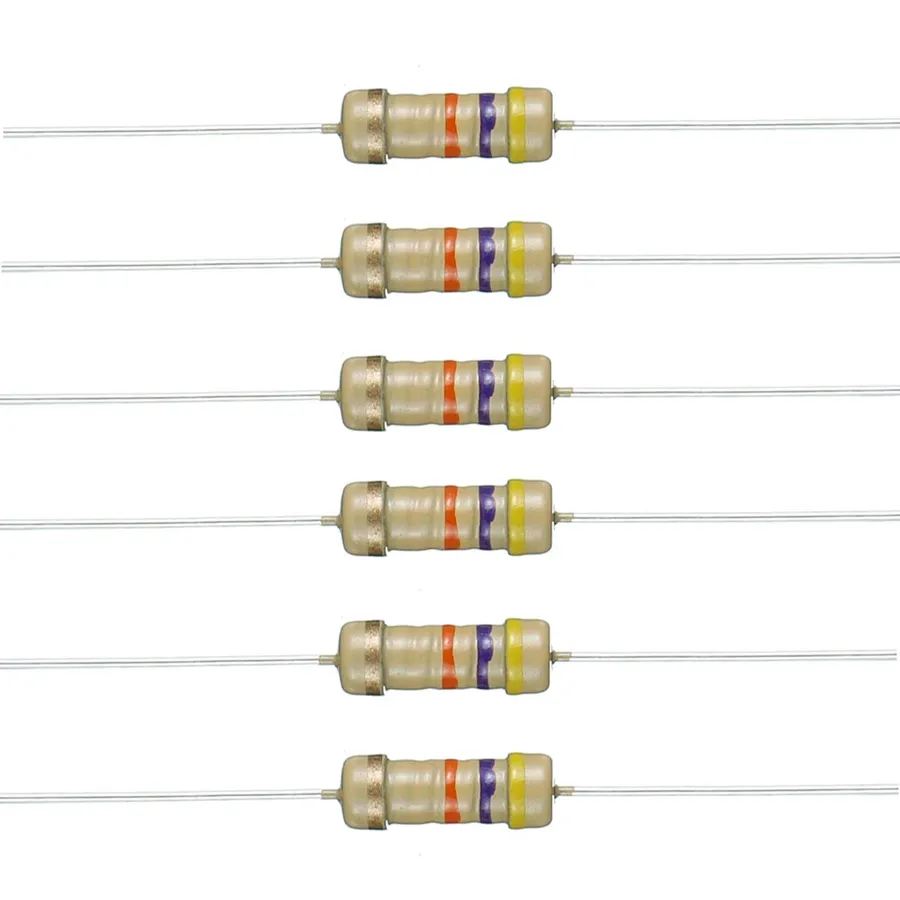
A 4.7k ohm resistor is a fundamental passive electronic component designed to impede the flow of electrical current, providing a resistance of 4,700 ohms. This specific resistance value is widely utilized in a multitude of electronic circuits, acting as a crucial element for controlling current, voltage, and signal levels, which are critical for proper circuit operation.
Electrical resistance, measured in ohms (Ω), is a fundamental property of materials that opposes the flow of electrical current. A 4.7k ohm resistor, therefore, presents a specific level of opposition (4,700 ohms) to current within a circuit. Ohm's Law, expressed as V = IR, mathematically defines the relationship between voltage (V), current (I), and resistance (R); this relationship is pivotal to understanding how a 4.7k ohm resistor operates within a circuit, where the resistor is used to precisely control the current and create voltage drops.
| Parameter | Symbol | Unit | Description |
|---|---|---|---|
| Voltage | V | Volts (V) | The electrical potential difference that drives current. |
| Current | I | Amperes (A) | The rate of flow of electrical charge. |
| Resistance | R | Ohms (Ω) | Opposition to current flow. |
When a voltage is applied across a 4.7k ohm resistor, the current flowing through the resistor is dictated by Ohm's Law. Specifically, the resistor limits the current, causing the voltage to drop proportionally across the component. For example, a 5V power supply connected to a circuit with a 4.7kΩ resistor will result in current of approximately 1.06mA passing through the resistor( I = V/R = 5V / 4700Ω = 0.00106A = 1.06mA). This interplay of voltage, current, and resistance allows for predictable circuit design.
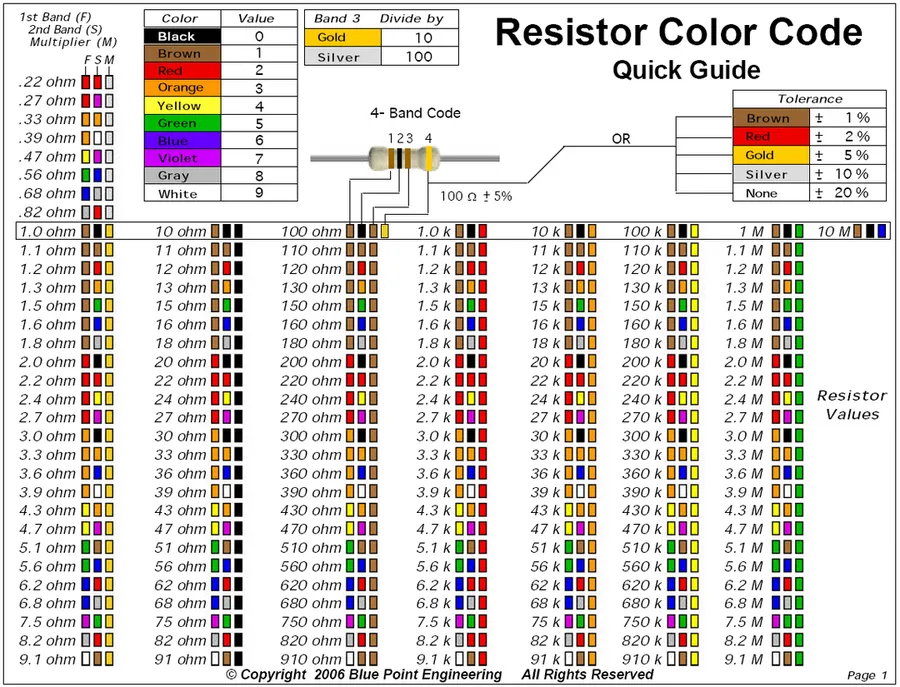
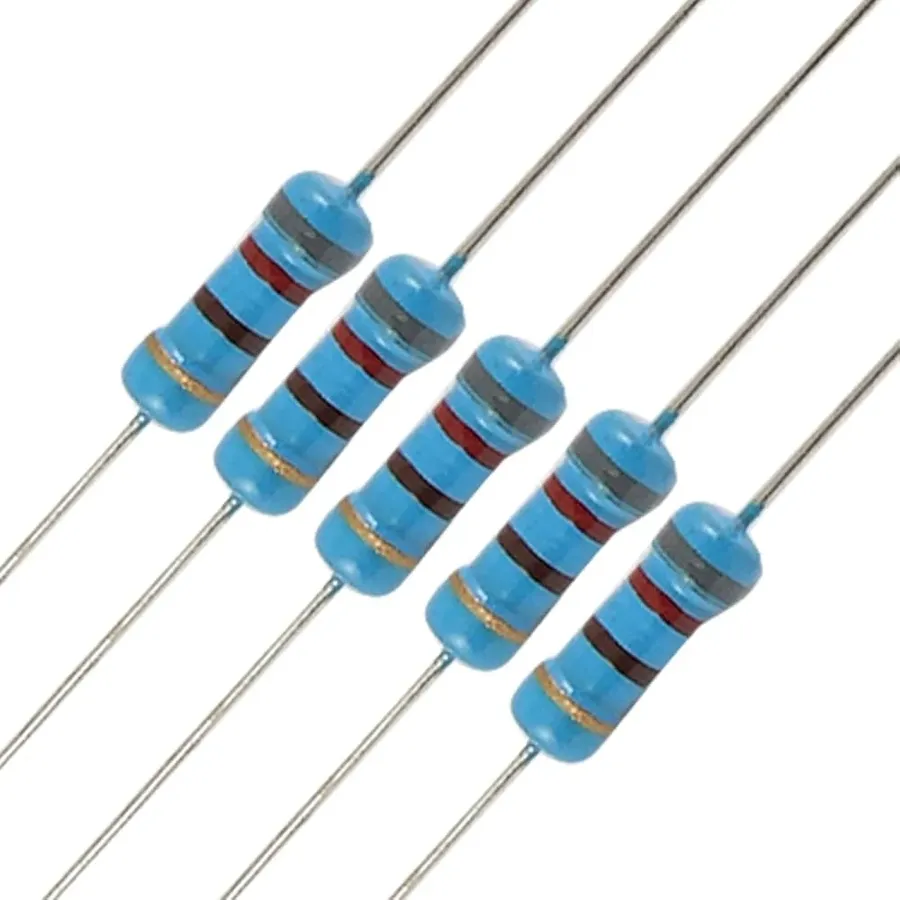
The 4.7k ohm resistor's value is visually encoded using color bands, a standard method for identifying resistance and tolerance. These bands allow for quick identification without needing to measure the component. A 4.7k ohm resistor with a 5% tolerance is typically marked with four color bands: yellow, violet, red, and gold.
| Band | Color | Digit/Multiplier | Tolerance |
|---|---|---|---|
| 1st Band | Yellow | 4 | - |
| 2nd Band | Violet | 7 | - |
| 3rd Band | Red | x 100 | - |
| 4th Band | Gold | - | ±5% |
To accurately determine a resistor's value, read the bands from left to right, starting with the band closest to the edge. The first two bands represent the significant digits of the resistance value, the third band acts as a multiplier, and the fourth band specifies the tolerance. Therefore, the 4.7k ohm resistor color code represents a resistance of 47 * 100 ohms, which is 4,700 ohms, with a ±5% tolerance.
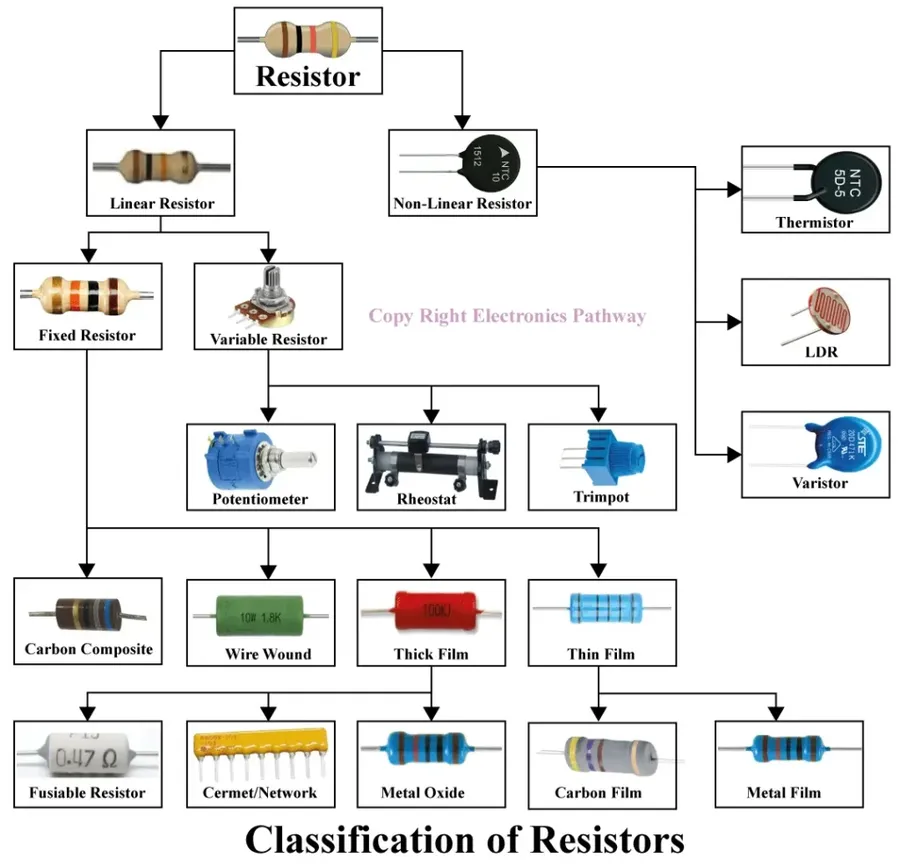
4.7k Ohm resistors are available in various types, each with distinct characteristics that cater to different application needs. These variations primarily stem from the materials and manufacturing processes used, influencing their performance metrics like power rating, tolerance, temperature coefficient, and overall reliability. The selection of a specific type often depends on the specific requirements of the application and the design trade-offs that may be necessary.
| Resistor Type | Construction | Typical Power Ratings | Tolerance | Temperature Coefficient | Advantages | Disadvantages | Typical Applications |
|---|---|---|---|---|---|---|---|
| Carbon Film | Carbon film deposited on a ceramic substrate | 1/8W to 2W | 2% to 5% | Relatively high and non-linear | Low cost, widely available | Higher noise, less stable, temperature sensitive | General purpose circuits, low-precision applications |
| Metal Film | Thin metal film deposited on a ceramic substrate | 1/8W to 1W | 0.1% to 1% | Low and linear | High precision, low noise, good stability | Higher cost than carbon film | Precision circuits, audio applications, high stability applications |
| Wire-Wound | Resistive wire wound around a ceramic core | 1W to 100+W | 0.05% to 1% | Very low and linear | High power handling, very precise | Large size, high inductance, higher cost | Power circuits, current sensing, high accuracy applications |
Power ratings for 4.7k ohm resistors typically range from 1/8W to 2W for carbon and metal film types, and can go much higher for wire-wound types, depending on the resistor's physical size and design. It’s important to select a power rating that is significantly greater than the calculated or measured power dissipation to ensure the longevity of the resistor and circuit reliability. Tolerance refers to the deviation from the stated resistance value which for 4.7k resistors can typically range from 0.1% to 5%. Temperature coefficient describes how the resistor's resistance changes with temperature, and selecting the appropriate type is paramount for applications operating under varying temperatures to minimize changes to the circuit behavior.
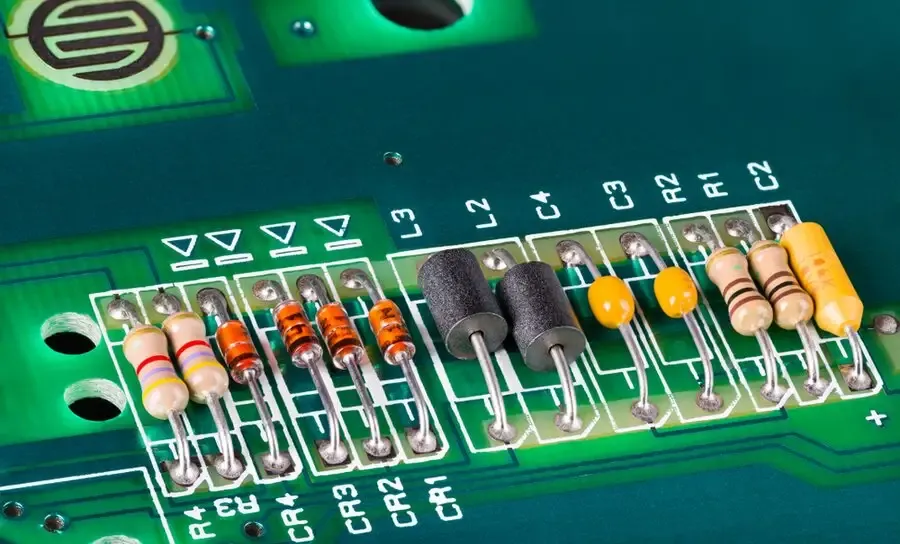
The 4.7k ohm resistor, a fundamental component in electronics, finds its utility across a diverse range of applications. Its primary function is to control current flow and establish precise voltage levels within circuits. This section explores some common applications, illustrating how this component is essential in different circuit designs.
The following list will elaborate on a few key use cases.
Selecting the appropriate 4.7k ohm resistor for a given application requires careful consideration of several key parameters. These specifications directly impact the resistor's performance and the overall circuit's functionality. Failing to account for these factors can lead to circuit malfunction or even component failure. This section provides a comprehensive checklist to ensure you choose the right 4.7k ohm resistor.
| Parameter | Description | Importance |
|---|---|---|
| Resistance Value | The nominal resistance of the resistor, in this case, 4.7k ohms. While the goal is 4700 ohms, minor deviations occur during manufacturing. | Must match the design requirements to ensure correct circuit operation. |
| Tolerance | The allowable deviation from the stated resistance value, typically expressed as a percentage (e.g., ±1%, ±5%). | Determines the precision of the resistor's resistance value, and the potential range of current flow within the circuit. A lower tolerance results in greater accuracy. |
| Power Rating | The maximum power that the resistor can dissipate without overheating and sustaining damage, typically measured in watts (W). Common ratings are 1/4W, 1/2W, 1W. | Crucial to avoid overheating and potential component failure; insufficient power rating can lead to damage and fire hazards. Calculate the expected power dissipation (P = I²R) to select the correct rating. For example, a 1/4W resistor should be selected if the calculation is below 0.25W. |
| Temperature Coefficient | Indicates how the resistor's resistance value changes with temperature. Measured in parts per million per degree Celsius (ppm/°C). | Important in applications with wide temperature variations; low coefficients are desired for stable operation. Typically, metal film resistors have a lower coefficient than carbon film, resulting in more stable performance. |
| Package Type | The physical form and mounting method of the resistor, such as through-hole (leaded) or surface mount (SMD). | Must be compatible with the circuit board design and assembly process. Through-hole components are easier for prototyping and experimentation. Surface mount components facilitate automated manufacturing and compact circuit design. |
When calculating power dissipation, the formula P=I²R should be used. P is the power in watts, I is the current in amperes, and R is the resistance in ohms. Exceeding the power rating will lead to overheating and can result in damage to the resistor, potentially causing a circuit failure. In addition, tolerance greatly affects the actual resistance of the component; a 5% tolerance will mean that a 4.7k ohm resistor could vary between 4465 ohms and 4935 ohms. Selecting the correct type of resistor such as carbon film or metal film is also critical to your project. Metal film resistors offer better stability, lower tolerance and lower temperature coefficients.
This section addresses common queries about 4.7k ohm resistors, providing concise answers to help you understand their properties and applications. We aim to clarify any confusion and provide practical information related to 4.7k ohm resistors.
Replacing a faulty 4.7k ohm resistor requires a systematic approach, beginning with accurate identification of the problem and proceeding through careful removal and replacement techniques. Proper testing and soldering methods are critical to ensure the new component functions correctly within the circuit.
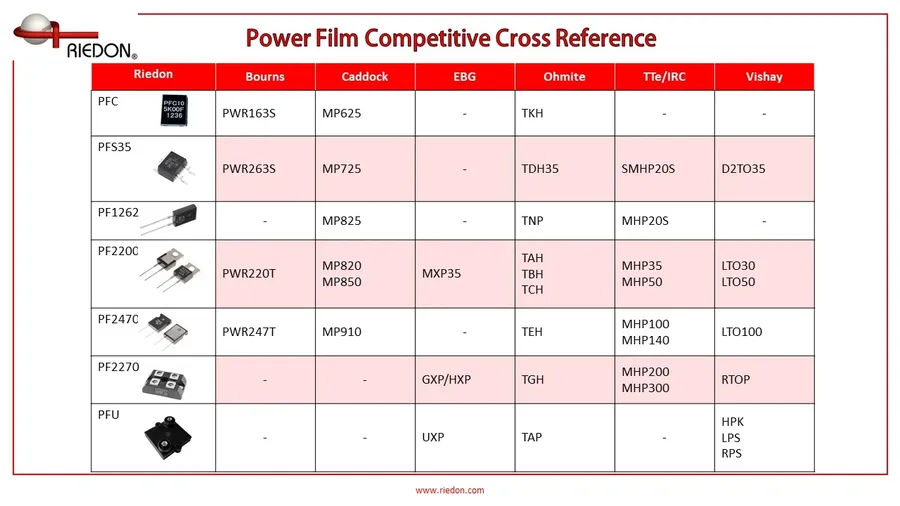
Acquiring 4.7k ohm resistors is straightforward due to their common use in electronics. These components are widely available from numerous suppliers, catering to both hobbyists and professionals. This section provides a guide to purchasing these essential resistors, covering both online and local options.
Always cross-reference the vendor's datasheet with your project needs to confirm the resistor's key specifications meet your project's power rating, tolerance, and temperature coefficients. This will avoid performance issues or potential damage from using an incorrect component.
The 4.7k ohm resistor, a small but mighty component, plays an indispensable role in countless electronic applications. From controlling the brightness of an LED to ensuring the proper function of complex circuits, understanding the characteristics and applications of the 4.7k ohm resistor is essential for any electronics enthusiast or professional. With this comprehensive guide, you now have the knowledge to select, use, and troubleshoot 4.7k ohm resistors effectively, ensuring your projects remain efficient and reliable. Always make sure that your projects use the correct resistor value in order to avoid damage or issues. The ubiquitous 4.7k ohm resistor is a key to your success.

