In our technologically driven world, electric circuits are the unsung heroes, powering everything from our smartphones to our homes. These circuits rely on a variety of parts working in harmony. This article will illuminate the essential components of an electric circuit, explaining their functions and importance, and shedding light on how these seemingly simple elements drive our modern lives.
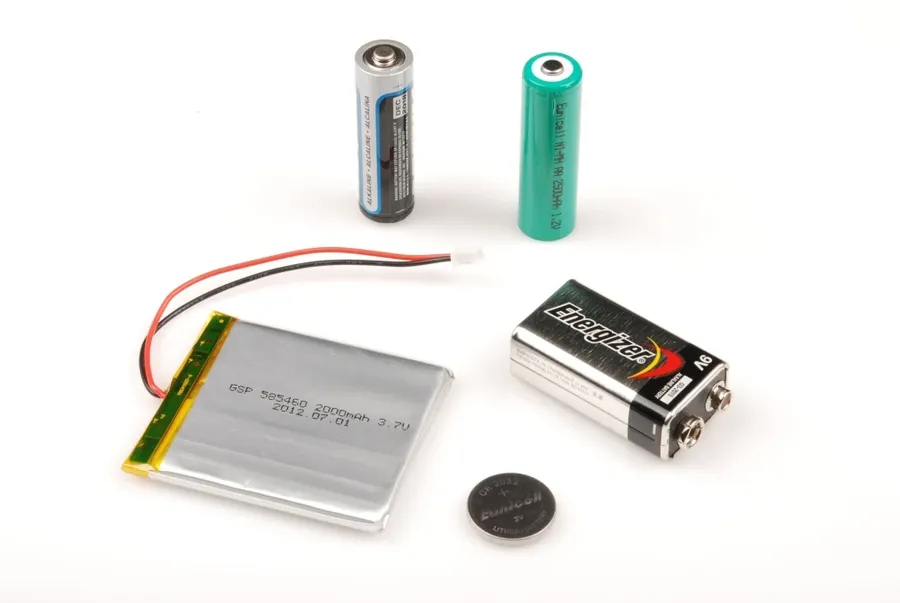
The power source is fundamental to any electric circuit, providing the necessary energy for electrons to flow and enabling the circuit to perform its intended function. These sources convert various forms of energy, such as chemical (batteries), mechanical (generators), or solar (photovoltaic cells), into electrical energy, which then drives the circuit's operation.
| Power Source Type | Description | Typical Applications | Voltage Characteristics |
|---|---|---|---|
| Batteries (DC) | Chemical energy converted to electrical energy. Typically provide a stable, direct current output. | Portable electronics, remote controls, flashlights | Fixed voltage, polarity sensitive |
| AC Power Supplies | Convert alternating current from mains to usable levels for electronic devices. | Household appliances, power adapters for devices | Varies based on mains voltage |
| Solar Cells | Photovoltaic cells convert sunlight directly into DC electricity | Solar panels, small-scale electronics | Varies based on light exposure |
| Generators | Convert mechanical energy into electrical energy using electromagnetic induction | Emergency power supplies, large-scale power generation | Varies based on design |
The choice of power source depends heavily on the specific application. For portable devices, batteries are often the best choice due to their compact size and DC output. In contrast, AC power supplies are utilized for larger appliances and devices needing higher voltages or currents. Understanding the specific characteristics of each power source, such as the voltage, current capacity, and stability, is essential for designing a reliable and effective electrical circuit.
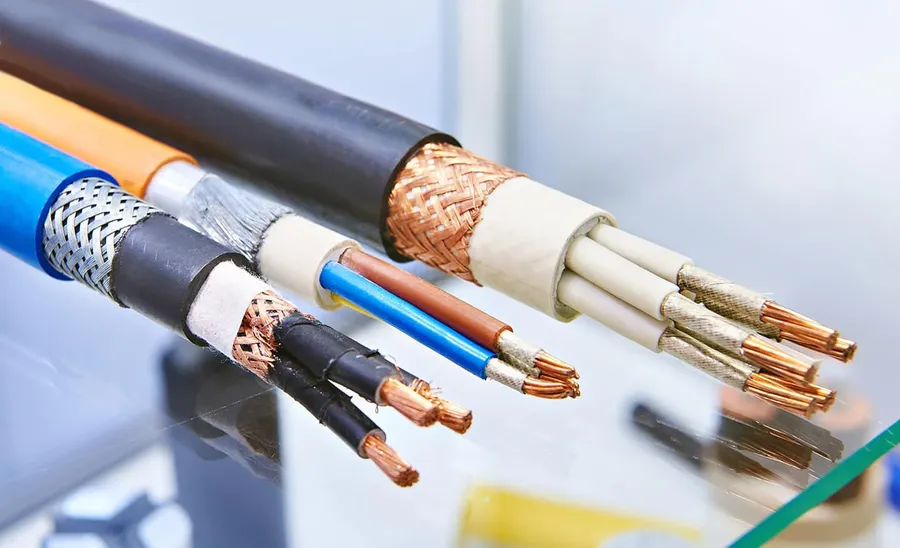
Conductors are essential components in electric circuits, providing the necessary pathways for electrical current to flow. Typically made of materials with high electrical conductivity, such as copper and aluminum, conductors facilitate the movement of electrons, enabling the circuit to function. Understanding the properties and specifications of conductors is critical for effective circuit design and performance.
| Property | Description | Impact on Circuit |
|---|---|---|
| Material Conductivity | The ability of a material to conduct electricity. Measured in Siemens per meter (S/m). | Higher conductivity leads to lower resistance and more efficient current flow, minimizing energy loss. |
| Wire Gauge | Indicates the physical size and current-carrying capacity of a wire. Measured using the American Wire Gauge (AWG) system. | Thicker wires (lower AWG number) can carry more current but are less flexible. Appropriate gauge ensures safe operation without overheating or excessive voltage drop. |
| Insulation | A non-conductive material surrounding the conductor, preventing current leakage and short circuits. | Proper insulation is vital for safety and reliable circuit operation, preventing unintended paths for current flow. |
The selection of conductive material, wire gauge, and insulation type are crucial design considerations. Copper is often chosen for its excellent conductivity, while aluminum provides a more lightweight alternative in specific applications. Proper gauge selection prevents overheating, and insulation protects against short circuits, contributing to circuit reliability and safety.
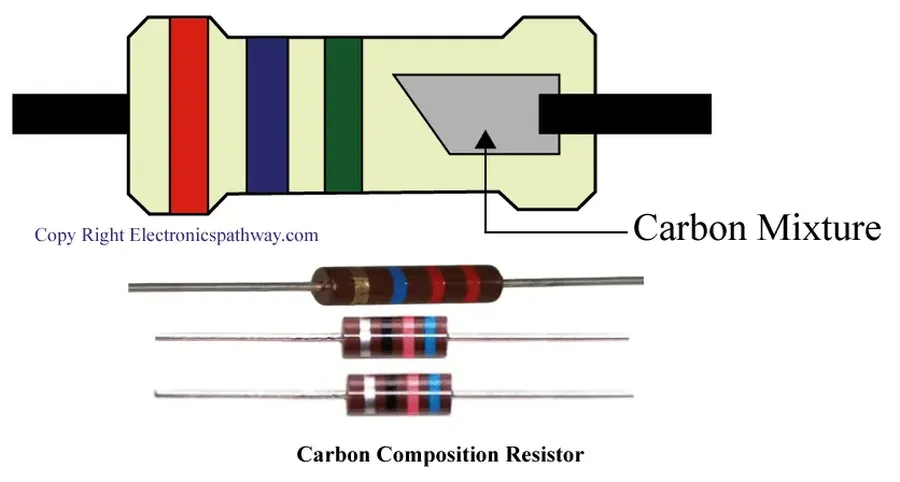
Resistors are fundamental electric circuit parts that impede the flow of electrical current, playing a crucial role in controlling the behavior of electronic circuits. They achieve this by converting electrical energy into heat, a process that is essential for various applications, from preventing damage to delicate components to adjusting signal levels.
Understanding how resistors function is key to designing and analyzing circuits. This includes an appreciation of their different types, their properties, and their practical applications. Below, we will delve into these critical aspects.
| Property | Description | Unit |
|---|---|---|
| Resistance | The measure of how much a resistor impedes current flow. | Ohms (Ω) |
| Power Rating | The maximum power a resistor can dissipate without damage. | Watts (W) |
| Tolerance | The permissible deviation of the resistance value from its nominal value. | Percentage (%) |
Resistors come in various types, each with its specific characteristics and suitable applications:
Resistors are crucial components in a wide range of applications, including:
The resistance value of a fixed resistor is often indicated through a color code printed on its body. Each color corresponds to a numerical value, and these values are used in a specific sequence to calculate the total resistance and the tolerance of the component. It is important to understand this code to choose the correct resistor in different circuit designs.
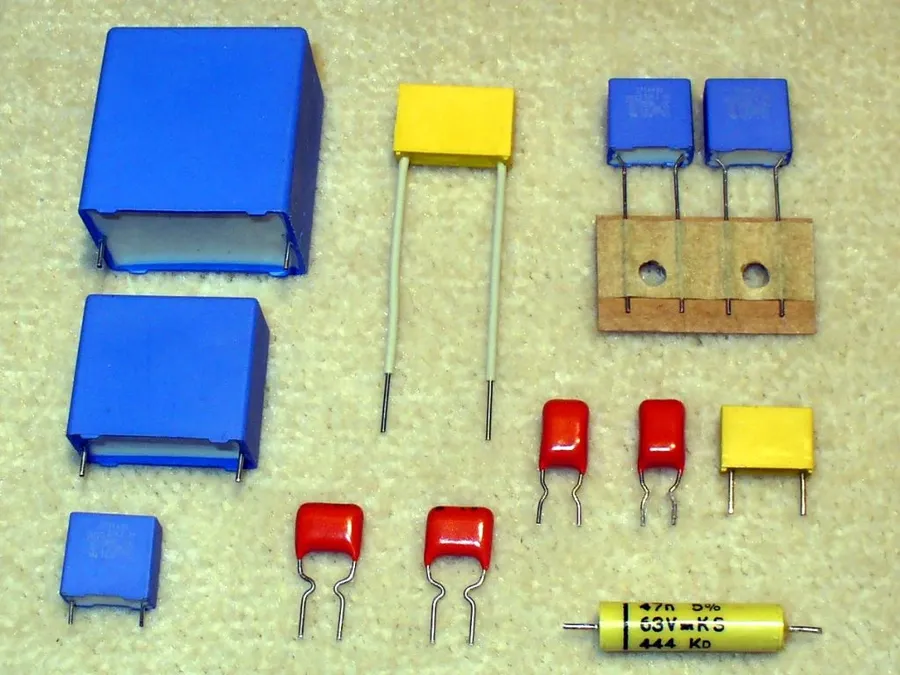
Capacitors are essential passive electronic components designed to store electrical energy in an electric field. They are fundamental in various circuits for energy storage, filtering, timing, and decoupling, acting like temporary batteries by accumulating charge and releasing it when needed. This ability to store and release energy makes them indispensable for smoothing voltage fluctuations, preventing signal interference, and establishing time-dependent circuit behaviors.
| Characteristic | Ceramic Capacitor | Electrolytic Capacitor |
|---|---|---|
| Dielectric Material | Ceramic | Electrolyte (typically aluminum or tantalum) |
| Polarity | Non-polarized | Polarized |
| Capacitance Range | Typically small (pF to µF) | Typically larger (µF to mF) |
| Voltage Rating | Moderate | Wide range, specific to type |
| Frequency Response | Excellent for high frequencies | Lower frequency performance due to construction |
| Stability | High stability | Lower stability, can degrade over time |
| Applications | Bypass, filtering, coupling in high-frequency circuits | Power supply filtering, energy storage, decoupling |
Capacitance, measured in farads (F), indicates a capacitor's ability to store charge. Common sub-units include microfarads (µF), nanofarads (nF), and picofarads (pF). The stored energy (E) within a capacitor can be calculated using the formula: E = 0.5 * C * V^2, where C represents capacitance and V represents the voltage across the capacitor.
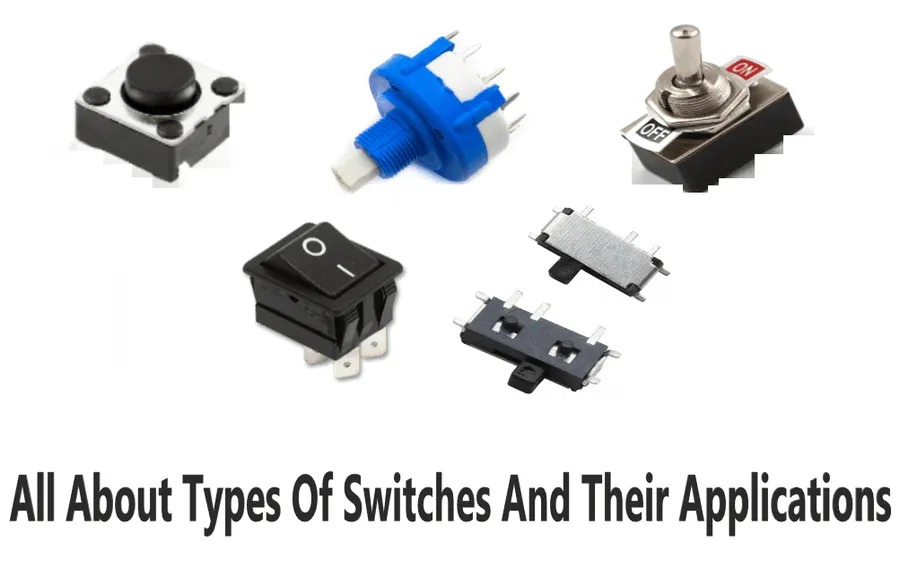
Switches are fundamental components in electric circuits, acting as gatekeepers that control the flow of electrical current by selectively opening or closing the circuit path. These devices enable us to control the operation of electrical devices and systems. This section will delve into various types of switches and their applications.
The core functionality of any switch is to provide a means to interrupt or complete a circuit. In the 'off' state, the switch creates an open circuit, preventing current flow. Conversely, in the 'on' state, it creates a closed circuit, allowing current to pass through. This simple on/off mechanism forms the basis for all switch operations.
| Switch Type | Description | Mechanism | Applications |
|---|---|---|---|
| Toggle Switch | A switch with a lever that moves between two positions. | Lever movement to open or close contacts. | General-purpose on/off control, often used in lighting and appliances. |
| Push-Button Switch | A switch that is activated by pressing a button. | Button pressure to make or break contact. | Momentary activation devices, such as keyboards and remote controls. |
| Rotary Switch | A switch with a rotating knob that selects from multiple positions. | Rotation of a knob to select a circuit path. | Mode selection and multiple circuit control, often used in multi-function appliances. |
| Slide Switch | A switch that is activated by sliding a knob or button. | Sliding a knob to open or close contacts. | Selecting a circuit path, often found in small handheld devices. |
| Limit Switch | A switch activated when a mechanical object makes contact. | Mechanical contact for activation. | Detecting position or presence of an object in industrial applications and robotics. |
| Relay | Electromagnetically activated switch. | Electromagnet to open or close contact. | Remotely controlling circuits, automation systems. |
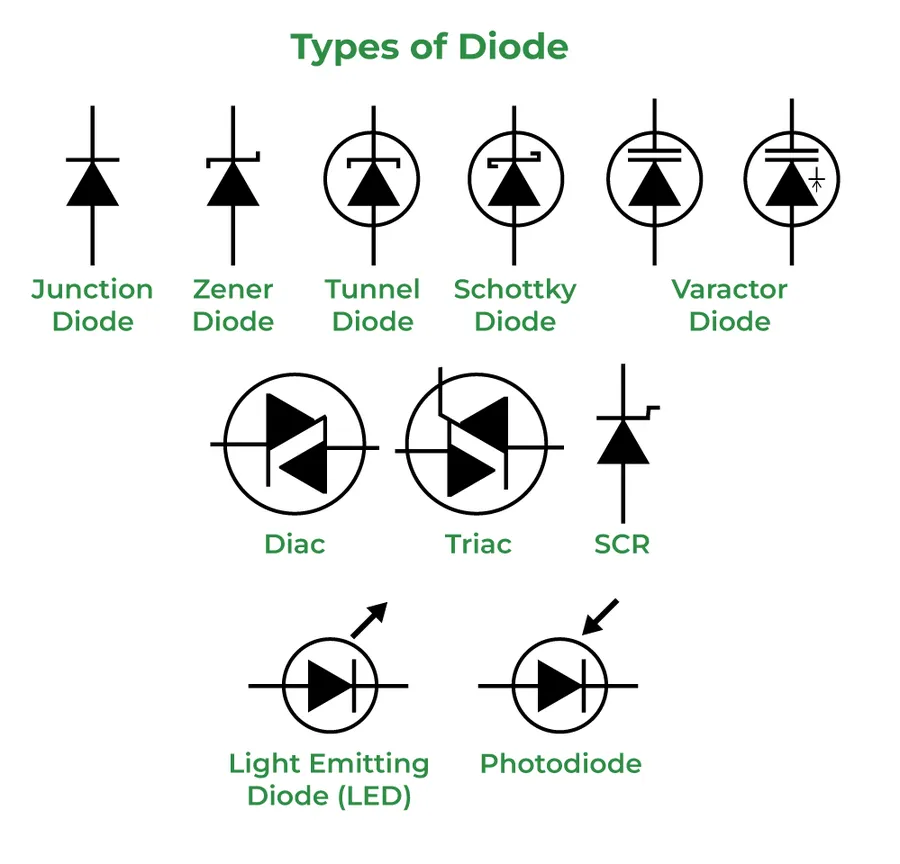
Diodes are semiconductor devices that function as one-way valves for electrical current, exhibiting a unique property of allowing current to flow predominantly in one direction while significantly restricting it in the opposite direction. This characteristic is fundamental to many electronic circuits and applications, primarily where directional control of current is required.
The behavior of a diode is governed by its junction, which forms when two different types of semiconductor material (p-type and n-type) are joined. When a positive voltage is applied to the anode (p-type side) and a negative voltage to the cathode (n-type side), the diode is said to be in 'forward bias,' allowing current to flow with minimal resistance. Conversely, when the polarity is reversed, placing the diode in 'reverse bias,' the diode impedes current flow, exhibiting high resistance.
| Characteristic | Forward Bias | Reverse Bias |
|---|---|---|
| Current Flow | High | Minimal |
| Resistance | Low | High |
| Junction Behavior | Depletion region narrows | Depletion region widens |
Diodes are instrumental in rectification, a process that converts alternating current (AC) to direct current (DC). Rectifiers, built using diodes, are fundamental in power supplies, enabling electronic devices to operate on DC power converted from AC sources. Furthermore, diodes play crucial roles in voltage regulation, signal processing, and protection circuits, showcasing their versatile applicability.
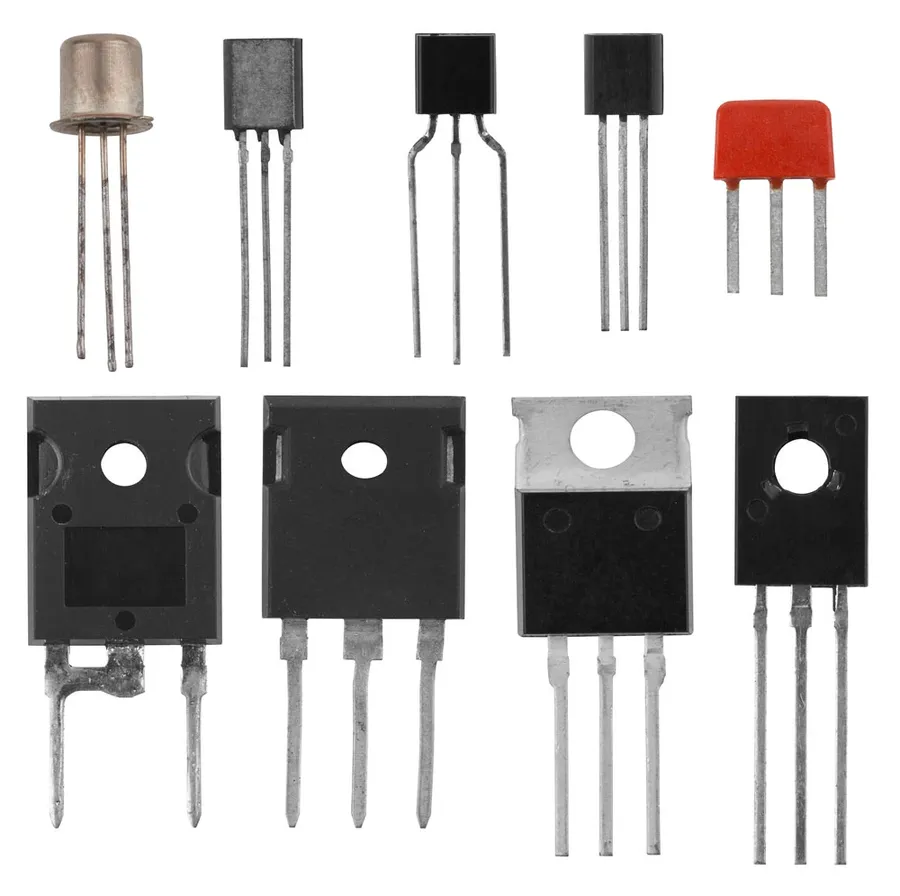
Transistors are fundamental semiconductor devices that act as electronic switches and amplifiers, forming the cornerstone of modern electronics. Their ability to control and manipulate electrical signals has revolutionized technology, enabling the development of complex circuits and systems.
At their core, transistors regulate the flow of electrical current, allowing them to perform two primary functions: switching and amplification. As switches, they control the activation and deactivation of circuit components. As amplifiers, they increase the magnitude of electrical signals, facilitating signal processing and transmission.
| Feature | Bipolar Junction Transistor (BJT) | Field-Effect Transistor (FET) |
|---|---|---|
| Control Mechanism | Current-controlled | Voltage-controlled |
| Input Impedance | Relatively low | Relatively high |
| Polarity | NPN or PNP | N-channel or P-channel |
| Applications | Amplifiers, switching circuits | Low-power applications, integrated circuits |
There are two primary categories of transistors, each with unique characteristics and applications:
The choice between BJTs and FETs depends on the specific application and design constraints. BJTs are often preferred in applications requiring high current gain, while FETs are more suitable for low-power or high-impedance circuits. Understanding the fundamental functionality of these devices is crucial for anyone working in electronics.
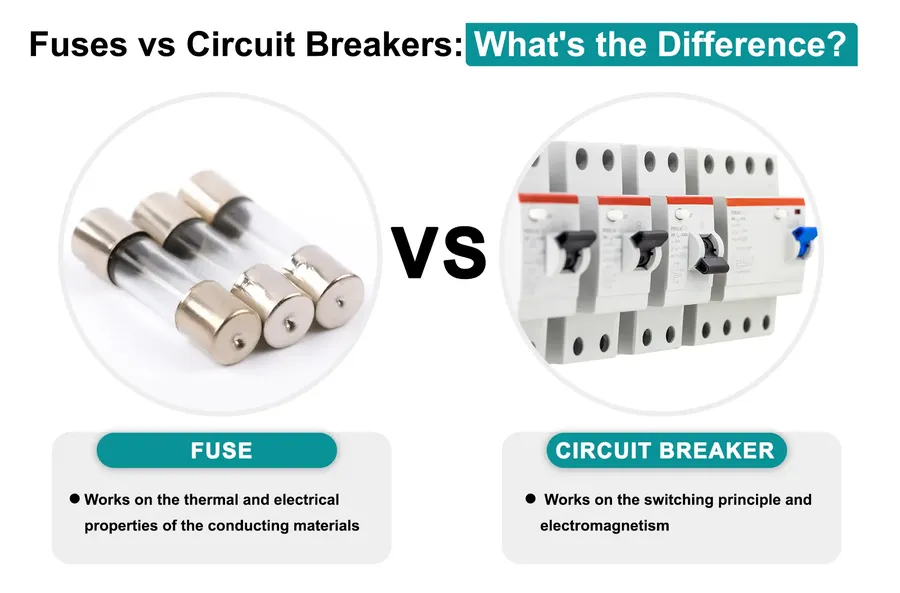
Fuses and circuit breakers are crucial safety devices in electrical circuits, designed to prevent damage from overcurrents. They act as protective mechanisms, interrupting the circuit when current exceeds a safe level, thus safeguarding components and preventing potential fire hazards.
| Feature | Fuse | Circuit Breaker |
|---|---|---|
| Function | Melts a wire to break the circuit | Mechanically trips to break the circuit |
| Reset | Must be replaced after activation | Can be reset manually |
| Response Time | Generally faster response to overcurrents | Slightly slower response compared to fuses |
| Lifespan | One-time use | Reusable multiple times |
| Cost | Lower cost | Higher cost |
| Typical Applications | Consumer electronics, small appliances | Electrical panels, high-power applications |
Proper selection of fuses and circuit breakers is critical for circuit protection. Fuses are rated based on the amount of current they can handle before melting and breaking the circuit. Circuit breakers are rated based on the current they can carry and the tripping current, the current at which they will interrupt the circuit. Selecting the correct rating for the circuit's requirements is essential for reliable protection, a slightly higher rating than necessary can prevent nuisance tripping, while a much higher rating compromises the protection. Incorrectly sized protection devices can either render the protection useless or result in a catastrophic failure or fire.
This section addresses common questions regarding electric circuit components, offering detailed explanations to enhance understanding. These questions cover the fundamental building blocks and their roles within electrical systems.
Understanding the various electric circuit parts is crucial to comprehending how electronic devices operate. From the power source to the load, each component plays a vital role in enabling the flow of electrical current. As technology advances, these fundamental building blocks remain essential, shaping how we interact with the electronic world. By understanding these parts and their functions, we gain a deeper appreciation for the complexities and simplicities of the electrical systems all around us. We can only anticipate greater advancement in technology with a deeper understanding of the role of each circuit part.

