Radio frequency (RF) components are the unsung heroes of our wireless world, powering everything from smartphones to satellite communications. This article unravels the complex world of RF components, exploring their fundamental building blocks, diverse applications, and how they facilitate the wireless transfer of information. Join us as we delve into the essential components that underpin modern communication systems, making the invisible world of radio waves a tangible reality.
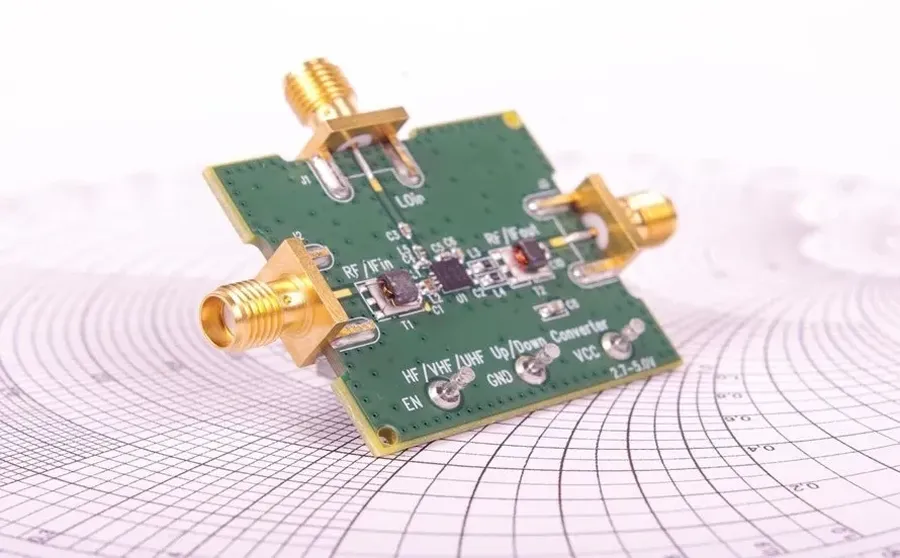
Radio Frequency (RF) components are the fundamental building blocks of any system that transmits or receives electromagnetic signals in the radio frequency range. These components, crucial for wireless communication and various other applications, manipulate electrical signals at frequencies ranging from a few kilohertz (kHz) to hundreds of gigahertz (GHz).
At their core, RF components manage the flow of electrical energy at high frequencies, ensuring that signals are transmitted, received, amplified, filtered, and processed with minimal loss and distortion. These components can be broadly categorized into passive and active types. Passive RF components, such as resistors, capacitors, and inductors, do not introduce gain to a signal, while active RF components, such as transistors and diodes, have the capability to amplify or manipulate a signal’s power.
The effectiveness of RF systems is heavily reliant on the performance and characteristics of individual components. From basic elements to complex integrated circuits, each component is meticulously designed to operate within precise specifications. These specifications include frequency range, impedance, power handling capability, noise figure, and linearity.
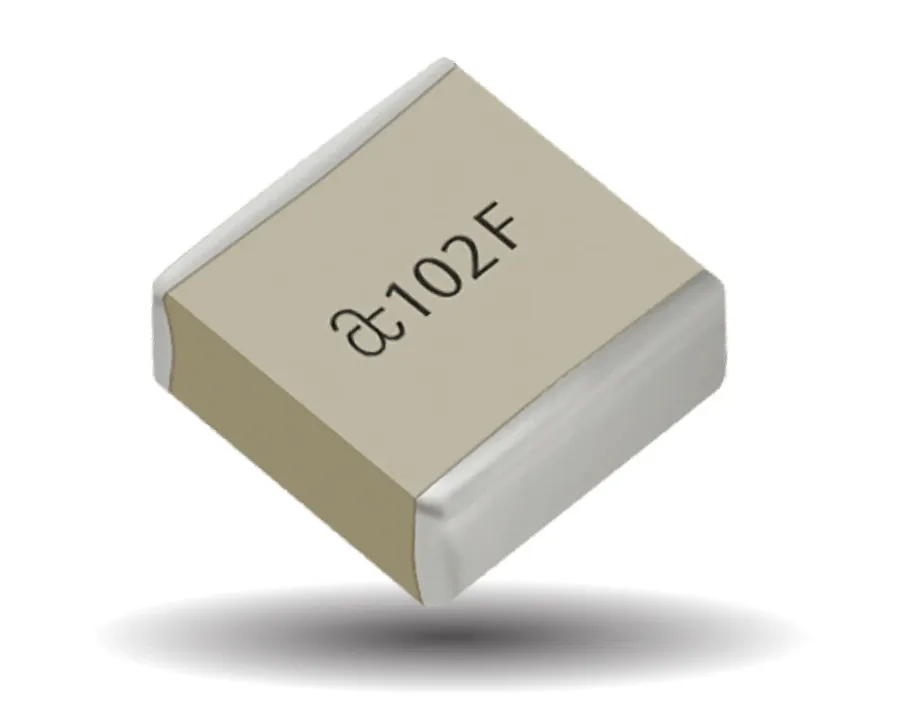
Passive RF components are the fundamental building blocks of radio frequency circuits, exhibiting no inherent power gain or signal amplification. These components, including resistors, capacitors, and inductors, are crucial for manipulating and shaping RF signals through impedance matching, signal filtering, and frequency tuning. Their precise characteristics directly influence the performance and stability of RF systems.
| Component | Symbol | Function in RF Circuits | Key Characteristics |
|---|---|---|---|
| Resistor | R | Controls current flow; provides impedance; attenuates signal power. | Resistance (Ω); power rating; temperature coefficient. |
| Capacitor | C | Stores electrical energy; blocks DC signals; enables AC signal coupling; frequency tuning. | Capacitance (F); voltage rating; equivalent series resistance (ESR). |
| Inductor | L | Stores energy in a magnetic field; blocks high-frequency signals; allows low-frequency signals to pass; frequency tuning. | Inductance (H); quality factor (Q); self-resonant frequency (SRF). |
Impedance matching is vital for efficient power transfer within an RF system, ensuring minimal signal reflection and optimal performance. Passive components, particularly resistors, are strategically placed to achieve impedance matching between various circuit stages. Signal filtering is equally essential for removing unwanted frequency components, with capacitors and inductors playing key roles in creating low-pass, high-pass, band-pass, or band-stop filters. These filters selectively allow desired frequency ranges to pass while attenuating unwanted frequencies. Tuning circuits, often employing capacitors and inductors in combination, allow for adjusting the resonant frequency of an RF circuit to match a particular operating frequency.
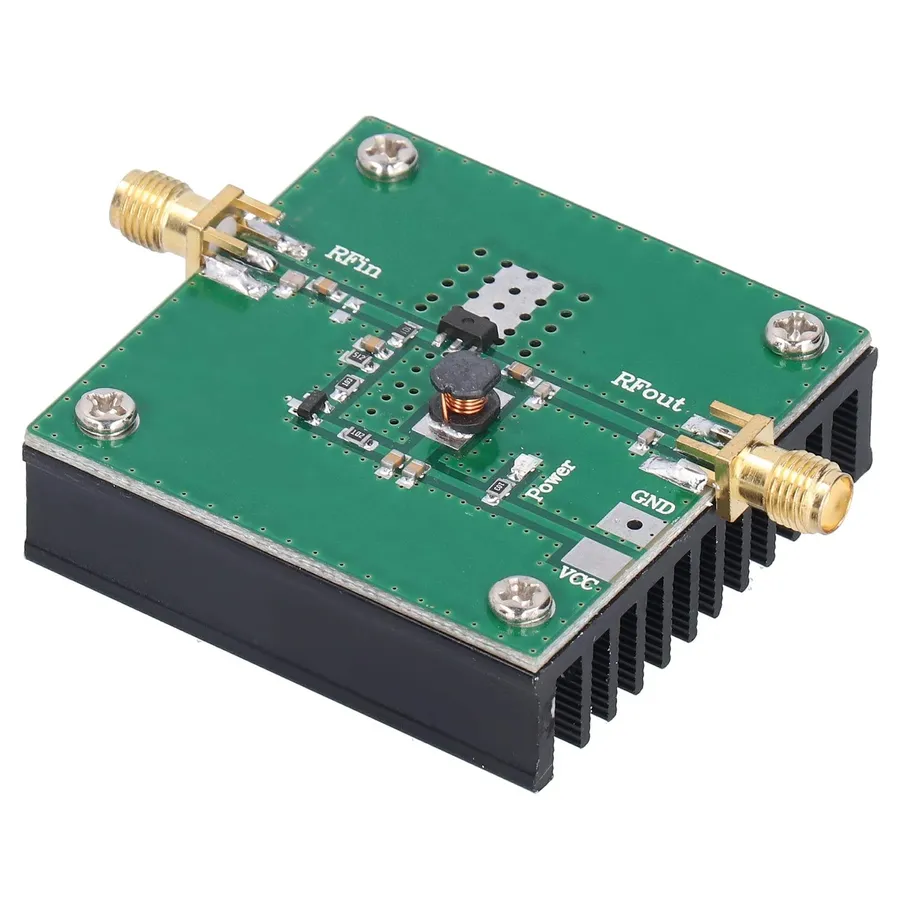
Active RF components are the workhorses of radio frequency systems, providing the critical functions of signal creation, amplification, and manipulation. Unlike passive components, active components require an external power source to operate, enabling them to introduce gain or control signal flow. These components form the core of RF circuits, facilitating essential operations such as signal amplification, frequency conversion, and switching.
The primary active components include transistors, diodes, and specialized integrated circuits like amplifiers, mixers, switches, and oscillators. These devices fundamentally shape the characteristics of RF signals, and a precise understanding of their behavior is paramount for successful system design.
| Component | Function | Key Characteristics |
|---|---|---|
| Transistors (BJT, FET) | Amplification, switching | Gain, noise figure, linearity, operating frequency |
| Diodes (PIN, Schottky) | Switching, mixing, detection | Switching speed, forward voltage, reverse recovery time |
| Amplifiers (LNA, PA) | Signal amplification | Gain, noise figure, output power, bandwidth |
| Mixers | Frequency conversion | Conversion gain, noise figure, isolation |
| Switches | Signal routing, ON/OFF control | Insertion loss, isolation, switching speed |
| Oscillators | Signal generation | Frequency stability, phase noise, output power |
Key performance metrics for active RF components include gain, which quantifies the amplification power; noise figure, indicating how much noise is added to the signal; and linearity, describing the component's ability to amplify signals without distortion. These parameters are essential in achieving the performance and stability of RF systems. For example, low-noise amplifiers (LNAs) are crucial in the front-end of receivers to ensure minimal signal degradation, while power amplifiers (PAs) are necessary to deliver sufficient power for signal transmission.
Active RF components are fundamental to various RF applications. Amplifiers boost weak signals to usable levels, mixers shift frequencies for transmission or reception, switches control signal paths, and oscillators generate the foundational frequencies used in countless communication devices and measurement instruments. The careful selection and design of active RF components are thus vital for achieving desired performance, efficiency, and signal integrity in RF systems.
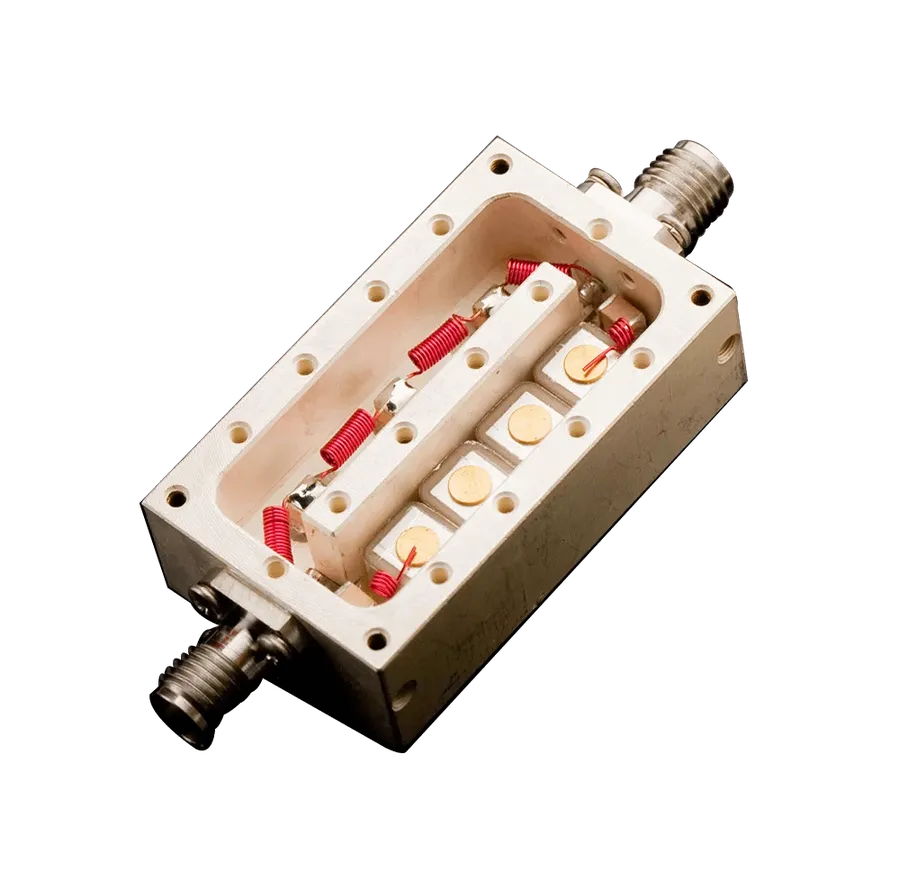
RF filters are essential components in radio frequency (RF) systems, serving the critical function of selectively passing or attenuating signals based on their frequency. This capability is crucial for eliminating unwanted noise and interference, ensuring that only the desired signals reach the subsequent stages of a system. These filters are designed to operate within specific frequency ranges and with precise characteristics, playing a vital role in maintaining signal integrity and system performance.
| Filter Type | Passband | Stopband | Applications |
|---|---|---|---|
| Low-Pass Filter | Passes low frequencies, below the cutoff frequency | Attenuates high frequencies, above the cutoff frequency | Signal smoothing, anti-aliasing |
| High-Pass Filter | Passes high frequencies, above the cutoff frequency | Attenuates low frequencies, below the cutoff frequency | DC blocking, noise reduction |
| Band-Pass Filter | Passes frequencies within a specific range | Attenuates frequencies outside the passband | Channel selection, interference mitigation |
| Band-Stop (Notch) Filter | Attenuates frequencies within a specific range | Passes frequencies outside the stopband | Interference rejection, specific frequency elimination |
Filter design involves selecting appropriate components (e.g., capacitors, inductors) and configurations to meet specific frequency response requirements. Key parameters include cutoff frequency, passband ripple, stopband attenuation, and filter order, which determine the steepness of the filter's transition from passband to stopband. Filter design often uses techniques such as Butterworth, Chebyshev, or Bessel responses which optimize performance based on specific requirements, these design choices impact tradeoffs between passband flatness, stopband rejection and phase response.
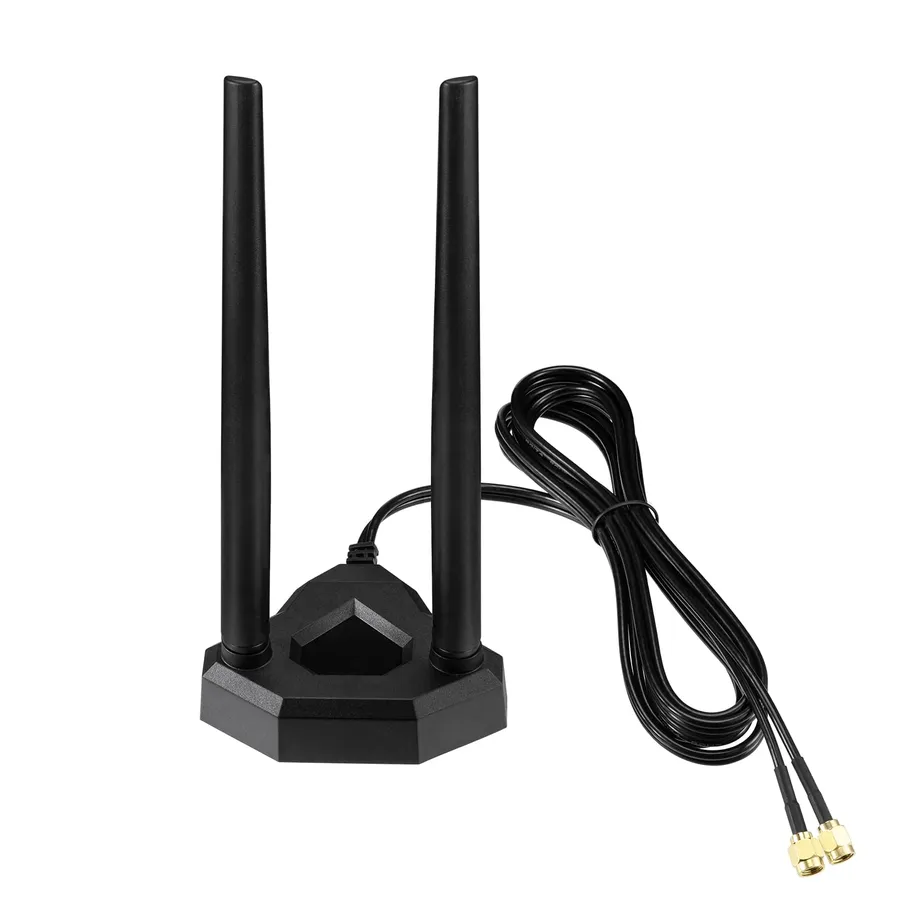
Antennas serve as the crucial interface between guided electromagnetic waves in RF circuits and the freely propagating electromagnetic waves in space, acting as the fundamental bridge for wireless communication. Their design and characteristics directly influence the performance of any wireless system, dictating signal strength, coverage, and overall efficiency.
Understanding the parameters of an antenna, including gain, impedance, and radiation pattern, is critical for optimal system performance. The selection of an appropriate antenna type is dependent upon the application, operating frequency, and desired range.
| Antenna Parameter | Description | Impact on System Performance |
|---|---|---|
| Gain | The ability of an antenna to focus radio waves in a specific direction. | Higher gain results in a stronger signal in the desired direction but may reduce coverage. |
| Impedance | The effective resistance presented by the antenna to the transmission line. | Proper impedance matching minimizes signal reflection and maximizes power transfer. |
| Radiation Pattern | The spatial distribution of power radiated by an antenna. | Determines the antenna's coverage and its effectiveness in different directions; can be omnidirectional or directional. |
| Bandwidth | The range of frequencies over which the antenna operates effectively. | A wider bandwidth allows the antenna to be used across a wider range of frequencies with minimal performance degradation. |
Selecting the correct antenna is paramount in achieving desired system performance. Factors such as frequency, range, application and available space will all play a critical role in ensuring performance is optimized.
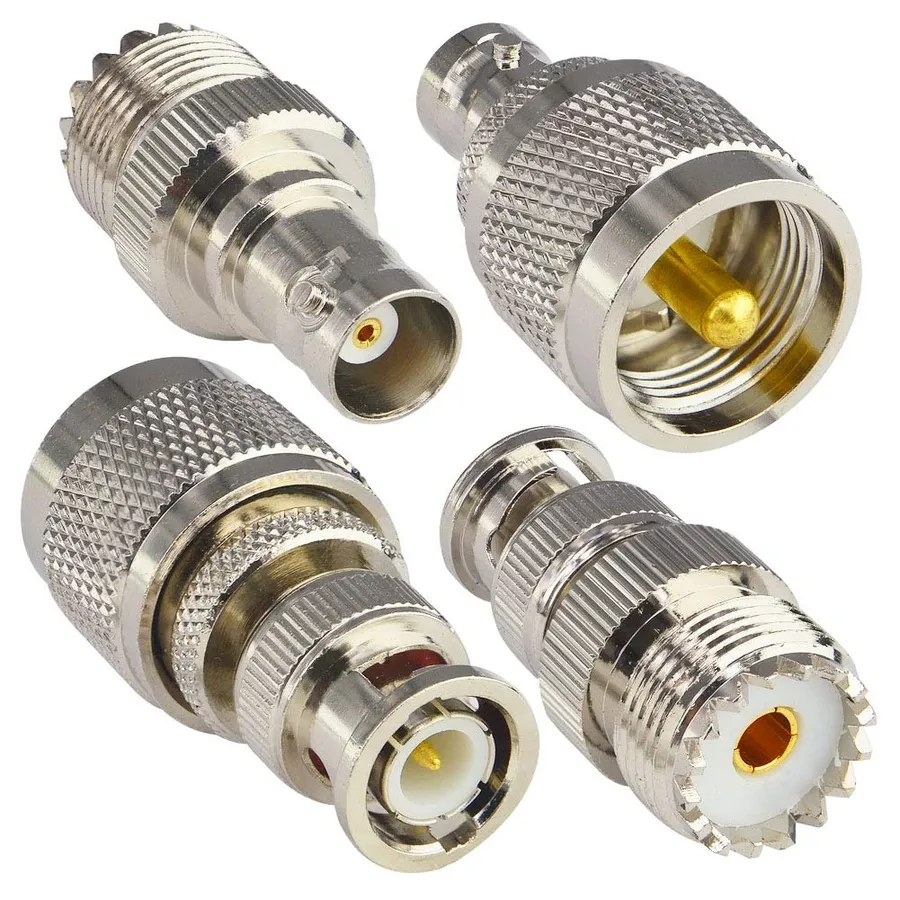
High-quality RF connectors and cables are critical for maintaining signal integrity in radio frequency systems. These components are not merely conductors; they are precisely engineered elements that must minimize signal loss, ensure proper impedance matching, and prevent signal degradation. The selection of appropriate connectors and cables is paramount for optimal system performance.
| Connector Type | Description | Typical Applications | Frequency Range |
|---|---|---|---|
| SMA (SubMiniature version A) | Threaded connector, commonly used for microwave applications. | Antennas, test equipment, Wi-Fi modules | DC to 18 GHz (some variants up to 26.5 GHz) |
| BNC (Bayonet Neill-Concelman) | Bayonet locking mechanism, quick connect/disconnect. | Test equipment, video signals, general RF | DC to 4 GHz |
| N-Type | Threaded, robust connector for higher power applications. | Base station antennas, high power RF systems | DC to 18 GHz (some variants up to 22 GHz) |
| TNC (Threaded Neill-Concelman) | Threaded version of BNC, provides more secure connection. | Test equipment, instrumentation | DC to 12 GHz |
| Type F | Commonly used for cable television and satellite television. | Cable TV, satellite TV | DC to 1 GHz |
Selecting the correct type of RF connector depends on the operating frequency, power levels, environmental conditions, and the specific mechanical requirements of the application. Similarly, RF cables are characterized by their impedance (typically 50 or 75 ohms), attenuation per unit length, shielding effectiveness, and flexibility. Common cable types include coaxial cables like RG-58, RG-174, and RG-214, each offering trade-offs between cost, loss, and power handling capacity.
One common pitfall in RF systems is the improper use of connectors and cables, which can lead to signal reflections, impedance mismatch, and increased signal loss. This underscores the necessity of using high quality connectors and cables that are appropriate for the given frequency range, and proper assembly and termination techniques.
RF components are fundamental to a vast array of modern technologies, extending far beyond basic radio communications. Their unique properties allow them to manipulate electromagnetic waves at radio frequencies, making them indispensable in diverse applications across various industries.
Below, we explore some key areas where RF components are deployed, showcasing their versatility and critical role in enabling sophisticated technological systems:
This section addresses frequently asked questions about RF components, providing clarity on their usage, specifications, selection criteria, typical costs, potential issues, and troubleshooting techniques. These answers are designed to provide a concise and practical understanding of RF components for both novices and seasoned professionals.
The field of RF components is experiencing rapid evolution, driven by demands for higher performance, smaller form factors, and lower costs. These advancements are crucial for supporting the ever-increasing complexity of modern wireless communication systems, sensing technologies, and other RF-dependent applications. Key areas of development include novel materials, miniaturization techniques, and enhanced integration strategies.
These trends are not only shaping the technical landscape but also have significant economic implications for the industry.
RF components are the building blocks of all wireless technologies, and understanding their functions and applications is crucial for anyone working with or interested in electronics and communications. From tiny chip components to complex antennas, these elements are essential for enabling our interconnected world, and their advancements are continually shaping the future of technology. As technology evolves, understanding RF components is not just about theory but about practical applications and innovations.

